

Macau's Na Tcha Temple Association hosted yesterday the premiere yesterday of a 15-minute short film that integrates the theme of the War of Resistance against Japanese Aggression with the folk belief in Nezha, titled“The Rhythm of Fire” (烽火之聲).
Irwin Kuok Pak Yu, chief of the association’s Youth Division, told the Post today that the film aims to perpetuate locals’ national spirit.
The premiere was held at the Macao Museum lecture hall.
According to a statement by the association, the film was shot by Free Dream Production Studio and sponsored by the local government's Cultural Development Fund (FDC).
The film blends historical events with artistic creation, according to the statement, using a "Nezha" opera troupe as the narrative vehicle to depict the "brilliance of humanity and the sentiment of home and nation amidst the flames of war".
The statement also said that a significant highlight of the film is its connection to Macau's history during the War of Resistance. It draws on specific historical materials to recreate the acts of support from Macau to the Chinese during the war, in connection with national-level intangible cultural heritage—the Nezha folk belief. This dual approach reflects the sentiment of home and nation during wartime from multiple perspectives, the statement said.
According to Kuok, the film had been in the planning and preparatory stages since the beginning of the year, the result of "meticulous collaboration" that has now been brought to the screen. Through this film, the hope is to encourage more people to remember history, cherish peace, strive for self-reliance, and carry forward the national spirit, Kuok said.
During the Chinese People’s War of Resistance Against Japanese Aggression and the World Anti-Fascist War, Macau’s then Portuguese administration maintained neutrality in the conflict, even though most residents, deep in their hearts, backed China’s struggle for survival against the Japanese invaders, according to contemporary witness reports. While Hong Kong was occupied by the Japanese in 1941, they imposed indirect control over Macau through naval blockades and economic pressure between 1943 and 1945, historians have pointed out. Scores of people starved to death in Macau at that time.
Nezha (哪吒), aka Nezha the Crown Prince (哪吒太子) is a protection deity in Taoism, Buddhism, and Chinese folk religion. Nezha, a famous figure in Chinese mythology, is a divine hero whose origins are rooted in ancient Chinese folklore and religious traditions. According to the mythological narrative, Nezha was born during the Shang Dynasty (商朝, around 1600–1046 BCE), as his story is closely tied to the Investiture of the Gods (封神演义), a Ming Dynasty (1368-1644) novel set in that era.
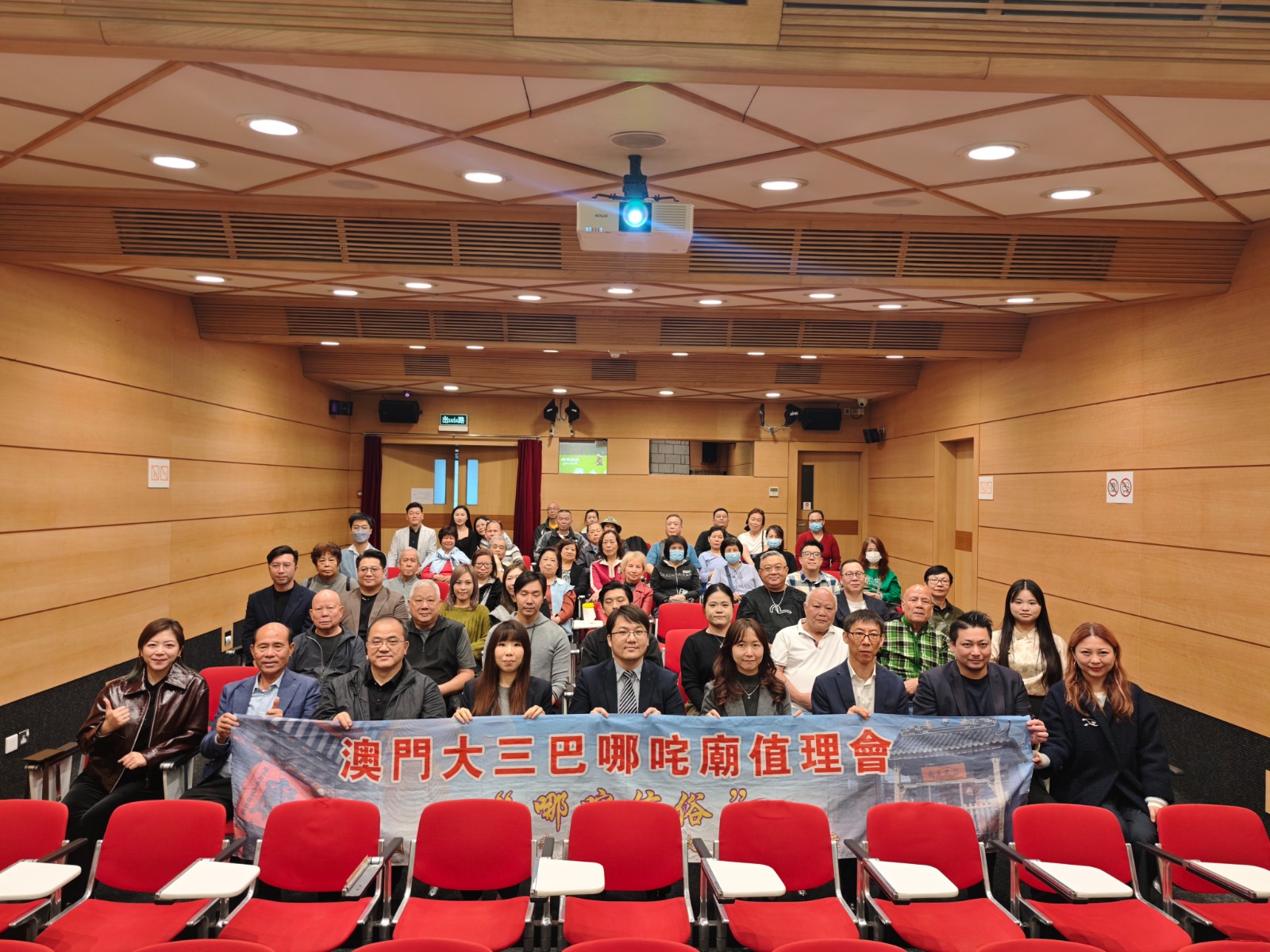
Caption: Dongjie Xu, representative of the Liaison Office of the Central People’s Government in the Macao Special Administrative Region (front row, centre), Macao Museum Director Lou Ho Ian (front row, fourth from right), Na Tcha Temple Association President Ip Tat (front row, second from left) and other respresentatives pose during the film's premiere at the Macao Museum yesterday. - Photo couresty of Na Tcha Temple Association