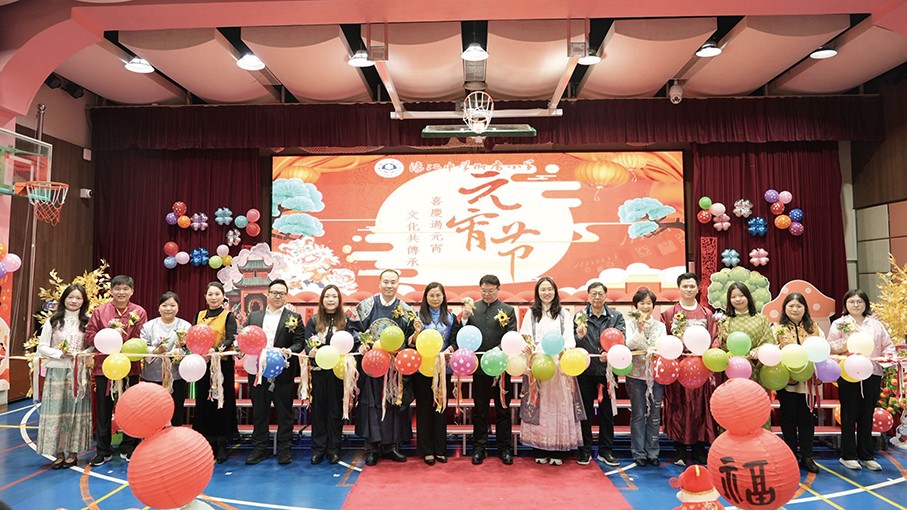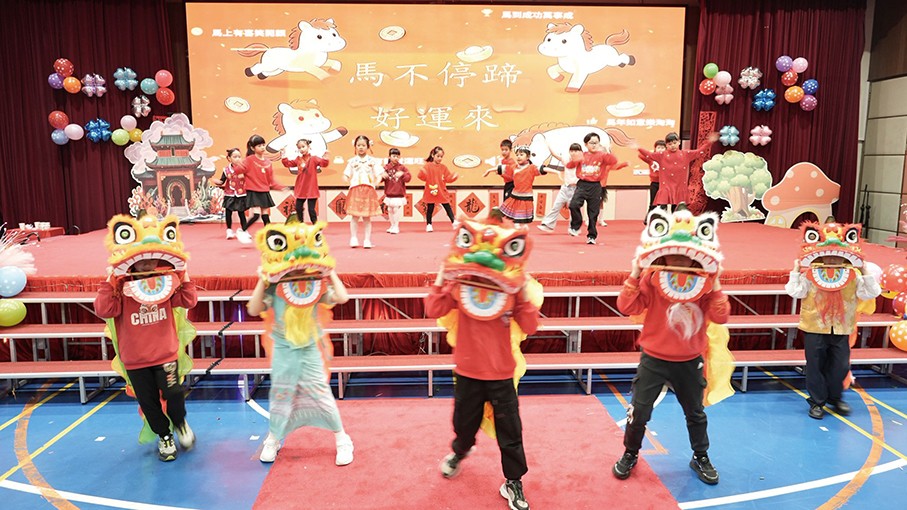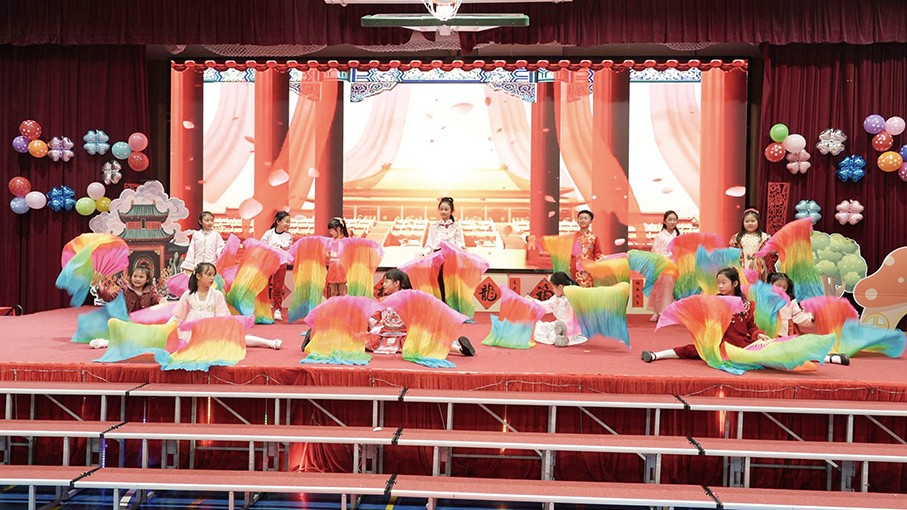


Macau’s renowned Hou Kong Middle School (Primary Section) hosted a Lantern Festival* event yesterday, and Chan Pou Sin, the school’s vice principal, told the Post during the festivity that it aimed to deepen students’ understanding of Chinese culture and national pride.
The one-day event was hosted on the school campus on Rua de Afonso de Albuquerque. Hou Kong Middle School, which comprises a number of different campuses, has been a traditional Chinese medium school since 1932. “Hou Kong” is one of Macau’s ancient names.
Chan told the Post that as a traditional patriotic school, Hou Kong Middle School has adhered to patriotic education for the past 93 years.
Chan emphasised that patriotism cannot rely solely on mere teaching, it must combine content and form to allow students to experience it personally. The school customarily takes advantage of traditional festivals such as the recent Spring Festival (Chinese New Year) and yesterday’s Lantern Festival, enabling students to participate and gain a deeper understanding of Chinese culture, fostering a sense of national identity, Chan said.
According to Chan, during yesterday’s event, which marked the formal end of the Chinese New Year period, the school focused on promoting home-school cooperation by inviting parents to participate. Through photos and videos, parents can better understand and support the school’s educational efforts, Chan said.
Chan expressed his gratitude to the parent volunteers and students for their active participation.
Chen addressed the festivities, expressing his hope that all staff members and students will enjoy good health and continuous progress in the Year of the Horse. Against the backdrop of the world’s current instability, he urged the participants to deepen their understanding of national culture, strengthen cultural confidence, and strive diligently in their studies to contribute to the future of Macau and the motherland, according to Chan.
The school’s Chinese Panel Head** Choi Hom Chu and Deputy Head Cheng Ka Wai told the Post that the event was part of the Chinese language curriculum’s teaching plan, which integrates traditional Chinese festivals, adding that the event included experiential activities such as lantern riddles and pitch-pot***.
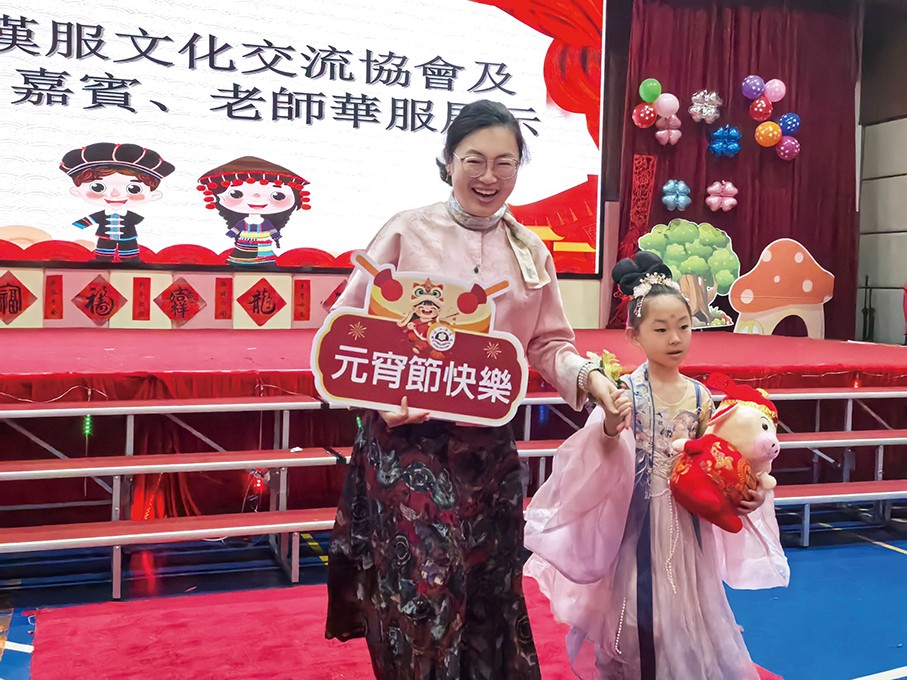
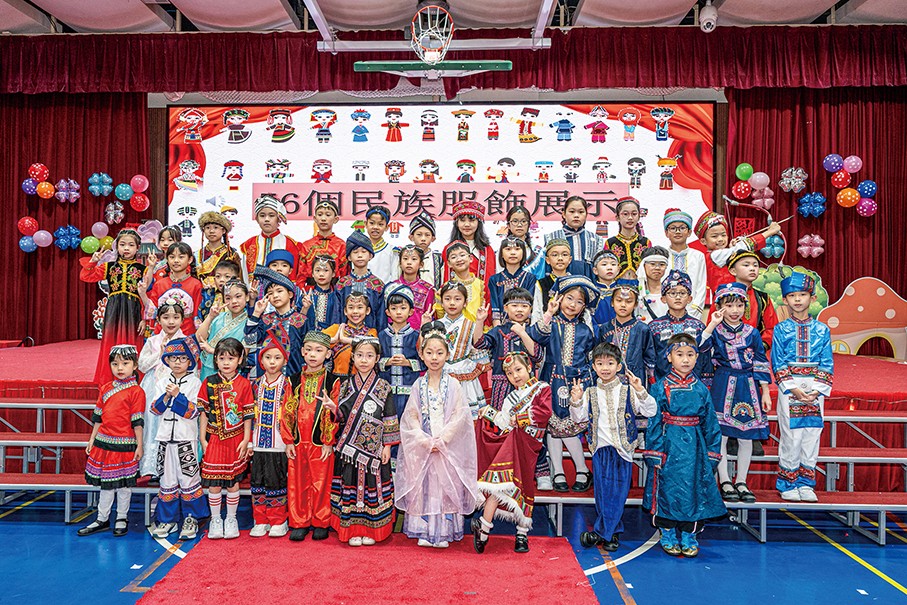
For this year’s event, both teachers underlined, the elements representing the nation’s 56 ethnic groups were specifically incorporated. Building on the students’ pre-class research and in-class learning, the aim was to deepen their understanding through a display of ethnic costumes, both said.
Choi and Cheng expressed the hope that through hands-on experience, students would come to appreciate the richness of Chinese culture, develop a love for traditions, and strive for academic progress in the new year.
The Post also interviewed several parent volunteers who helped to get the event off the ground. They generally agreed that participating in such activities helped them gain a deeper understanding of the school’s educational approach, while also allowing children to learn about the nation’s diverse ethnic groups through hands-on experience, thereby nurturing a sense of patriotism.
Ho and Kuai, who were in charge of the traditional Chinese clothing (Hanfu) activity, said that the event provided an opportunity for parents and children to experience the beauty of traditional Chinese attire together. They also said that some parents were encouraged by their children’s enthusiasm and gladly took part, enhancing parent-child interaction and strengthening the home-school connection.
Lei and Choi, who were responsible for makeup, designed looks based on the distinctive features of various ethnic costumes. Both said that the children were highly focused on the process, demonstrating a strong sense of responsibility for their roles.
Ieong, who led the origami workshop, mentioned that his child woke up early to attend, showing great interest in the event.
In the future, Chan said, Hou Kong Middle School will continue to uphold patriotic education, designing appropriate content for students of different age groups, such as that the sixth graders’ graduation trip will incorporate patriotic elements – visiting revolutionary historic sites and advanced regions of the country. Through comparisons, students will feel the changes in national development, especially before and after Macau’s return, Chan said.
Chan pointed out that after Macau’s return to the motherland, the special administrative region has benefited from the “One Country, Two Systems” policy. He stressed that the Central People’s Government’s deep care for Macau has supported its ongoing development, adding that students should understand the close connection between the nation and Macau.
*The Lantern Festival (元宵節 Yuanxiao jie in pinyin; while directly translated it means “First Night Festival”, the term Yuanxiao is traditionally used to describe the sweet glutinous rice balls that are eaten during the festival) is a traditional Chinese festival celebrated on the 15th day of the first month in the lunisolar Chinese calendar. The day marks the final day of the traditional Chinese New Year –Spring Festival – celebrations. – DeepSeek
**A Chinese Panel Head is the Head of the Chinese Department in a Hong Kong or Macau school, responsible for everything from teaching classical Chinese poetry to organising the school’s Mandarin curriculum. – DeepSeek
*** Pitch-pot (Touhu - 投壺) is an ancient Chinese game involving throwing arrows into a pot, but historically it functioned as a Confucian ritual designed to cultivate grace, focus, and moral virtue among scholars and nobles. – DeepSeek
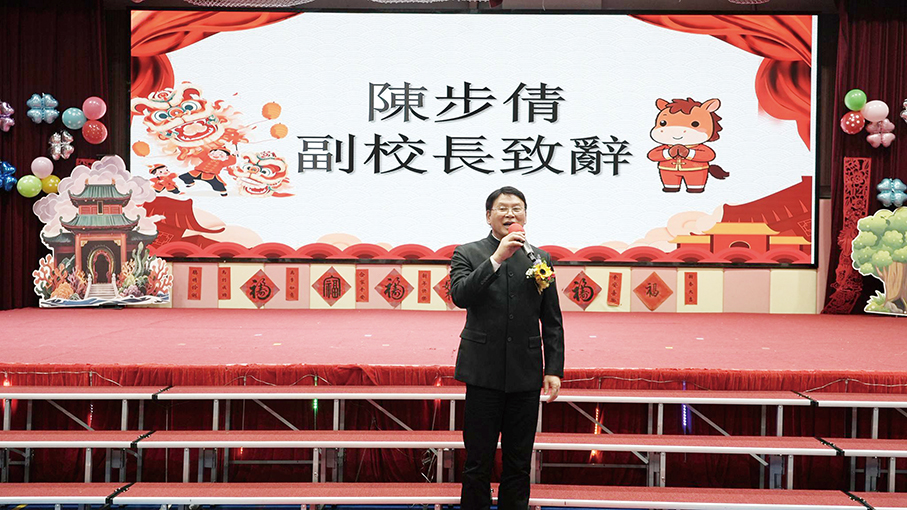
Hou Kong Middle School Vice Principal Chan Pou Sin addresses yesterday’s Lantern Festival event at Hou Kong Middle School (Primary Section) on Rua de Afonso de Albuquerque. – Photos courtesy of Hou Kong Middle School