

Hong Kong actor and director Lau Kar-leung (劉家良 – Liu Jialiang) first appeared in a 1953 film titled “How Wong Fei-hung Defeated Three Bullies with a Rod” (黃飛鴻一棍伏三霸). Starring as Wong Fei-hong (黃飛鴻) was actor Kwan Tak-hing (關德興)—Kwan appears as Chinese martial artist, physician, and folk hero Wong (https://en.wikipedia.org/wiki/Wong_Fei-hung) in dozens of films from the late forties until the sixties.
The venerable Kwan appreciated young Lau, whose career took off at Shaw Brothers Studios. Lau worked for mainland Chinese director Chang Cheh (張徹) as martial arts director, but in the director’s chair, his take on martial arts films was diametrically opposed. Chang presented staunch masculinity, Lau gave us heroes and heroines who fought valiantly but didn’t die. Chang chopped heroes and henchmen into gruel, Lau ended epic battles with the bad guy giving a thumbs-up and walking away.
Cue the Canto
In Chang’s films, Mandarin supplanted Cantonese, but Lau showcased Canto—with its attendant puns and gags. Chang’s poetic violence was an iron fist, while Lau leavened the mix by interweaving then-popular Cantonese-language comedy among his fight sequences.
Shaw Brothers was famed for its martial arts acumen, and Lau brought a lifetime of training in both real-world and cinematic kung fu to the table. His seminal worldwide hit “The 36th Chamber of Shaolin” (少林卅六房, aka “The Master Killer”, 1978) stars his adopted brother Gordon Liu Chia-hui** (劉家輝) and spawned a pair of Lau-directed sequels. He also directed 1984’s “The 8 Diagram Pole Fighter” (五郎八卦棍): the final film of Shaw’s superstar Alexander Fu Sheng (傅聲), who died in a car accident during filming. Over 2,000 friends and relatives and some 3,000 fans attended Fu’s funeral procession in Hung Hom in 1983, and a stone cenotaph was later erected at the site of his crash by Sir Run Run Shaw (邵逸夫).
Boss ladies
Lau appreciated martially gifted women, and cast Japanese actress Yuka Mizuno opposite Gordon Liu in “Heroes of the East” aka “Challenge of the Ninja” (中華丈夫, 1978). “My Young Auntie” (1981) starred Kara Wai Ying-hung (惠英紅) - Wai won the Best Actress Award at the inaugural Hong Kong Film Awards.
In “The Lady Is the Boss” (掌門人 1983), Lau plays the hidebound sifu (“teacher-instructor”) of a martial arts school that reluctantly welcomes its new boss: an Americanised young woman (Wai) who brings aerobics and new thinking to the school’s hidebound training methods. She starts teaching self-defence techniques to ladies working at a local nightclub. These students then fend off client advances with martial skill, annoying the local gangsters. It all culminates in a battle royale staged in a gymnasium, where the trampolines are visible – for a change.
Post-Shaws
Lau’s final film for Shaw Brothers was “Disciples of the 36th Chamber” (霹靂十傑, 1985). He directed Jet Li (李連杰) in “Martial Arts of Shaolin” (南北少林, 1986), then lensed “Tiger on Beat” (老虎出更) in 1988. Chow Yun-fat pokes fun at his famous twin-Beretta/trenchcoat persona and Cantonese puns pepper this delightful actioner, which culminates in a battle between Lau and Hong Kong-born American actor Conan Lee Yuen-Ba (李元霸) performed with industrial-grade chainsaws.
And Lau continued to act in Hong Kong films. In “Evil Cat” (凶貓, 1987), he plays a venerable sifu tasked with eliminating an ancient feline demon. “Drunken Master II” (醉拳II, 1994) sees Jackie Chan (成龍) playing martial artist-cum-folk hero Wong Fei-hung while Lau plays a rogue general who fights an adversary under a train using a tasselled Chinese spear.
The post-Shaws’ role legendary among Hong Kong film fans occurs in 1989’s “Pedicab Driver” (群龍戲鳳), directed by Sammo Hung Kam-bo (洪金寶). Sammo began at Shaws and found greater fame at rival studio Golden Harvest, along with fellow Seven Little Fortunes (七小福) alumnus Jackie Chan.
The film, set in Macau, stars Sammo as a pedicab driver attempting to woo the lovely Ah Bing, played by Nina Li (利智). Unfortunately, Sammo crashes his pedicab into a casino, breaking glass and spilling chips.
Clearly the boss is going to come out to thrash the intruder, and when he does, it’s Lau – resplendent in a kung fu suit and classic Shaw-Brothers-villain cigarette holder. And they fight.
Fists and feet elevate to pole-fighting, and senior Lau bests Sammo, who admits defeat. True to form, rather than ordering goons to further thrash him, Lau lets him go. Sammo to Lau: “I have fought with many men, and you’re the only one who has beaten me.”
“Fatty,” says Lau, “I have fought with many men. You are the only one who has scared me.”
Guangzhou-born Lau passed away in Hong Kong in 2013, aged 78. He was also known as Lau Kar-lung, Liu Chia-liang, Liu Chia-liung, Liu Ka-liang, and Kung Fu Leung.
*Hong Kong-based American film critic and writer
** Lau Kar-fai is the Cantonese romanisation of Gordon Liu’s name.
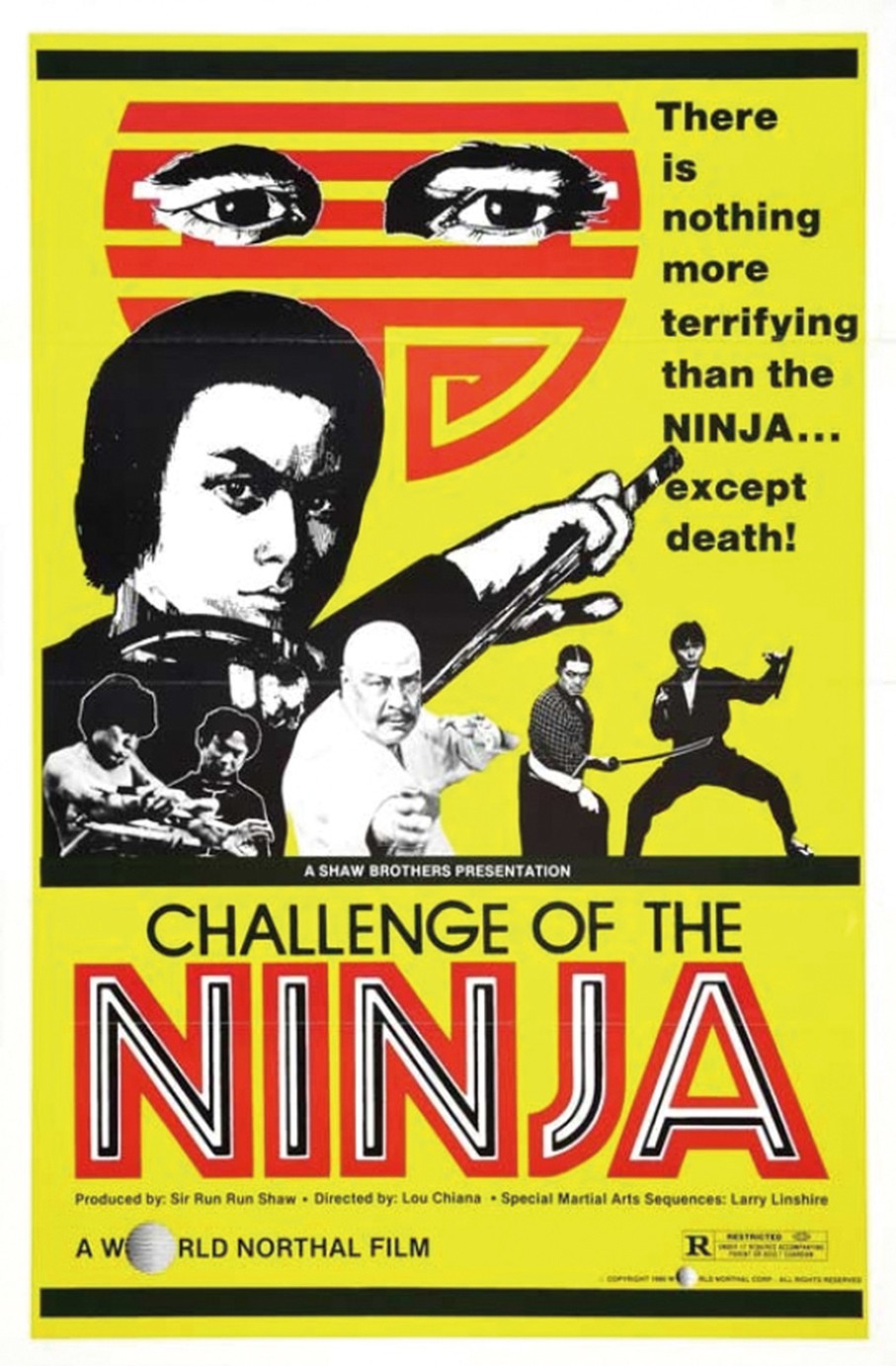
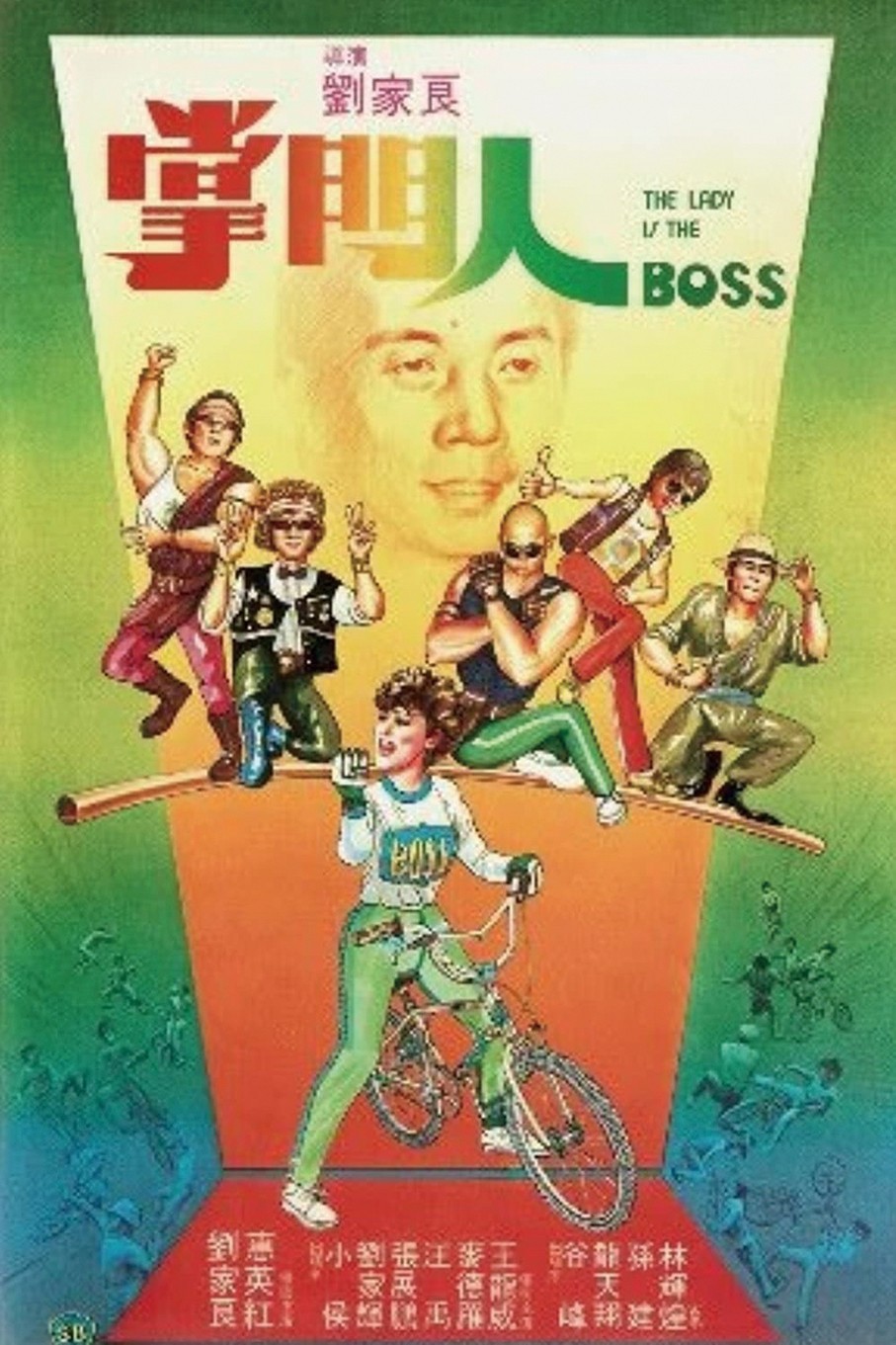
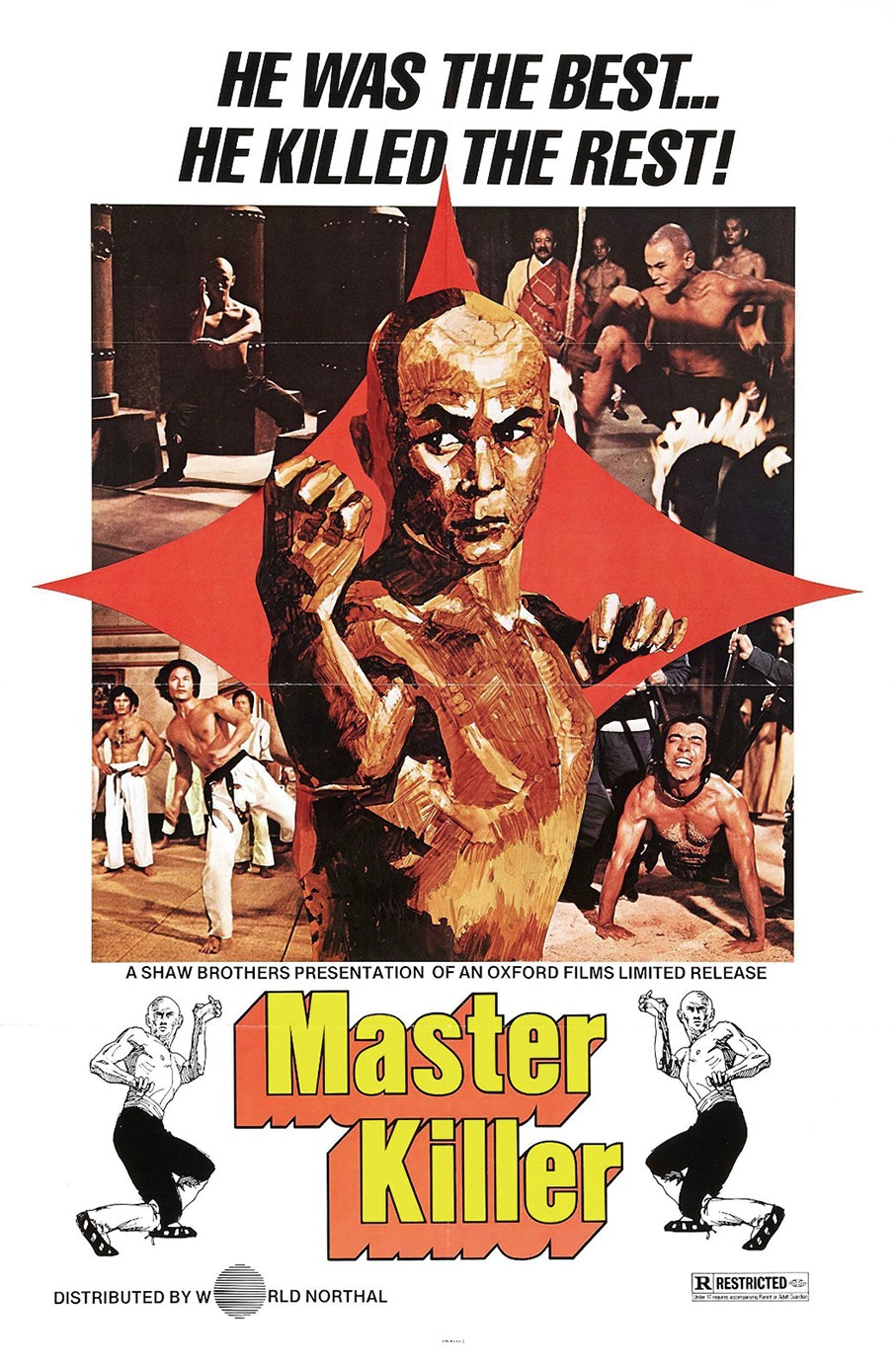
Posters provided by Stefan Hammond