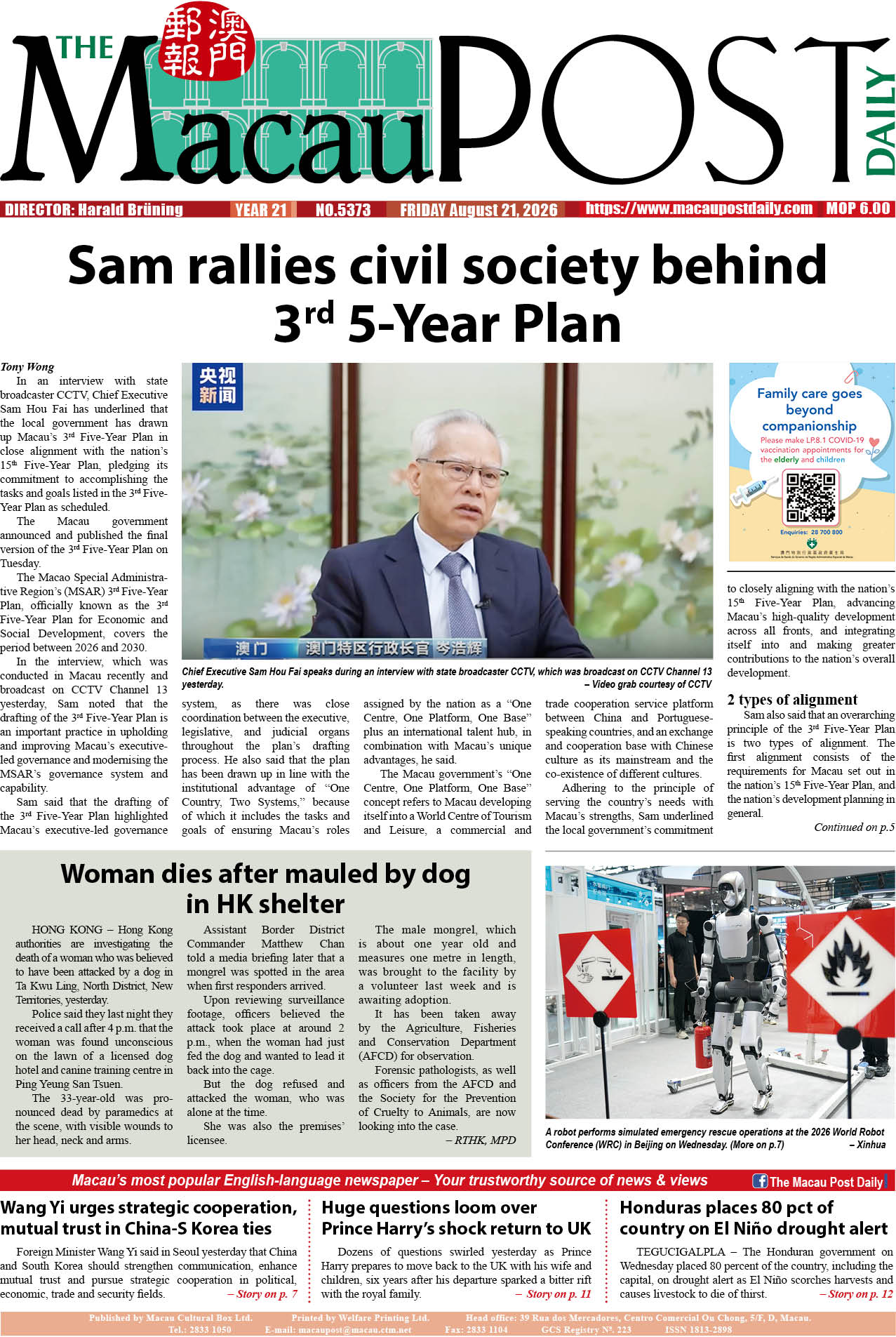


Interview by William Chan
Local choir Dolce Voce concluded their 12-day concert tour across four cities – Lisbon, Batalha, Peniche, and Porto – on Sunday, showcasing a repertoire that bridges Chinese and Portuguese musical traditions.
Last Wednesday, the Post published an interview with the choir’s conductor, Maria Vanessa Leão.* The Post engaged in a follow-up interview with Leão, who answered some follow-up questions, along with giving more feedback from both audience members and choir participants.
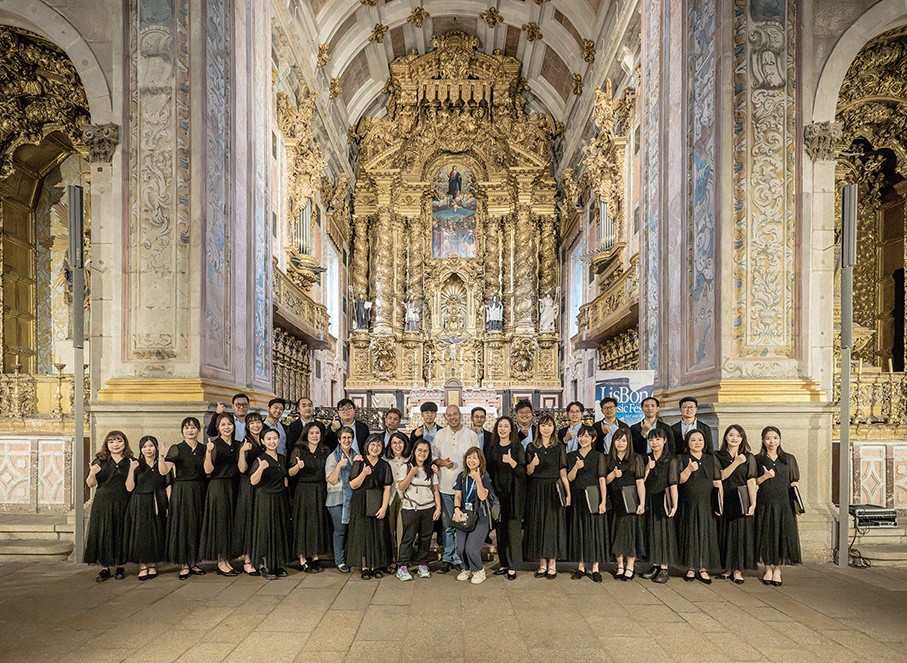
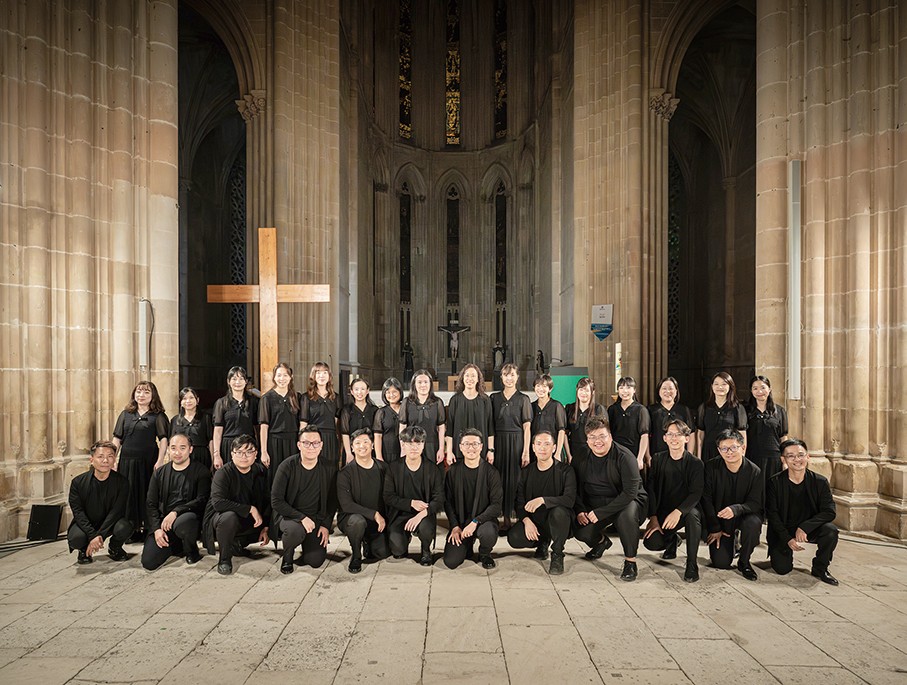
Founded in 2008, Dolce Voce – meaning “sweet voice” in Italian – was established to promote the art of choral singing, enrich Macau’s choral music culture, and provide high-quality performances to the local community. Leão noted that due to early preparations, the choir was fortunate to gather 27 members for this tour, achieving a well-balanced ensemble.
According to DeepSeek, an adult choir is typically organised into several main sections: soprano, tenor, alto, and bass. Each section works together to create harmony, balance, and blend in choral music.
Previously, Leão mentioned that the choir had meticulously curated a programme of over 20 a cappella works spanning a variety of styles, with distinct repertoires for each venue. The selections included hymns, folk songs, popular music, musical theatre excerpts, contemporary Chinese compositions, Patuá** songs, and adaptations of traditional Portuguese fado, performed in nearly 10 languages.
“In the first three performances, we presented a variety of all our songs to showcase our diversity. In the final performance, due to the Catholic church’s requirements, we performed solely hymns,” Leão noted.
Leão highlighted two particularly significant songs: the Fado composition “Lela” and the Patuá song “Macau Sam Assi” [“That’s Macau”]. Both songs are rooted in Portuguese culture and received the most praise from the choir, she said.
Daniel Leong Si Kei, the choir president, noted that since the choir always arrived at each venue shortly before the performance during the four-city tour, they only got to understand the characteristics of the space right before going on stage. “This means that every new venue was a surprise for our members – it really tested their adaptability and ability to listen to each other while singing. Of course, before each concert, Vanessa always held a rehearsal and sound check to help us adjust, and she took time to remind us what to pay attention to in each unique setting.”
In terms of group dynamics, Leong said that the choir has welcomed quite a few new members in recent years. “While we’ve performed together in Macau before, it’s always during these tours that we truly get to know one another and become friends. After all, we spend these dozen days together from morning till night.”
Leong added that during their final performance, everyone thoroughly enjoyed the experience, and the Portuguese audience was also highly engaged. Below are some comments made by audience members, provided by Leong.
Feedback from audience
“Congratulations, Vanessa. Your choir is excellent. They sing very well. Do you know what’s so special about your choir? You can see how involved they are in the performance. They truly enjoy singing - it isn’t just a job to them. They’re doing what they really love...,” an unnamed Portuguese music director from the festival said about the choir’s performance.
Tiago Neto, another festival director, commented: “I only attended the first and fourth concerts, but already at the first one I was amazed – and the fourth performance was even more brilliant. I also really love your choice of repertoire in both concerts. It’s very expressive and contains so many different elements.”
After the third concert, a female audience member from Prague approached the choir and talked to the members, saying: “I often attend concerts there. But your performance moved me deeply – I truly loved it.”
“The week with Dolce Voce Choir was a very rich experience, giving me the opportunity to get to know a bit about a culture influenced by the Portuguese, yet with unique characteristics,” the tour guide of Dolce Voce said, adding: “Each concert was unique, thanks to the different venues and surprises in the repertoire, which brought emotions to the surface. Although I did not understand Patuá, I could still feel the Portuguese cultural influence in the songs.”
*https://www.macaupostdaily.com/news/25629
**Patuá is Macau’s highly endangered Portuguese-Asian Creole language.

Dolce Voce sings at Mosteiro da Batalha in western Portugal’s town of Batalha last Wednesday. – Photos: Derry Sio
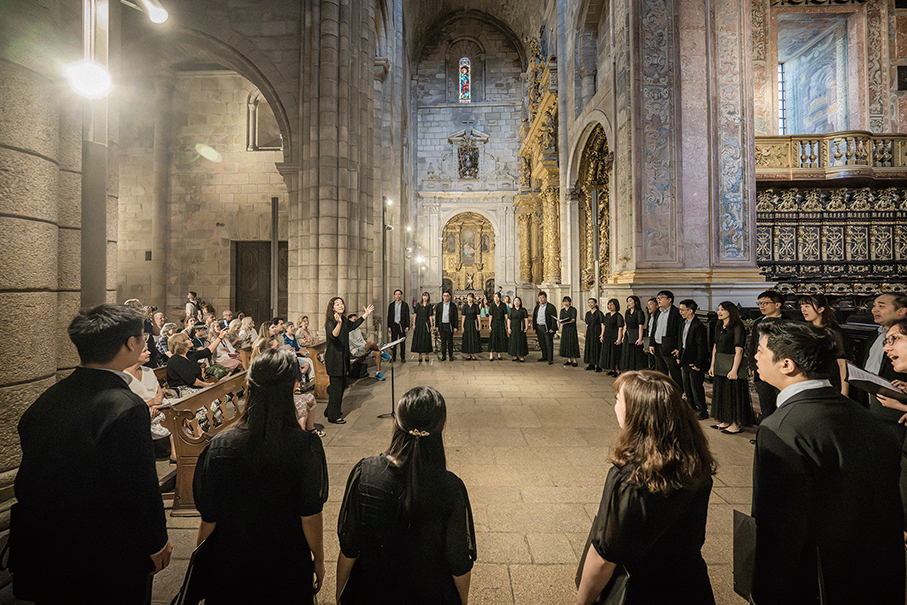
Dolce Voce performs their last concert on Saturday last week at Sé Catedral in northern Portugal’s city of Porto.
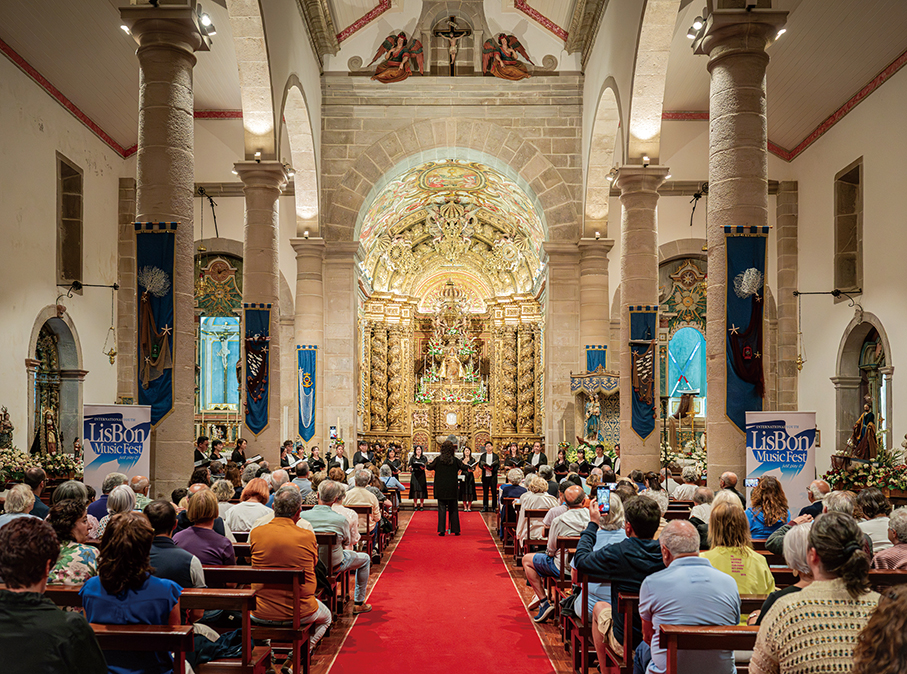
Maria Vanessa Leão conducts Dolce Voce at Igreja de São Pedro in western Portugal’ coastal town of Peniche last Thursday.