

Review by William Chan
PO Art Studio’s “Living Here, Living Together” recently completed its two-part cultural project that sheds light on the experiences of second-generation Filipinos in Macau.*
The second part, which I joined on Saturday afternoon, was a unique audio-guided walk along Rua da Alfândega. Through thematic story and immersive soundscapes, the event invited participants to explore the heart of Macau’s Filipino community along the neighbourhood, affectionately known as “Pinoy Street” for its many Filipino-run shops, salons, and businesses.
On arrival at the starting point, Largo de Santo Agostinho, I met the director of the programme, Gary Ao Ieong Wun Un, who handed me a meticulously designed booklet. It outlines the route and explains the process: at each of five locations in the Rua da Alfândega area, I had to scan a QR code to listen to audio segments.
The audio, delivered mostly in Tagalog (with written Chinese and English subtitles), tells a fictional story written by Ao Ieong and voiced by two members of Macau’s Filipino community, portraying a father and son.
Although I had interviewed Ao Ieong the month before, the project’s concept was at the time unclear; the details were still being finalised, and the experience was vastly different to simply listening to the concepts. But in practice, the “Roaming Audio Exploration” made perfect sense. The walk encouraged participants to engage with the neighbourhood not just as observers but as listeners, immersing themselves in the daily sounds, personal memories, and lived realities of Filipino families in Macau.
The audio story revolved around a father anxious about his son’s future and a son who feels lost, struggling to reconcile his own aspirations with the expectations of his family. Though most of the dialogue was in Tagalog - requiring me to rely on subtitles - the emotional content was universal. The father’s concern and the son’s uncertainty resonated with anyone who has ever navigated generational or cultural divides within a family.
Each stop - including Anak Philippine Bread, La Mesa Filipina Macau, and DC Café - offered not just a new segment of the story but a deeper sense of the community’s presence. While the specific locations weren’t intimately tied to the plot, their bustling, lived-in atmosphere made the experience authentic. The shops were filled with Filipino customers, music and food, making the fictional story feel like a natural part of the street’s daily life.
At the final stop, DC Café, participants were invited to write messages to the imaginary family from the audio story, creating a moment for reflection. We were also treated to bread from Anak Philippine Bread - the same food the father and son in the narrative often shared. This small but thoughtful gesture tied the journey together, connecting story and reality.
Despite having walked Rua da Alfândega countless times (The Macau Post Daily is just nearby), this experience offered a completely new perspective. Where I once saw just another busy Macau street, the tour revealed a vibrant, layered history and a living community with its own struggles and joys. As Macau continues to modernise and areas like “Pinoy Street” face inevitable change, projects like this are vital reminders of the city’s diversity.
Although the audio walk event has already ended, the first part of “Living Here, Living Together” – a documentary featuring in-depth interviews with three second-generation Filipinos in Macau – remains available online. The video follows Eunice, Sandy, and Jorge, who each come from Filipino immigrant families but have taken different paths in their search for identity. Their stories, like those highlighted on the “Pinoy Street” tour, speak to the universal journey of finding one’s place in a changing world.
For anyone interested in Macau’s multicultural tapestry, I highly recommend watching the documentary. It’s a moving and eye-opening look at the lives behind the shopfronts and the evolving story of Macau’s second-generation Filipino community.
Watch here: https://www.facebook.com/watch/?v=1915918609199368
*https://macaupostdaily.com/news/25925

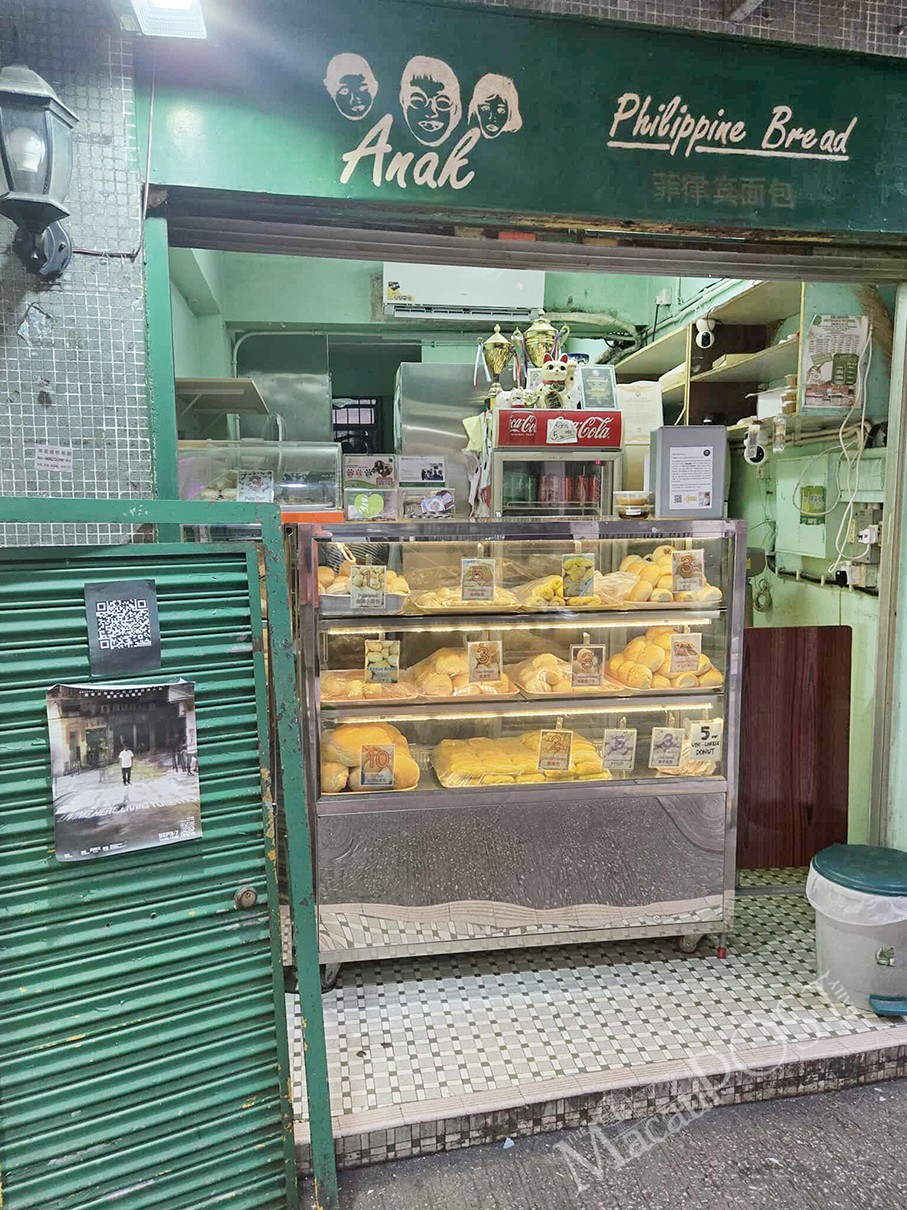

These photos taken on Saturday show some of the locations of the audio-guided walk at the Rua da Alfândega neighbourhood. - Photos: William Chan
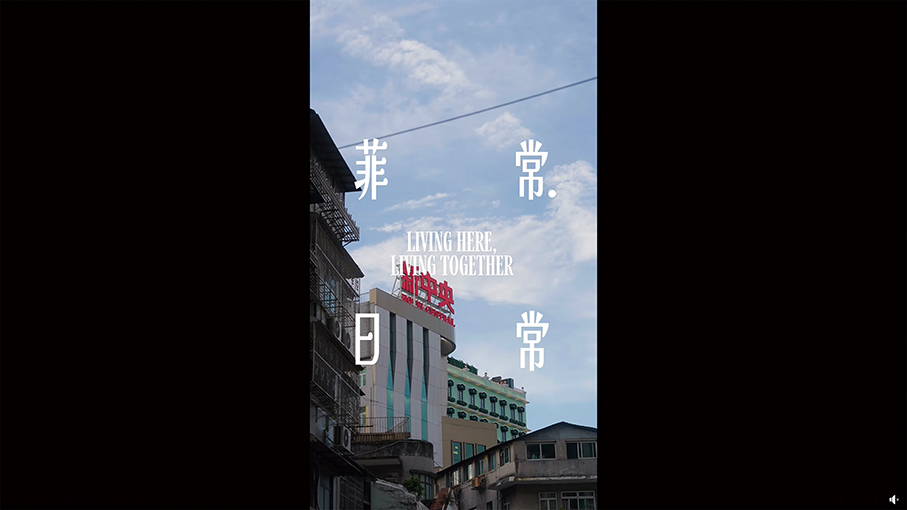
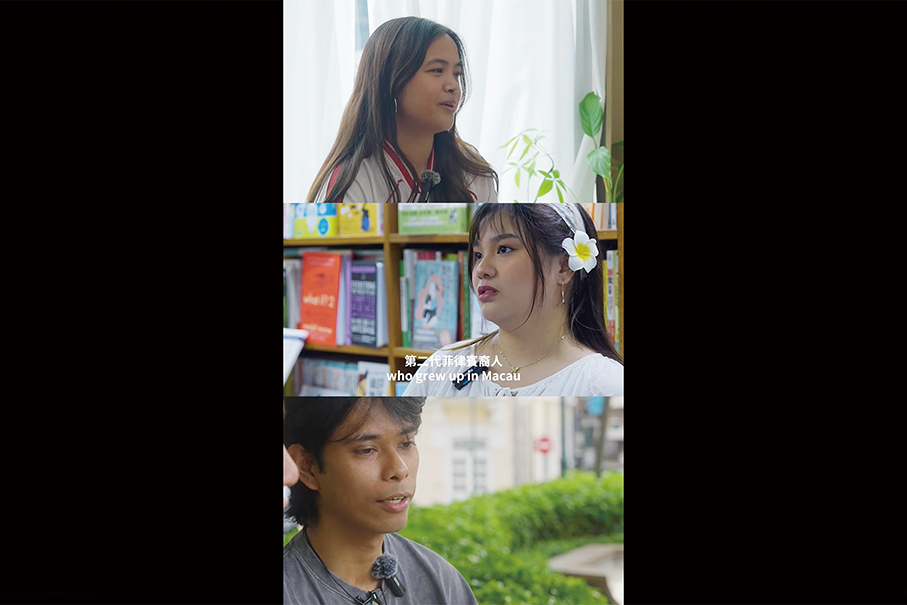
These screenshots show scenes of the documentary on Macau’s second generation Filipino community.