

Review by William Chan
Attending the Fringe Festival has always felt like opening a blind box – you never know what to expect, but there is always the thrill of surprise. This year, thanks to a friend’s invitation and a lucky pair of free tickets, I found myself last Wednesday at Yuan Coffee situated at 5 Pátio de Lourenço Marques, a Sino-Portuguese heritage house with nearly a hundred years of history near Praça de Ponte e Horta, for a performance that lingered in my mind long after the final applause.
“A Sea in the Old House of Orchid” stands out as an evocative and haunting piece of site-specific theatre. The performance, set in the intimate space of Yuan Coffee (“Original Coffee”), promised that “participants will experience the emotional and physical voyage of Cheang Hoi – the protagonist of “A Sea in the Old House of Orchid”—reliving his journey across the seas, grappling with displacement, loss, and survival.” With such a cryptic description, I entered the show with few expectations, ready for anything.
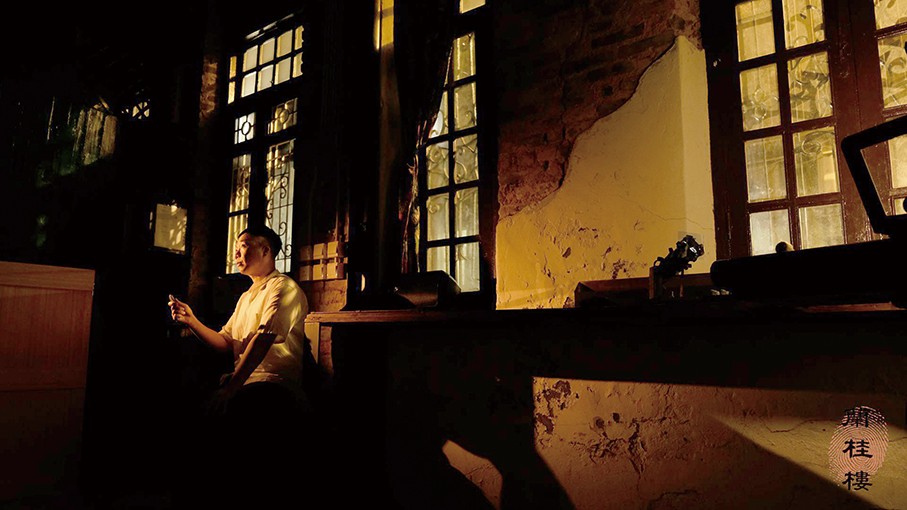
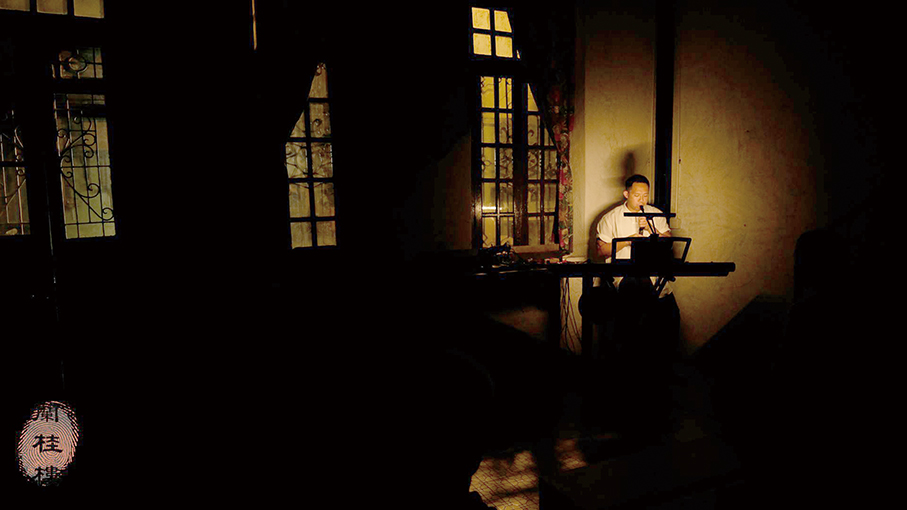
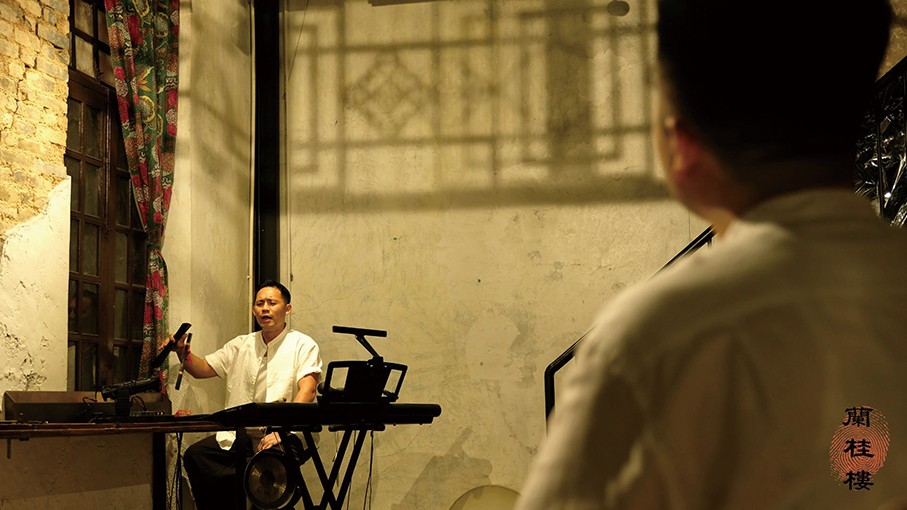
The production is led by two compelling performers, Rocky Wong Kwok Kei and Ng Yui Man, who take turns narrating and embodying the various characters inhabiting Cheang Hoi’s world. The interplay between the actors is seamless, moving fluidly between narration, dialogue, and moments of immersive, physical storytelling. Ng also enriches the narrative atmosphere with live piano and a variety of other instruments, creating a soundscape that is at once dynamic and deeply evocative.
The story itself is rooted in one of Macau’s most harrowing historical chapters: the human trafficking of the 1800s, when the city became a notorious hub for the coolie trade*. Thousands of Chinese men were lured or coerced into leaving their homeland, only to be shipped across oceans to foreign colonies and forced into gruelling labour. The show does not shy away from this dark material; instead, it confronts it head-on, inviting the audience to step into the shoes of those who lived - and suffered - through it.
Cheang Hoi, the show’s protagonist, is introduced as an ambitious young man, drawn to Macau by the promise of work in a time of hardship. He finds employment at a local barracoon – a holding place for trafficked labourers, often referred to as “piglets” (豬仔) —and quickly becomes enmeshed in the mechanics of this grim trade.
The first half of the performance is almost playful in tone, as the actors recount Cheang Hoi’s cleverness and resourcefulness, the strange camaraderie among the traffickers, and the dark humour that permeates their world. This misdirection is masterfully orchestrated by director Fong Ki Tuen, who lulls the audience into a false sense of security before pulling the rug out from under us.
The turning point comes abruptly: Cheang Hoi, betrayed by those he trusted, finds himself on the other side of the transaction, sold and shipped to Cuba as a “piglet.” The shift in tone is palpable. The actors’ voices grow quieter and more urgent; the music becomes sparse and unsettling. We follow Cheang Hoi’s harrowing journey – beaten nearly to death on the voyage, witnessing atrocities that leave him scarred in body and soul. In a foreign land, stripped of his identity and renamed Carlos, he clings to sanity by talking to a rock – a small, heartbreaking detail that lingers long after the show ends.
Remarkably, Cheang Hoi survives. Through grit and cunning, he rises to become the overseer of a barracoon in Cuba, transitioning from victim to perpetrator in a cycle of exploitation that leaves no one unscathed. His eventual return to Macau is bittersweet; the house that once sheltered him is now in ruins, a stark symbol of all that has been lost, including his own identity.
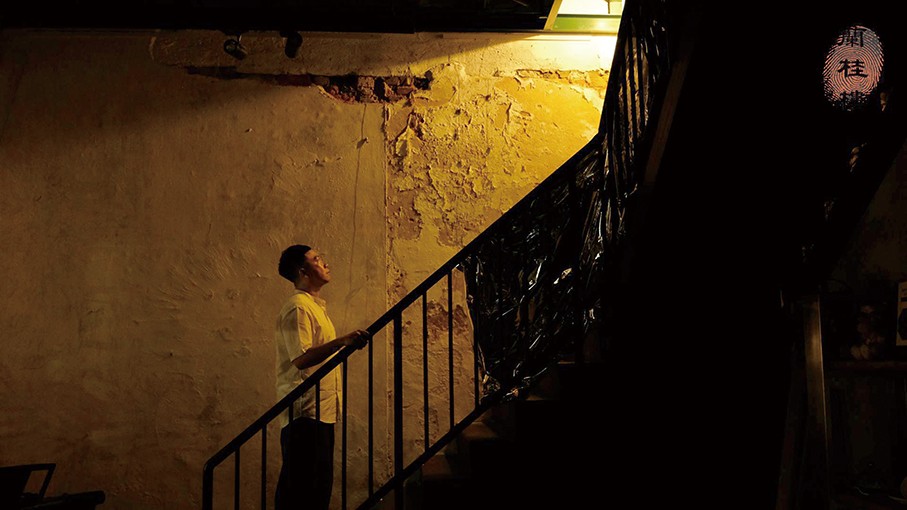
What makes this production truly outstanding is not just the power of its story, but the way it is told. The intimate setting of Yuan Coffee is used to full effect. Every corner of the space is activated – actors move among the audience, and the line between spectator and participant blurs. The familiar environment is transformed, echoing the layered history of Macau itself. This site-specific approach amplifies the emotional impact, making the experience deeply personal and immersive.
Only after the show did I learn that the performers are graduates of the Hong Kong Academy for Performing Arts. Their commitment to research and authenticity is evident in every detail, from the historical accuracy to the emotional nuance. As a local, I was struck by how they brought to life a chapter of Macau’s history that is often forgotten or glossed over – a chapter defined by cruelty, resilience, and survival.
In just 40 minutes, “A Sea in the Old House of Orchid” delivered one of the most intense and moving artistic experiences I have had in recent memory. It was a reminder of theatre’s unique power to transport, to unsettle, and to provoke reflection. In a city that sometimes seems eager to forget its past, this show is both a memorial and a wake-up call.
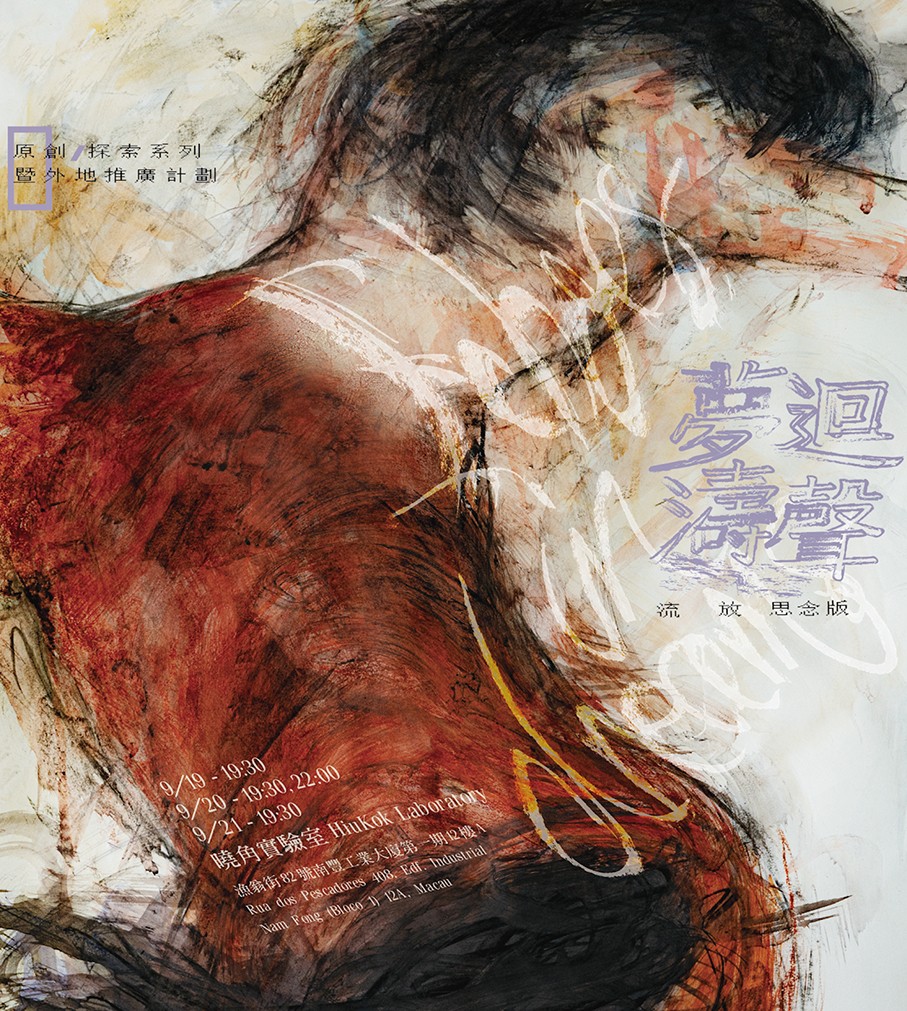
The performance was presented by Dirks Theatre Arts Association**. Their original creation, “Echoes in Dreams,” will also be staged this weekend. For details, visit: https://form.jotform.com/251482347076460.
*The coolie trade was a system of large-scale, often coercive, contract labour that replaced slavery and was responsible for the migration and exploitation of millions of Asian workers across the globe in the 19th century. – DeepSeek
**According to its website (www.dirkstheatre.com), Dirks Theatre is a theatre company passionates to creative theatre performance by collaborating with artists across various disciplines and cross-cultural heritage. Our works focus on three major areas including performer’s training pedagogy, stage productions, community engagements, and cultural exchanges collaborations.

Rocky Wong Kwok Kei (right) and Ng Yui Man perform“A Sea in the Old House of Orchid” at Yuan Coffee last week. – Photos provided by Dirks Theatre Arts Association