

Review by William Chan
Paul A. Van Dyke, an adjunct professor at the Centre for Macau Studies (CMS), donated some 500 old photos and postcards from Canton and Macau to the University of Macau (UM) library. The donation ceremony took place on Monday morning at the university, showcasing multiple photos and postcards from Van Dyke’s collection.
Canton is the old Western name of Guangzhou, the capital city of Guangdong Province.
Last May, Van Dyke also donated a set of Greater Bay Area (GBA) tourist and promotional literature. He has been a collector of GBA-related items for over 20 years, primarily through online sources, when they were still affordable and accessible before people began purchasing these books in bulk and driving up the prices.
In his keynote speech, Van Dyke noted that the photos and postcards he donated represent aspects of daily life that official documents do not show—particularly the Thirteen Hongs*, as well as the daily lives of Canton people, ships, and the rivers that served as sewage systems. Van Dyke underlined that most of the pictures were taken by foreign journalists staying in Canton.
Some photos were displayed at the ceremony, held at E34 of the university, and will remain there for an indefinite period. Representatives at the ceremony hinted at a full exhibition in the future.
Wu Yixiong on Qing Court’s clash with Canton officials over Macau
Another keynote speaker, Wu Yixiong, a history professor at Sun Yat-Sen University in Guangzhou, delivered a fascinating speech on the convergences and divergences in decision-making between the Qing Court and Canton authorities regarding Macau in the early 19th century.
He noted that the late 18th and early 19th centuries saw a major expansion in Sino-Western trade, with Guangzhou and Macau functioning as an integrated commercial system. Britain, a primary beneficiary, harboured long-standing ambitions to replace Portuguese influence and occupy Macau, driven by naval competition with France during the Napoleonic Wars, rampant piracy in the Pearl River Estuary, and broader security concerns.
Wu highlighted a key divergence in governance: Canton authorities typically handled Sino-British disputes through a “local path,” resolving issues locally to protect lucrative trade revenue while bypassing Qing laws and central government oversight. This approach conflicted with the Qing court’s emphasis on imperial dignity and security.
Wu pointed to two incidents that illustrated this tension. In 1802, Britain attempted to occupy Macau; the Governor-General of Canton resolved the matter locally without reporting it to the emperor. When Macau authorities secretly informed Emperor Jiaqing, the emperor was shocked, but Guangdong officials fabricated an inquiry and pressured Macau to alter its reports.
Secondly, in 1808, Britain occupied Macau for three months. The Governor-General of Canton tried suspending British trade – the strongest measure within the “local path” – but it failed. Emperor Jiaqing severely reprimanded the Governor-General, criticising him for his focus on trade revenue over imperial dignity and demanding military action, thereby invalidating the local approach. This episode revealed a fundamental discrepancy: Canton officials prioritised customs revenue, while the emperor prioritised the Celestial Empire’s** dignity and security, even at the cost of trade.
Wu’s speech revealed that the Qing Court and Canton authorities never resolved their fundamental disagreement over how to handle foreign threats. Local officials prioritised trade and revenue; the emperor demanded dignity and military force. This unresolved tension weakened China’s response to Western expansion and persisted until the dynasty’s collapse in 1912.
*The Thirteen Hongs (also known as the Thirteen Factories or Canton Factories) were a critical neighbourhood along the Pearl River in Guangzhou. From 1757 to 1842, they served as the sole legal site for Western trade with China, operating as a controlled monopoly under the Qing emperors. It was burned in 1856 and the site was never rebuilt as a trading quarter. The English word “hong” comes from the Cantonese pronunciation of the Chinese character 行 (Mandarin: hang), which literally means “row of shops”. In English, it means Chinese trading house. – DeepSeek
** “Celestial Empire” is an archaic, poetic, and literary term for China or the Chinese Empire. It is derived from a translation of phrases referring to the country, reflecting the traditional status of the Chinese Emperor as the “Son of Heaven” (Tianzi) within the Sinosphere. It is often associated with the concept of the Middle Kingdom (中國 - Zhōngguó), representing the idea of China as the cultural centre of the world. – Gemini

UM Centre for Macau Studies Director Agnes Lam Iok Fong (left), UM historian Paul A. Van Dyke (centre) and UM librarian Xu Hong (right) pose during Monday’s on-campus event. – Photos: William Chan
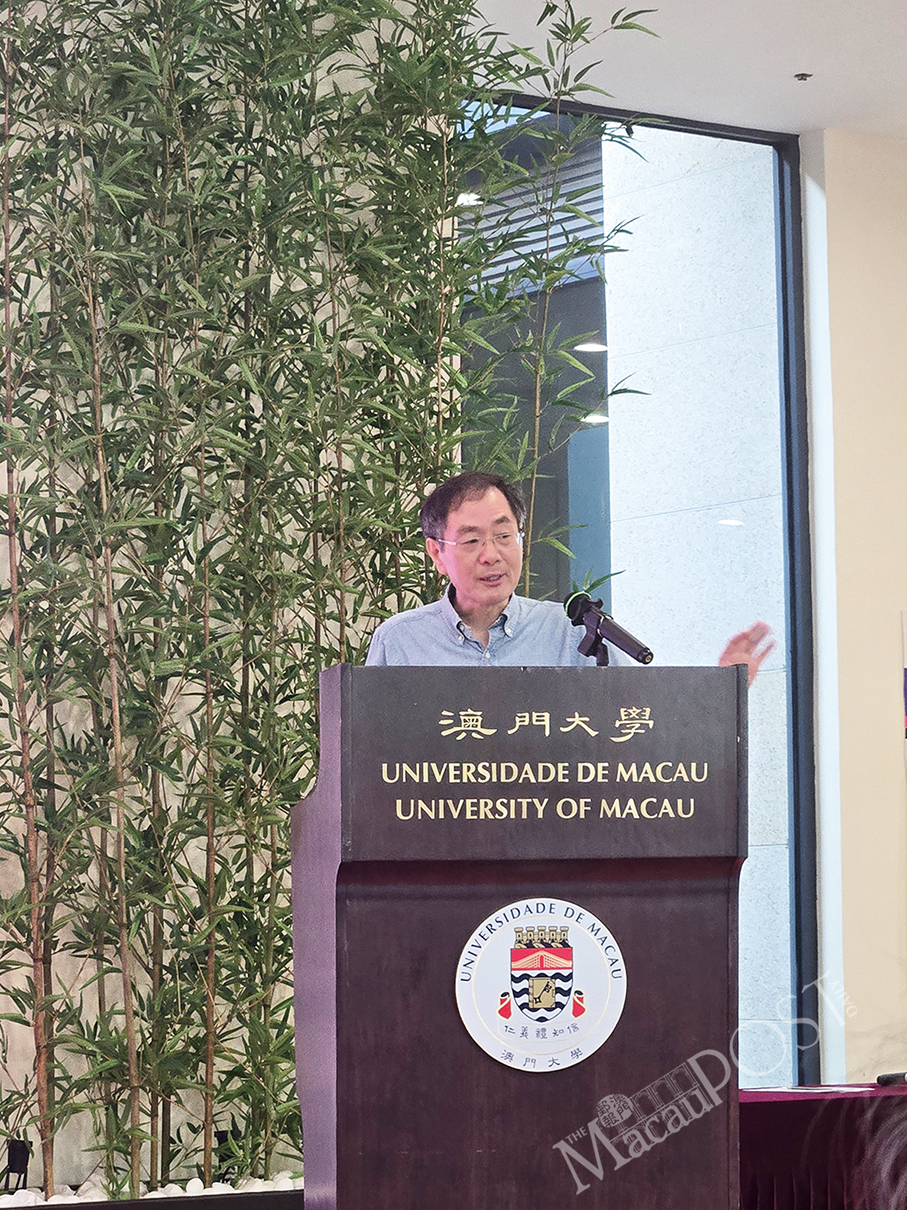
Wu presents his keynote speech at the University of Macau on Monday.
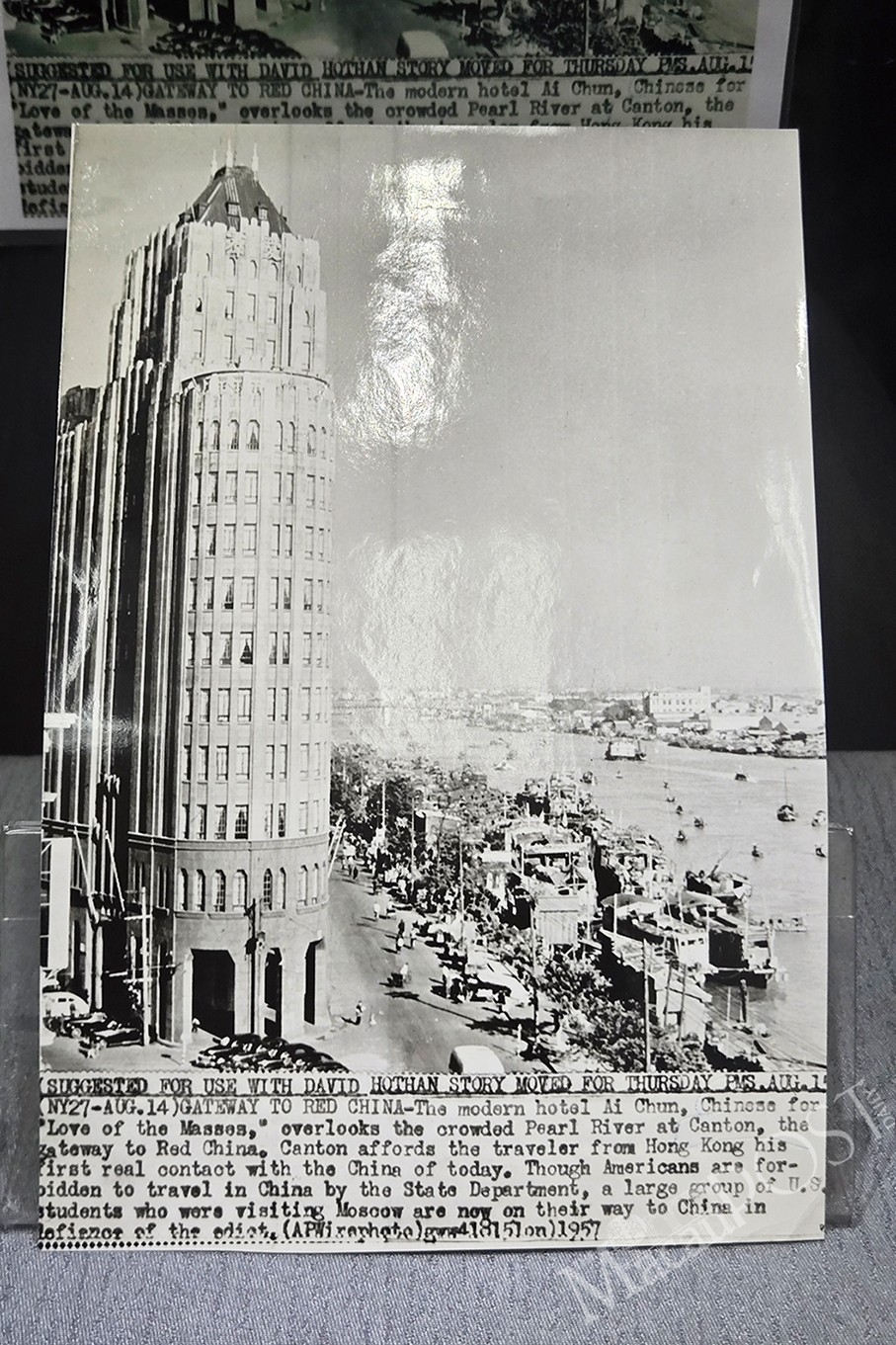
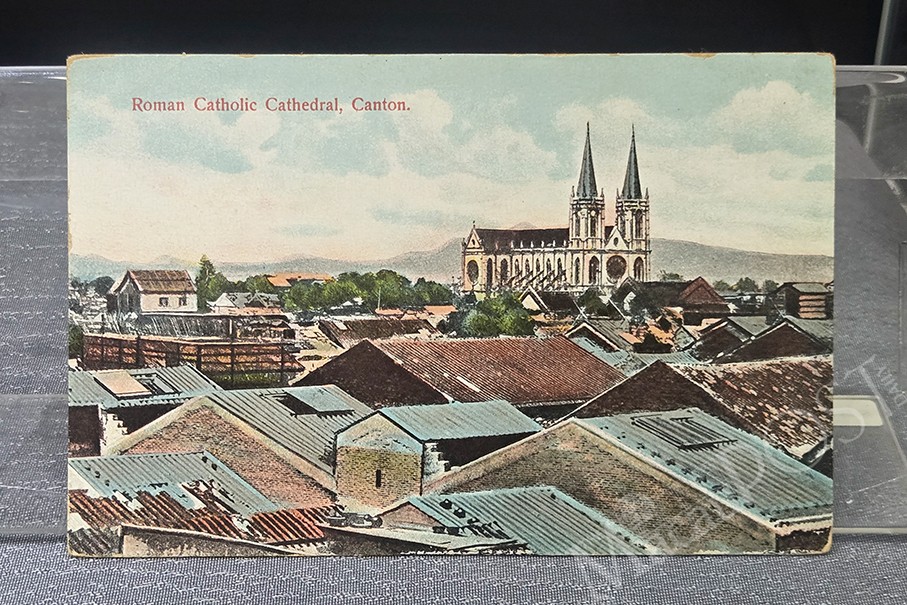
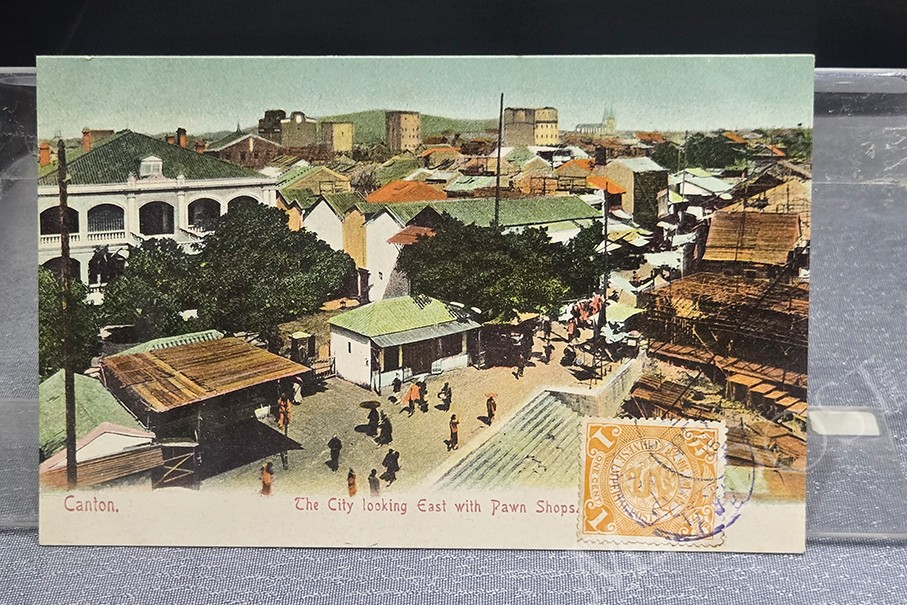
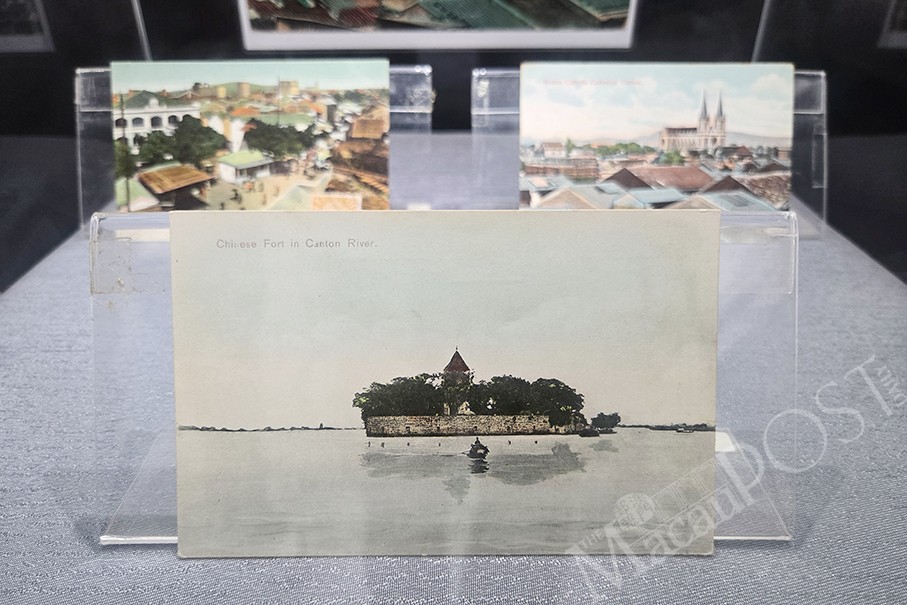
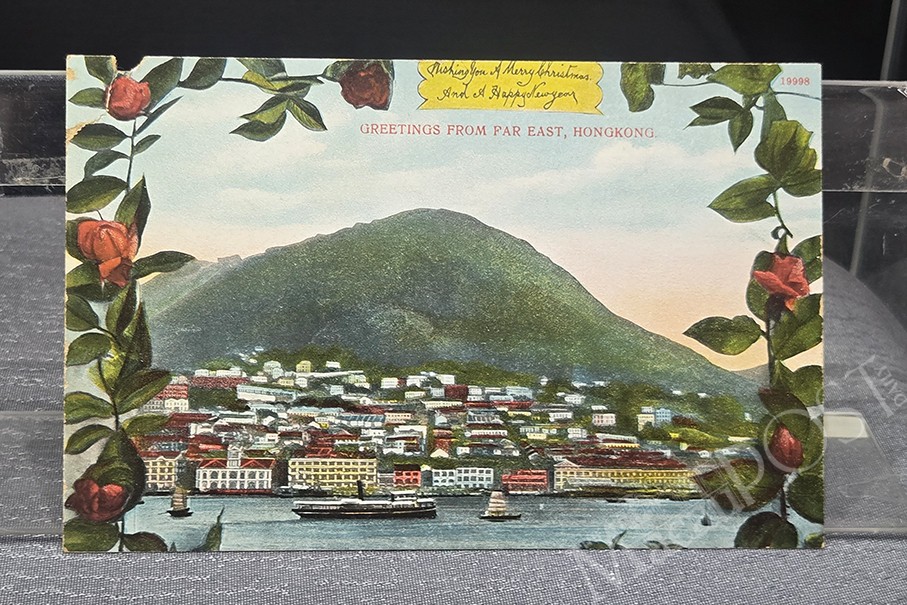
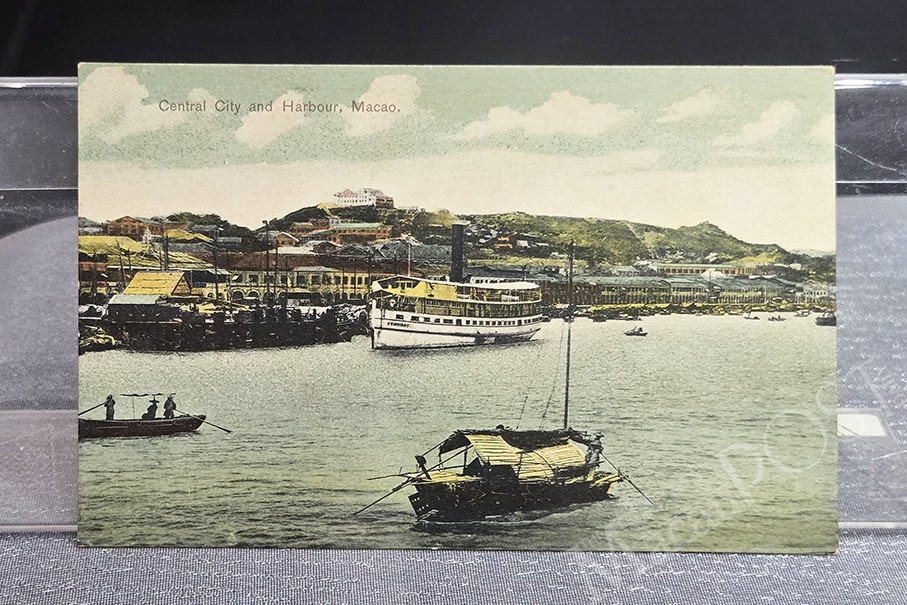
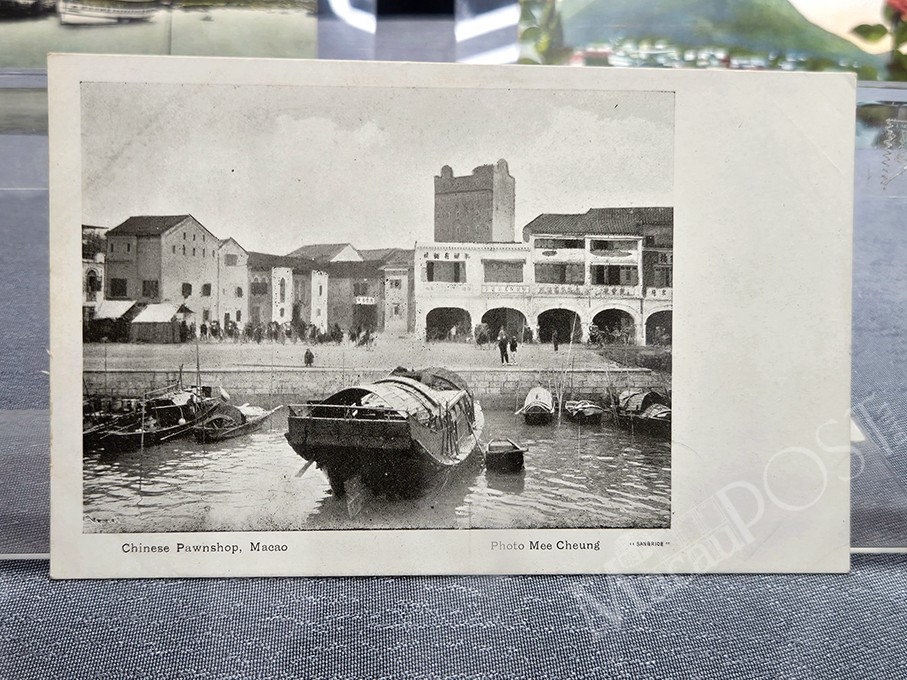
Photos and postcards from Canton and Macau are displayed at University of Macau E34.