

Interview by Armindo Neves
Last week, Macau saw a case of collective bullying involving minors. The Judiciary Police released details of the case on June 17. The incident involved a local underage female student who was physically assaulted – punched and kicked – by six local minors (three males, three females, aged between 11 and 15, and attending four or five different schools) at a residential estate in Areia Preta district. The victim was also forced to transfer 200 patacas via mobile phone as a “passage fee”. During the incident, one of the perpetrators filmed the assault on a mobile phone and shared it; the footage subsequently spread widely online.
In response to this case, on Friday, the Post interviewed Ho Ka Ian, vice-president of the Women’s General Association of Macau (commonly known as Fu Luen), to gain insight into how Macau can prevent and reduce the likelihood of such incidents occurring. The interview took place at the Fu Luen headquarters on Rua do Campo.
Local youngsters face lack of support systems for youth development
In light of this incident, Ho said that the case reveals three alarming warning signs:
Lack of self-protection awareness: When faced with violence and coercion across two different locations, the victim was paralysed by fear; she neither dared nor knew how to reach out to those around her for help.
Secondary harm: The footage of the assault was uploaded and circulated widely online, causing “secondary harm” and stigma to the victim. The psychological trauma from this is far more difficult to heal than any physical bruising, and could even lead to her refusing to go to school or fearing social contact.
The age of those involved: The perpetrators, the bystanders, and the victim are all minors—with the youngest being only 11 years old. This is no longer merely an issue of “naughtiness”, but a clear reflection of the inadequacy of the entire youth development support system.
When discussing violence among female adolescents, Ho pointed out that while Macau currently lacks systematic statistics on gender-based violence, community observations and relevant studies suggest that in the past, female adolescents tended to favour “relational aggression” such as verbal insults or spreading rumours. However, this case demonstrates that such aggression has escalated to physical violence.
She emphasised that this trend often stems from weak family bonds, a lack of parental supervision, and the fact that on social media platforms (such as the WeChat group involved in this case), young people – driven by a blind pursuit of group validation and a conformist mentality – become trapped in escalating conflicts with no way to withdraw.
Calls for improving child-friendly legal support mechanisms
Although Macau’s Education and Youth Development Bureau (DSEDJ) coordinated an immediate response from schools and counselling services following the incident, Ho believes there is still room for improvement in the government’s protection mechanisms for underage victims.
She strongly recommended the establishment of a “golden 24-to-72-hour” psychological crisis intervention system, shifting from a reactive to a proactive approach, so that psychological support can be activated at the very onset of an incident. At the same time, the current judicial procedures offer relatively weak child-friendly legal support, Ho said, suggesting the introduction of a “case manager” or “child advocate” system to accompany helpless victims and their parents throughout legal proceedings.
In response to calls from some quarters for lowering the age of criminal responsibility, Ho said that while she understands the public’s anger over violent incidents, simply lowering the age limit may not produce a significant deterrent effect. Instead, it could cause further psychological harm to young people whose development is still incomplete, Ho highlighted.
According to the Macau Penal Code, Macau’s age of criminal responsibility stands at 16.
Ho also said that Fu Luen advocates maintaining the current principle of “education in place of punishment”, but insists that the deterrent and corrective effects of the “educational supervision system for young offenders” must be strengthened. For example, structural violence awareness programmes should be incorporated into correctional plans, restorative justice through mediation should be introduced on a voluntary basis for both parties, and parents of perpetrators should be required to attend regular case follow-ups and parenting guidance sessions.
4 recommendations to weave a tighter community protection network
In order to prevent similar tragedies from recurring, Ho, on behalf of Fu Luen, put forward four specific policy recommendations:
First, establish a one-stop support service: This would bring together the Social Welfare Bureau (IAS), the Education and Youth Development Bureau, the Health Bureau (SSM), and the Judiciary Police (PJ) to provide victims with immediate psychological intervention, a child-friendly evidence-gathering environment, full judicial accompaniment, and follow-up psychological support for no less than six months.
Second, develop a framework for digital violence prevention education: Led by the DSEDJ, this would incorporate healthy digital citizenship, conflict de-escalation skills, and bystander responsibility into the curriculum from primary to secondary school. Building on the existing “School Safety Liaison Network”, it would also establish a cross-school early warning platform for youth at risk, enabling the sharing of high-risk signals.
Third, deepen parenting education and compulsory intervention: Schools should organise parent workshops each semester focusing on emotional health and online behaviour, and introduce mandatory parenting guidance for parents of students exhibiting high-risk behaviours, helping them to recognise warning signs in their children.
Fourth, build a community protection network: Call on neighbours and local businesses to remain vigilant, and to report to the police immediately when they observe groups of young people gathering and behaving disruptively. At the same time, appeal to the public to refrain from downloading, liking, or sharing footage of bullying, and to refuse to become accomplices in causing further harm.
Finally, Ho encouraged victims and their parents to face the situation with courage. She said that Fu Luen’s family service centres and psychological therapy centres are staffed with professional social workers and psychotherapists who, under the principle of confidentiality, can provide comprehensive support in areas including legal resources, family relationships, and emotional counselling, working together to weave a strong safety net for traumatised children.

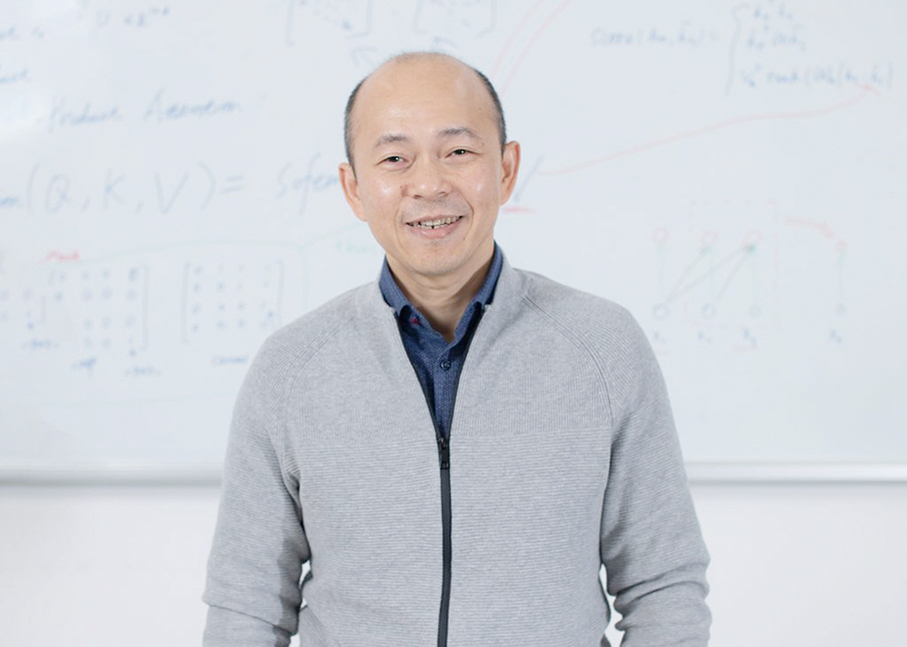
Women’s General Association of Macau (Fu Luen) Vice President Ho Ka Ian poses at Fu Luen headquarters on Rua do Campo on Friday. – Photo: Armindo Neves