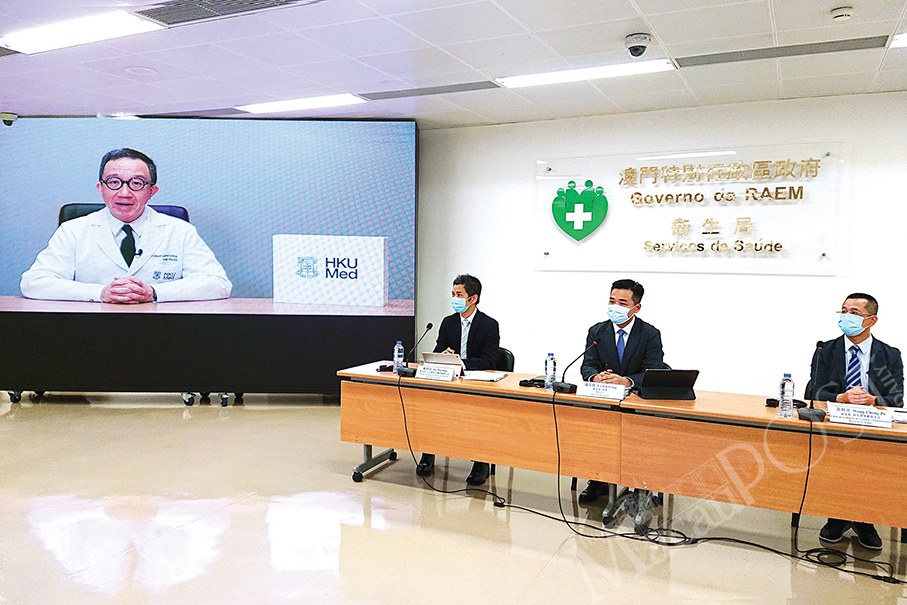


The local Health Bureau (SSM) yesterday issued a renewed warning for residents to take precautions against heatstroke, as the Meteorological and Geophysical Bureau (SMG) maintained a yellow hot weather alert and forecast persistently hot conditions over the next two days.
An SSM statement noted that high temperatures, combined with humidity and poor air circulation, can significantly increase the risk of heat-related illnesses, particularly for people engaged in outdoor or physically demanding activities, adding that when the human body is exposed to extreme heat, natural cooling mechanisms such as sweating and increased breathing are activated.
However, the statement underlined that in conditions of prolonged exposure to sunlight, heavy humidity, or insufficient ventilation, these mechanisms may fail, leading to a range of heat-related conditions.
According to the local observatory, the yellow alert is issued when the weather is forecast to be “very hot”. It is activated when temperatures are expected to reach or exceed 33 degrees Celsius in certain areas. Meanwhile, the orange alert signifies “extremely hot” weather, typically issued by the local observatory when maximum temperatures are forecast to surpass 34 or even 35 degrees Celsius.
According to the statement, four main types of heat-related illnesses were highlighted: heat syncope (fainting or dizziness caused by overheating), heat cramps, heat exhaustion, and heatstroke.
The most severe form, heatstroke, can cause body temperatures to rise to around 41 degrees Celsius, potentially resulting in neurological damage, organ failure, or even death if not treated promptly, the statement said.
The bureau advised the public to avoid prolonged outdoor activity during peak heat hours, wear light-coloured and loose-fitting clothing, and use hats or umbrellas for sun protection, the statement pointed out, adding that residents are also encouraged to stay in well-ventilated areas and use fans or air conditioning when possible.
The statement further emphasised the importance of maintaining hydration with electrolyte drinks while avoiding alcohol, coffee, and strong tea, adding that vulnerable groups such as the elderly, children, pregnant women, and individuals with chronic illnesses are urged to take extra precautions.
The bureau reminded residents to seek medical assistance immediately if symptoms occur. In severe cases, emergency services should be contacted via 999, and first aid measures such as cooling the body and moving the patient to a shaded or air-conditioned area should be applied while awaiting help.
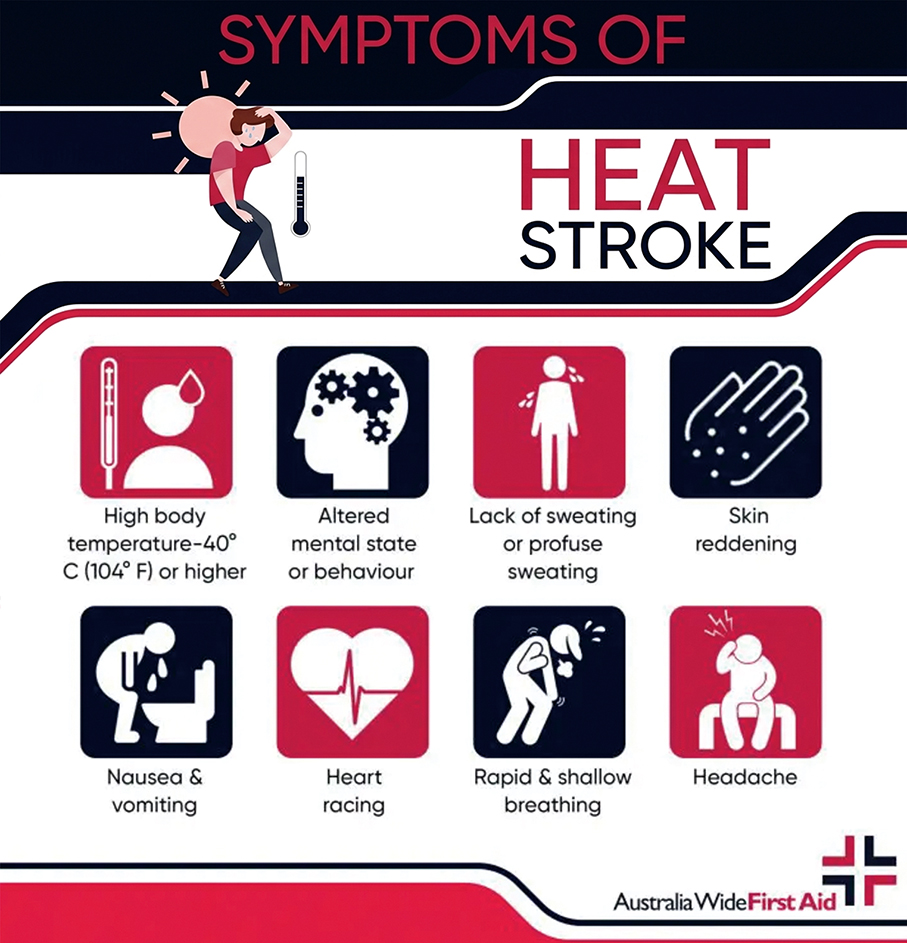
This image downloaded yesterday shows the symptoms of a heatstroke. – Photo courtesy of Queensland’s Australia Wide First Aid website.