

Interview by Rui Pastorin
As an East-West entrepôt, Macau sits on over 400 years of history, along with a rich cultural heritage. The importance of understanding or at least knowing about them cannot be understated, and for Macau’s young students and future generations, that remains especially true.
“Heritage is important because it’s part of them and they are part of Macau”, Macanese Youth Association (AJM) President António Monteiro said during an interview with the Post earlier this week. He also stressed the importance of having a sense of belonging, particularly among youngsters and the future generations as the city continues to promote, recognise and emphasise its cultural heritage.
The importance of having a sense of belonging
Having a sense of belonging allows one to recognise the value and legacy of the cultural heritage that surrounds them each day. “If we don’t feel this sense of belonging in Macau, I think they won’t have the pride to promote this [heritage] outside Macau one day”.
Therefore, Monteiro stresses the significance of bringing education and cultural heritage together. The best place to start? Schools, particularly at the primary school level, introducing cultural heritage in a light and basic way.
The primary school stage is also the most suitable as students are already able to read and write, as well as already have a sense of what certain topics are.
“If you start with schools, at least they can hear about it”, Monteiro said, noting that while interest might vary among students, at least they would be introduced to the topics to gain some knowledge to share with others and even pursue the topics further down the line.
He added that a number of schools, though not all, already invite representatives from local organisations and cultural associations to introduce Macau’s cultural heritage and related history to youngsters in a light and basic way.
“The problem now is they don’t even know what it [cultural heritage] is. If we don’t go through a cultural association or people who can pass on this knowledge, they won’t know”, noting examples such as Patuá, Macau’s severely endangered Portuguese-Asian Creole. “This is only an example. Imagine the gastronomy, old traditions and festivities”.
Learning about cultural heritage allows them to touch on something directly or indirectly, giving them the autonomy as to whether they want to pursue it further – whether through books, school, cultural associations or further studies. “But at least they started with something basic”, being part of building a solid foundation.
Monteiro added that it is a gradual process that he was glad to see starting, perhaps later opening discussion to see and fill in gaps that might exist.
It is, all in all, a joint effort between the Cultural Affairs Bureau (IC), the Education and Youth Affairs Bureau (DSEDJ) and the relevant associations, moving forward step by step, with hopes for finding a way to further integrate it within schools in the future, he said.
Ways to foster interest
With this in mind, fostering interest and introducing youngsters to the subject can be done in a fun, light and engaging way, all with the aim of allowing the younger generation to attain a rich knowledge for the future.
Aside from reading books, continuing talks at schools, and following the materials using the established official narratives available, videos can also be used, along with continuing or arranging more field trips to museums and heritage sites. Games that allow students to play around with heritage knowledge, projects, and competitions in photography or videography that also help them understand what they are shooting can also stimulate interest, Monteiro said.
Joint collaborations with related associations to promote knowledge into schools and the creative integration of technology also open up fun ways to foster interest in Macau’s cultural heritage, he said, adding that, down the line, acquiring more knowledge and understanding comes with potential opportunities.
Understanding leads to opportunities
When students understand or know more about the city that they live in, there’s a “big benefit”, Monteiro said, among which is being equipped to properly introduce or talk about Macau and its rich history and heritage to those visiting or wanting to learn more about the city. “If they have this knowledge, they will not promote the wrong message”.
Building on this point, it extends to economic diversification and even their potential careers, according to Monteiro. Concerning youngsters’ future career ladder, students can later pursue positions in related government entities, and become knowledgeable specialists or ambassadors. For the entrepreneurial route, they will have the knowledge to develop representative products, taking deeper aspects beyond what one normally might use as inspiration.
It doesn’t stop there, with Monteiro adding that it can also be useful when considering the opportunity to produce movies in Macau, opening international opportunities for local talent along with local production.
“It’s very important to learn about heritage. If you don’t have a sense of belonging, you won’t know or understand who you are. If you have a sense of belonging, I think you can be more assured with what you are promoting to others. If not, people will get the wrong message about Macau”.
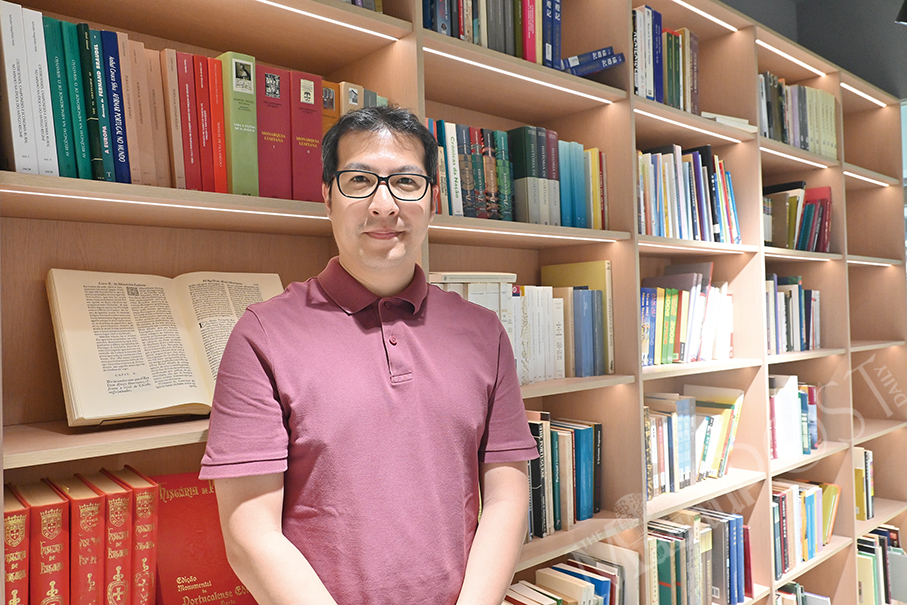
Macanese Youth Association (AJM) President António Monteiro poses for a photo at the library of the International Institute of Macau (IIM) in Nape. Monteiro is also IIM’s secretary-general. – Photo: Rui Pastorin