

Interview by William Chan
Driven by the belief that theatre can serve as a catalyst for reflection, dialogue, and social healing, the Macao Applied Theatre Association (MATA) has spent the past months bringing interactive drama directly into everyday life.
In an exclusive interview, theatre scholar and MATA president Mabina Choi Leng Chi told the Post how the association’s initiatives this year are bridging stagecraft and real-world issues – ranging from family conflicts and youth emotional literacy to building a sustainable platform for local arts criticism.
Rewriting household struggles on stage
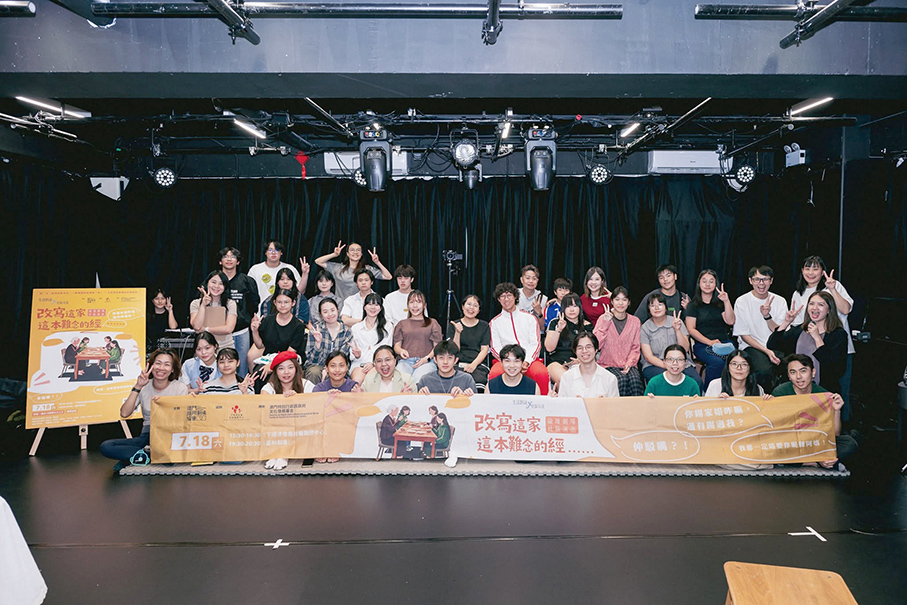
One of MATA’s flagship initiatives this summer was Rewriting the Hard-to-Read Family Scriptures (改寫這家這本難念的經), a forum theatre project supported by the Cultural Development Fund. Concluding its performances in mid-July at the Sing Wo Theatre in Fai Chi Kei and Ha Van Baptist Social Service Centre, the production attracted local residents as well as audience members from Hong Kong and Shenzhen.
Unlike conventional plays where spectators passively watch, forum theatre invites the audience to intervene. During the performances, audience members called out to stop the action, stepped onto the stage, and replaced actors – specifically taking on the role of the mother – to test real-time strategies for resolving intense domestic disputes.
“Applied theatre isn’t merely about entertainment or commercial appeal,” Choi noted. “It creates a safe, comfortable space for people to step outside their comfort zones. In forum theatre, there are no predefined ‘correct’ answers. Through the guidance of a ‘Joker’ – a facilitator bridging the actors and the audience – citizens explore different choices on stage and reflect on how those decisions might transform their daily relationships and family communication.”
The arts critique workshop
Beyond interactive performance, MATA tackled a persistent void in the local art scene: the lack of written records and critical reviews for children and youth theatre. From July 19 to August 10, the association hosted the Arts Criticism Co-Learning Workshop.
Preceded by outreach lectures across local secondary schools reaching over 100 students from April to June, the workshop featured lectures by Choi alongside veteran critics Hsieh Hung-wen and Wu Yueh-lin from China’s Taiwan region. Participants engaged in structured analysis, attended local youth productions, and interviewed creative teams to dismantle the notion that viewing theatre is “just for entertainment.”
“Children’s and youth theatre has long suffered from a shortage of documented evaluation,” Choi pointed out. “Reviewing children’s theatre requires understanding child psychology, educational philosophy, and theatrical aesthetics. By training local enthusiasts to write critical reviews, we hope to establish a dedicated publishing platform over the next five years, preserving Macau’s theatrical footsteps.”
As a reviewer myself, I often struggle to find angles to comment on children’s art. Choi advocated a distinction between showcases and professional productions. When reviewing showcases, she argued that critics should focus on the societal issues raised, theatrical elements, and educational reflection. Conversely, for professional children’s theatre, evaluation must move beyond superficial entertainment to scrutinise how thematic depth, acting, and design elements work together, underlining that the greatest artistic triumph in youth theatre lies in seamlessly transforming educational intent into rich, non-preachy theatrical aesthetics.
Emotional literacy & school tours
Looking ahead to the upcoming school season, MATA is preparing a new interactive project focused on youth mental health and emotional expression. Recognising the emotional pressures and resilience challenges faced by young students, the association is creating a portable touring performance designed specifically for kindergarten and primary school environments.
The production utilises an innovative “pop-up book” format – a light, dynamic visual structure that unfolds during storytelling workshops to help children process complex emotions in an approachable, tactile way. Alongside the school tours, MATA plans to host practitioner sharing sessions and masterclasses featuring leading theatre directors from Hong Kong and Beijing, introducing collaborative creation techniques to Macau’s youth.
For Choi, all these efforts align with a single underlying vision: using drama to give back to society. “Whether we are addressing family dynamics, training critical writers, or helping young children understand their feelings, drama holds immense functionality in this contemporary moment,” Choi underlined. “It gives our community a voice and a mirror to explore life together.”
For more information, visit:
www.facebook.com/MacaoAppliedTheatreAssociation
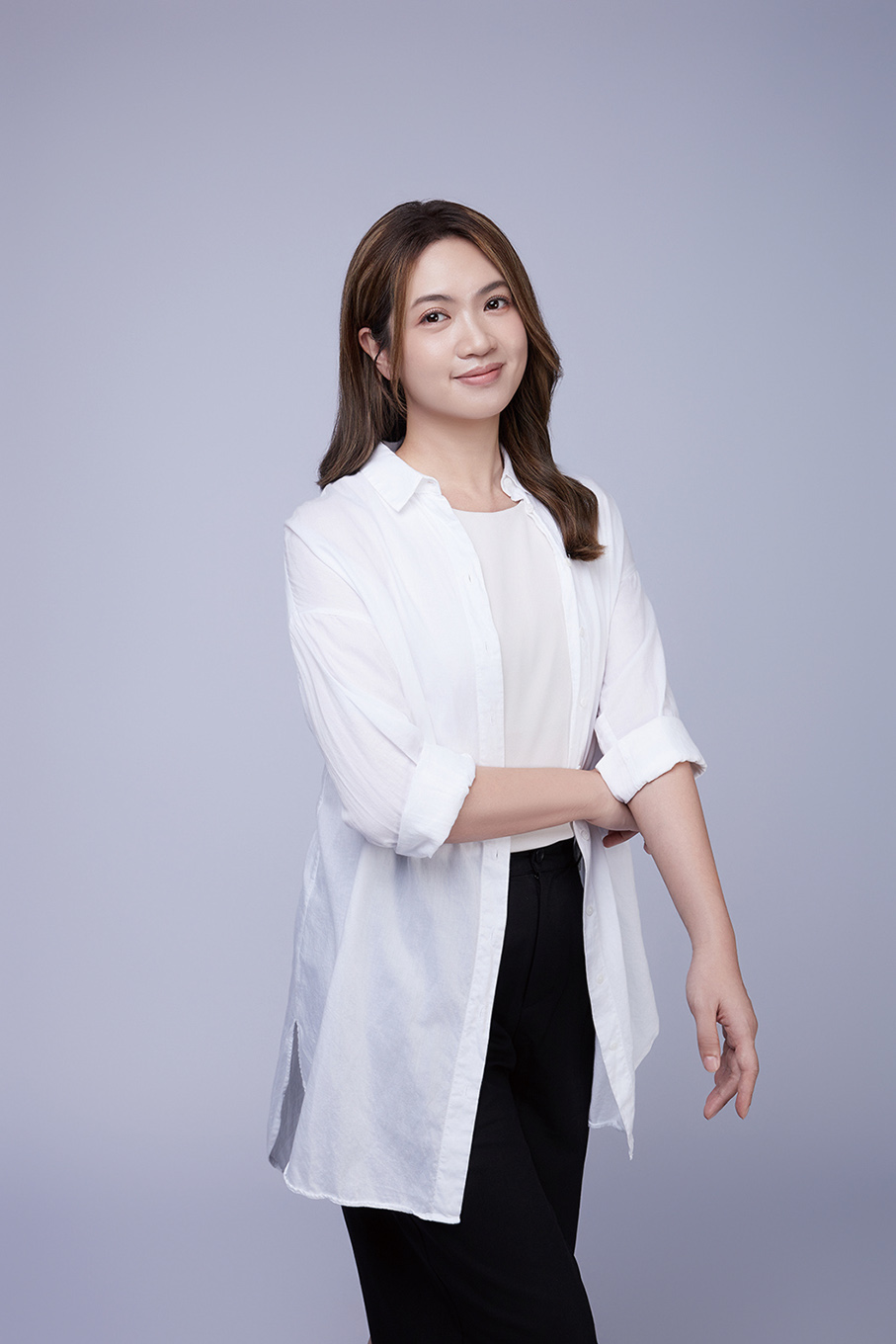
This undated file photo shows Mabina Choi posing.
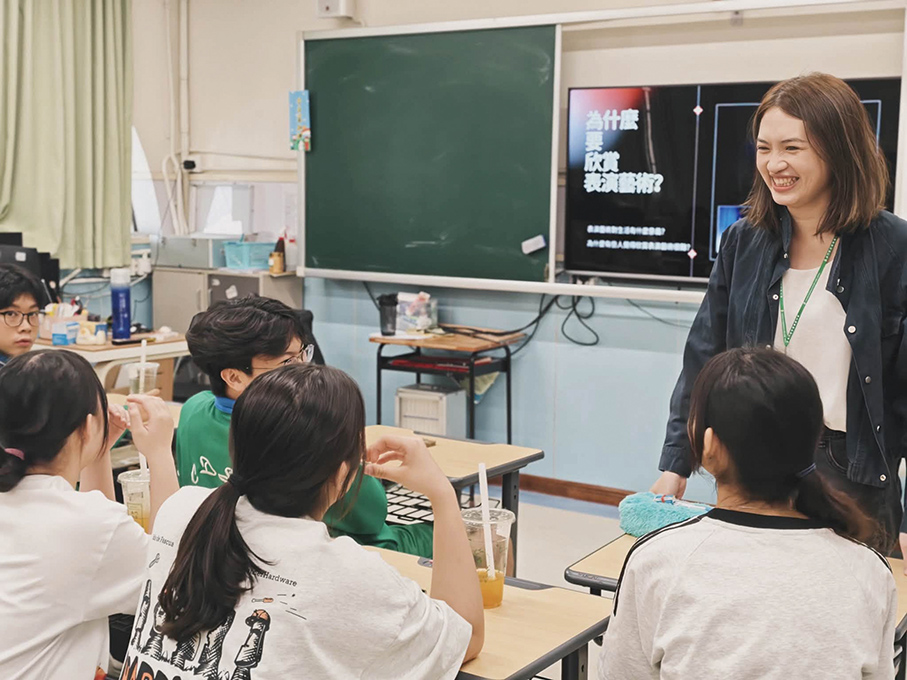
Mabina Choi hosts an outreach lecture at local secondary school, giving insights on how to appreciate art. – Photos provided by the Macao Applied Theatre Association (MATA)
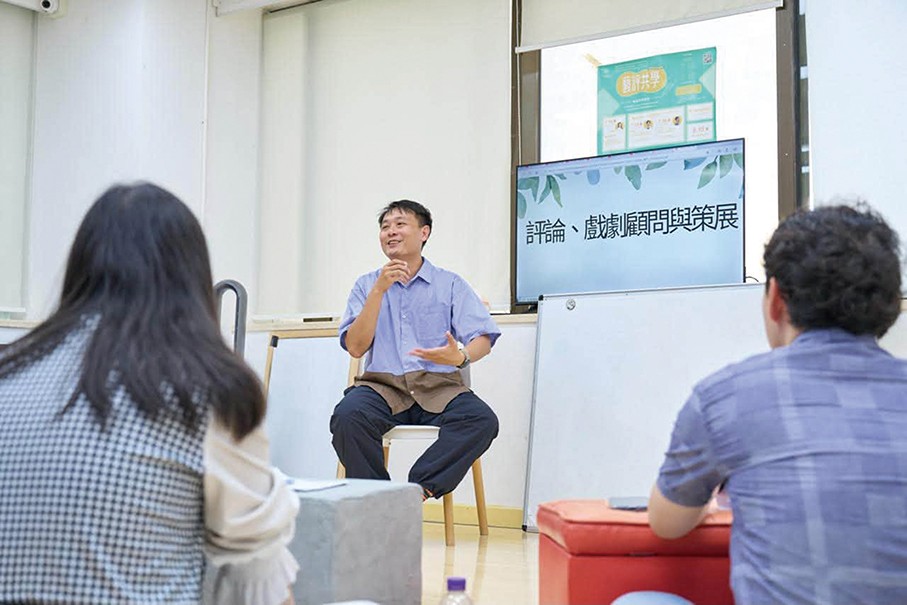
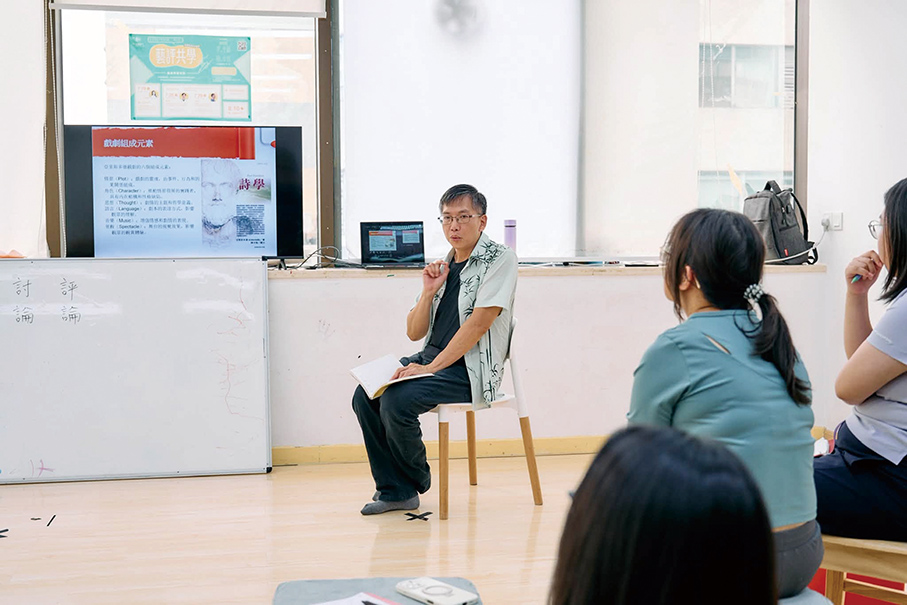
Veteran Taiwanese critics host review workshops in Macau earlier this year.
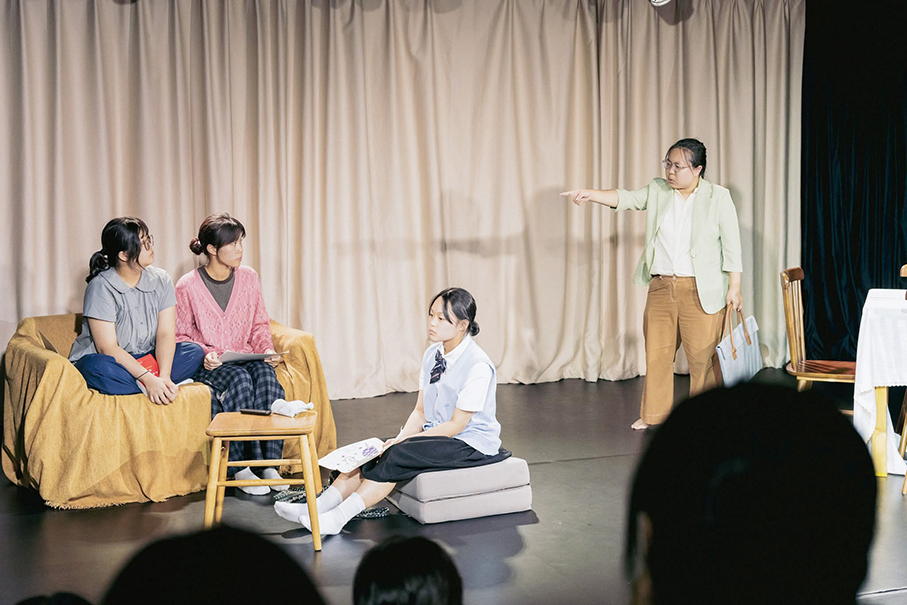
First-time actors perform Rewriting the Hard-to-Read Family Scriptures at the Sing Wo Theatre in Fai Chi Kei last month.