

Chi Lam Vai concern group conveners Ip Tat and Leong Heng Teng announced, following a meeting with the government-appointed “Specialised Working Group for the Renewal and Revitalisation of Pátio do Espinho” on Friday, that the ancient walled village’s revitalisation plans should prioritise housing security.
The meeting was held in the village.
The working group, headed by Secretary for Transport and Public Works Raymond Tam Wai Man, has been established under the “Leadership Group for the Promotion of Urban Renewal”, which is chaired by Chief Executive Sam Hou Fai.
Tam and Sam did not attend the meeting.
Chi Lam Vai (also known as Chi Lam Chuen – 茨林村), known in Portuguese as Pátio do Espinho (“Courtyard of the Thorn”), is a 400-year-old former walled village. It is situated just a street away from the UNESCO World Heritage-listed Na Tcha Temple – one of Macau’s two temples dedicated to the tutelary deity known in Mandarin as Nezha – and close to the Ruins of St Paul’s.
Urgent need to resolve water, electricity, and fire safety issues
Leong and Ip noted that the village currently accommodates between several dozen and nearly a hundred residents across about 120 individual houses. Although interactions between the local community and government entities, such as the Municipal Affairs Bureau (IAM), have been frequent in recent years – resulting in greening initiatives and environmental improvements – the degradation of basic infrastructure remains significant, making it an urgent priority for revitalisation.
They said that the revitalisation project should strictly follow the principle of “securing safe housing before initiating revitalisation.” At present, the village faces hazards such as surface-exposed water pipes and tangled, ageing power cables, with some residents reporting that low electrical capacity leaves them unable to use a rice cooker while running the air conditioning. The concern group urged the task force to prioritise upgrading water and electricity pipelines, increasing cable capacity, improving drainage systems, and installing suitable fire safety equipment and fire hoses to fundamentally resolve these everyday livelihood and safety concerns.
Building a community of living heritage
Regarding the long-term vision for the area, the concern group expressed hope that the authorities will strictly avoid large-scale demolition and construction. Instead, they recommend making good use of vacant land within the village for greening and micro-renovations, while ensuring the protection of ancient trees. Additionally, leveraging its unique geographical proximity to the Ruins of St Paul’s and Na Tcha Temple, the village should fully preserve its authentic residential atmosphere and vibrant local life.
Ip and Leong also said that the group will continue to serve as a bridge, supporting the government in establishing an open and transparent communication channel. By actively conveying the voices of local residents, it aims to help turn Chi Lam Vai into a win-win model for sustainable heritage conservation, resident well-being, and cultural preservation.
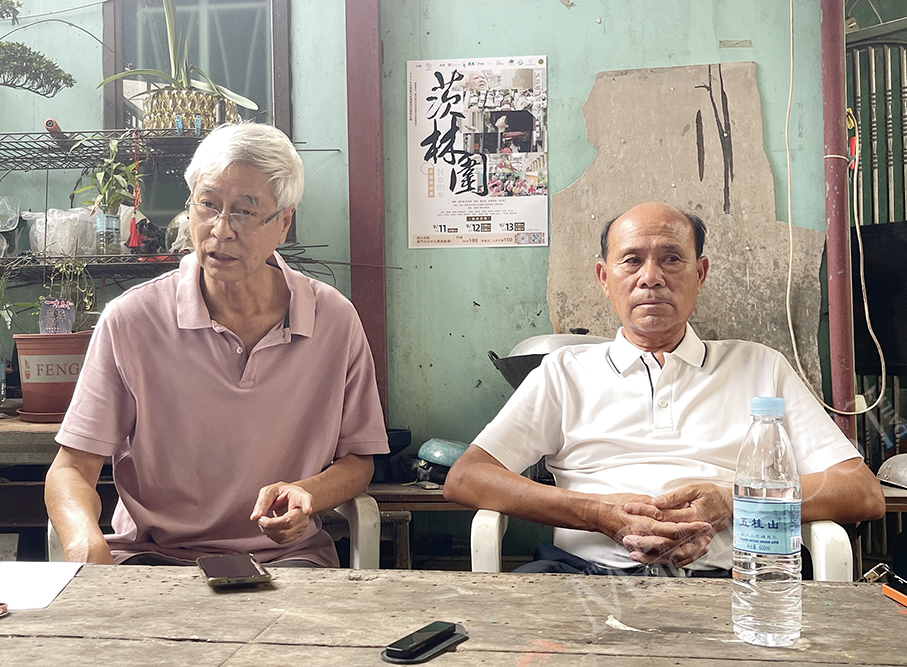
Chi Lam Vai concern group conveners Ip Tat (right) and Leong Heng Teng address Friday’s press briefing in Chi Lam Vai. – Photo: Armindo Neves