

Interview by Armindo Neves
On the first day of the new school year on September 1, a severe assault involving a teacher and a student occurred at a local school, where an 18-year-old Form 6 student used drain cleaner to injure a female teacher in her 60s, sparking widespread public concern and distress.
Speaking to the Post in a phone interview last week, local lawmaker and Vice-President of the Women’s General Association of Macau (Fu Luen) Sharon Loi I Weng expressed deep sympathy to the seriously injured teacher and her students, and said she felt immense pity for the student who has been charged with intentionally causing bodily harm.
Loi, who is also vice-principal of Fu Luen School, emphasised that any school campus should offer a warm and safe environment. She stressed that the healthy physical and psychological development of students is not the sole responsibility of a single school or teacher.
She called on civil society as a whole to share this responsibility and build a lifelong mental health protection network.
Long-term suppressed emotions trigger extreme behaviour
In the interview, Loi said that although details of the case await further investigation by the police and judicial authorities, existing information suggests that friction between the student and the teacher involved may have begun as early as junior secondary school, with suppressed emotions remaining unresolved for years.
In today’s hyper-connected digital and social media era, face-to-face communication among students has decreased, while exposure to violent content has increased, Loi said. She added that when facing setbacks or grievances, students lacking healthy outlets are more likely to vent their grievances through extreme measures.
Strengthening home–school cooperation and relieving teacher pressure
“The education sector currently faces pressure from educational reforms and declining birth rates. With teachers’ energy stretched thin, it is difficult for them to tackle increasingly complex student emotional and behavioural issues alone,” said Loi.
To address this, communication and cooperation between home and school must be strengthened and parents should offer more care and companionship to spot emotional changes early, she said. Furthermore, Loi commended the Education and Youth Development Bureau (DSEDJ) for actively expanding school social worker and psychological counselling teams in recent years, allowing “professionals to handle professional tasks”. Operating as impartial third parties, these specialists can more effectively foster consensus between homes and schools and support student counselling.
Systematising & proactively embedding mental health education
To prevent crises at their source, Loi put forward two key recommendations:
Proactive mental health education: Drawing on the Chinese mainland’s experiences, she recommended incorporating mental health education into the formal curriculum framework in the future to establish system-wide teaching. A “life-course” emotional literacy curriculum should be implemented, teaching young children to recognise and manage emotions starting from crèche level.
Refining regulations on dangerous items and express referral paths: The needs of integrated students and high-risk cases should be continuously reviewed, alongside stronger safety promotion and home–school guidance regarding the ban on dangerous items on campus. Simultaneously, an emergency “green channel” for referrals should be established to ensure high-risk students receive timely medical and psychiatric professional support, Loi said.
Additionally, Fu Luen and its subsidiary district family service centres and psychological counselling centres will continue to provide free psychological resources, offering community support to teachers, students, and residents in need at any time to jointly build a safety barrier for campuses and the wider community, according to Loi.
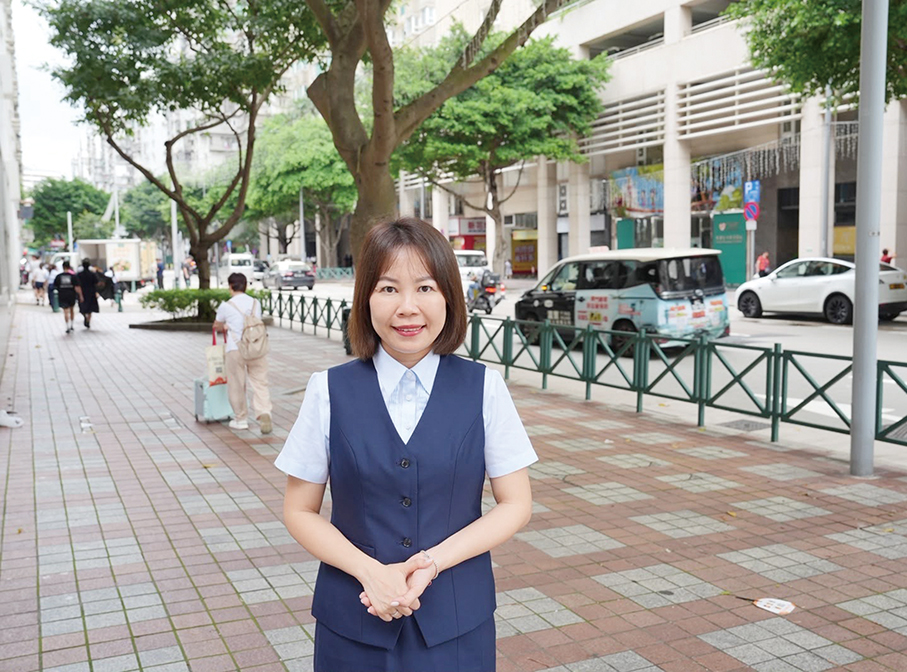
Undated file photo of Women’s General Association of Macau (Fu Luen) Vice-President-cum-lawmaker Sharon Loi I Weng. – Photo courtesy of Fu Luen