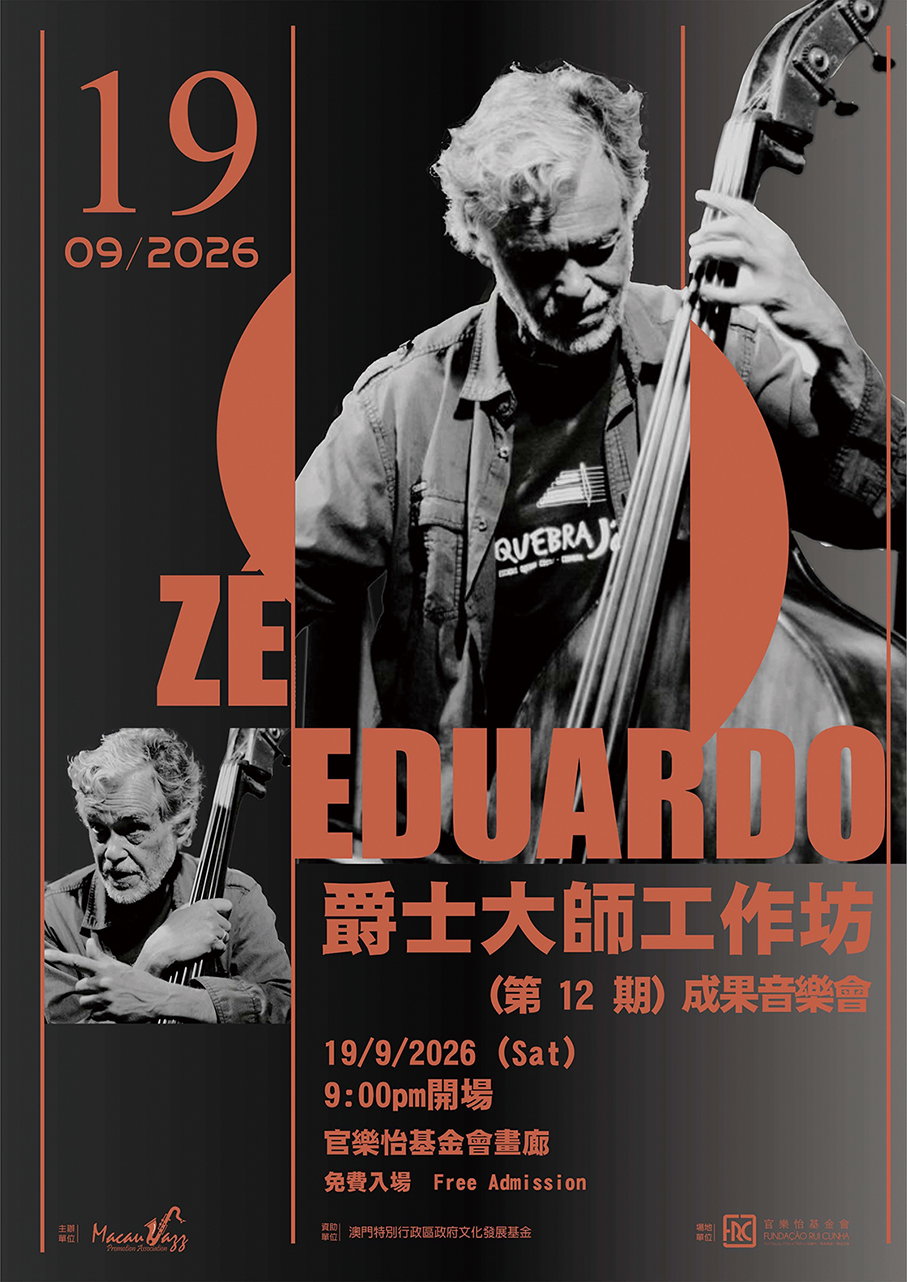


The Rui Cunha Foundation Gallery will play host to a showcase performance highlighting the results of the 12th Jazz Masterclass Workshop tomorrow.
Behind this workshop is Zé Eduardo – born in Lisbon in 1952 and widely dubbed the “godfather of Portuguese jazz.” A regular visitor to Macau since 1996, and a regular interviewee for the Post, Eduardo has collaborated closely with the Macau Jazz Promotion Association (MJPA) since 2013 to cultivate local musical talent.
My first interview conducted with Zé Eduardo was in 2023, at the Orient Foundation’s local headquarters, where he was staying. Back when I still hadn’t been in touch with jazz. Now, as I get more in touch with jazz, including local players, I recognise his importance to local jazz improvement.
Reflecting on the evolution of Macau’s music scene, Eduardo notes an immense shift since his initial visits. In his early years teaching in the territory, jazz lacked a structured foundation; amateurism prevailed, with local enthusiasts relying almost entirely on visiting musicians to glean insight into the art form. Today, the landscape is gradually reshaping itself, with many prominent and professionally trained jazz musicians in the local scenery, though Eduardo emphasises that building a self-sustaining jazz ecosystem – comprising local teachers, bandleaders, and venues – requires an integrated process where audiences and performers grow side by side. He highlights the necessity of government support, educational grants for young musicians to study abroad, and, crucially, small venues that regularly put on local bands.
Eduardo points to past successes, such as the “Jazz Mission Big Band” Christmas concerts supported by the Cultural Affairs Bureau (IC), which brought together Portuguese and Chinese musicians from Macau for performances locally and in Portugal in 2024.*
For him, these initiatives represent more than mere commercial sets; they serve as cross-cultural incubators that offer young musicians invaluable personal and musical interactions. Despite these positive steps, Eduardo stresses that Macau remains at the beginning of its transformation. “While the environment has improved significantly over the past decade, a persistent shortage of intimate clubs continues to bottleneck consistent growth,” he underlined.
This structural challenge is not unique to Macau. Eduardo observes that musicians across Europe face similar financial hurdles, often balancing teaching responsibilities with gigs due to the financial constraints of smaller spaces. Yet, the drive to build educational pathways remains strong, even as Eduardo shifts his personal focus towards performing and composing at this stage of his career.
Mars Lee Siu Hong, chairman of the MJPA, echoes Eduardo’s stance on the necessity of intimate settings. While Macau is famed globally for its massive resort arenas, Lee highlights that a parallel grassroots scene is steadily taking root in local lounges, cultural foundations, and smaller spaces. Organisations like the MJPA continue to drive this movement through regular workshops and collaborative showcases like tomorrow’s concert at 9:00 p.m. “As local audiences increasingly seek authentic, close-up cultural experiences, these smaller venues serve as the essential heartbeat and incubator for Macau’s homegrown jazz talent,” Lee said.
*
www.macaupostdaily.com/news/23649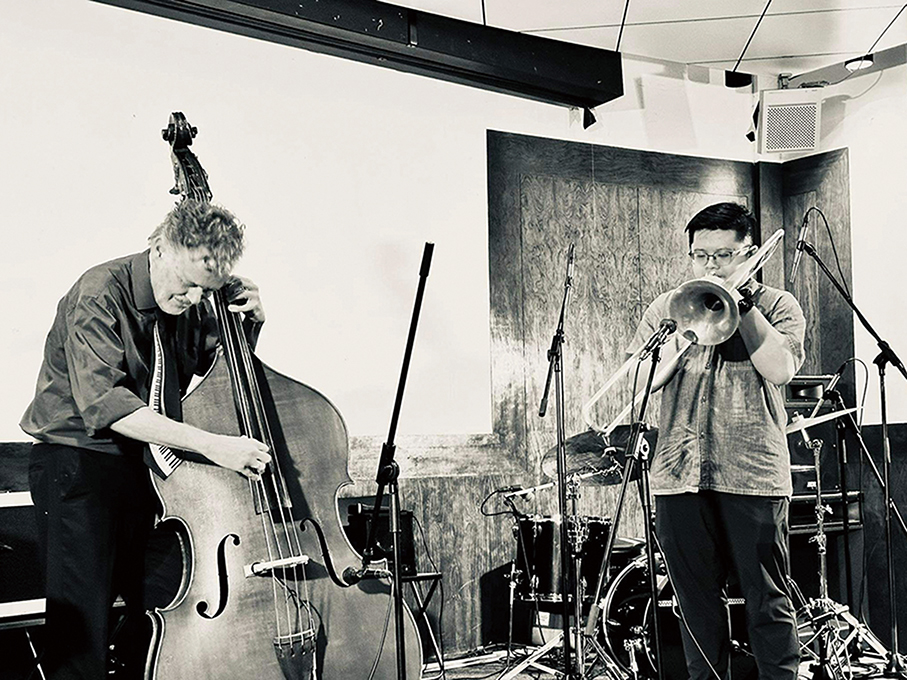
Zé Eduardo plays a duet with local trombonist Gregory Wong Weng Hou at the Orient Foundation in 2023. – Photos provided by Mars Lee Siu Hong
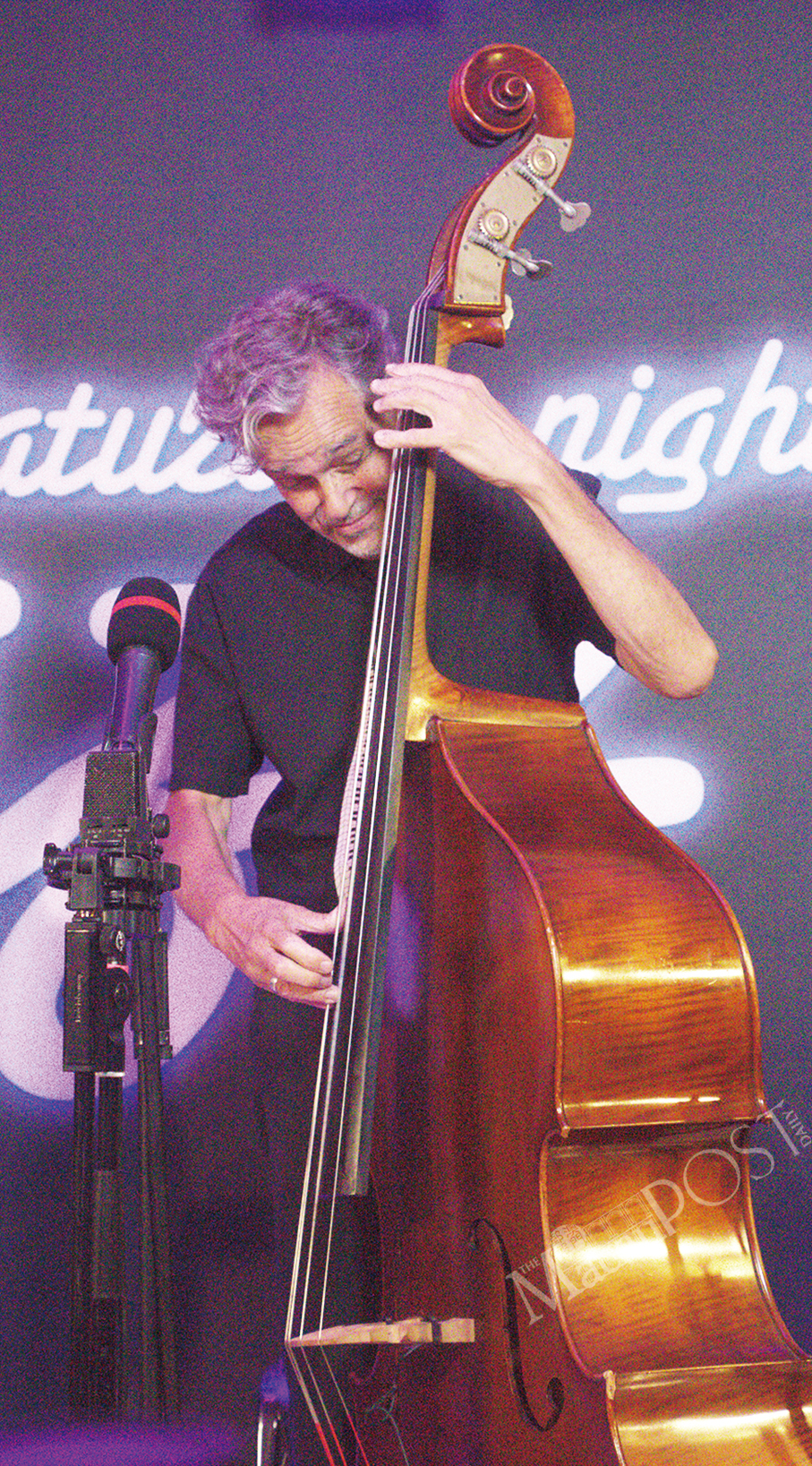
Zé Eduardo performs during his Jazz Workshop Presentation Concert at the Rui Cunha Foundation (FRC) in Nam Van last year. – Photo: Khalel Vallo
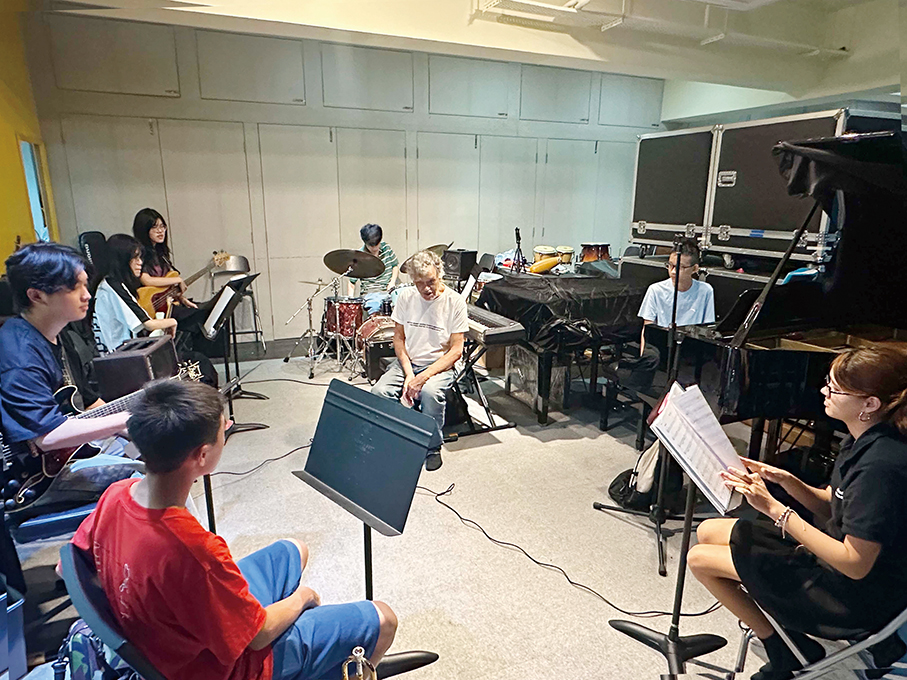
Zé Eduardo (centre) coaches local musicians at the venue of the Macau Jazz Promotion Association (MJPA) in Areia Preta district earlier this month.
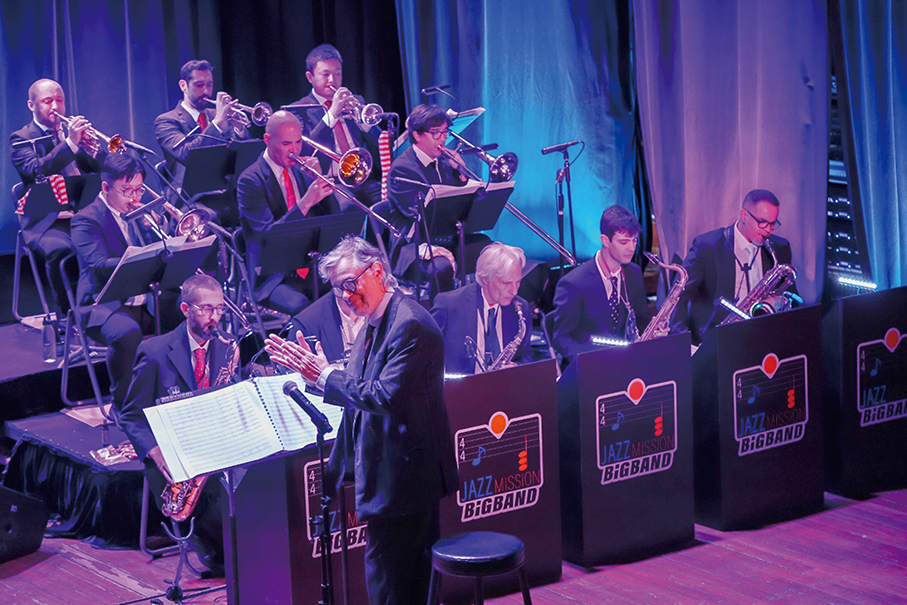
Zé Eduardo conducts the Jazz Mission Big Band at the Dom Pedro V Theatre on December 21, 2024.