

Interview by Lesley Wells
Critique by William Chan
Peggy Chan Pui Ian has been playing the guzheng from a very young age after she heard it being played on television and fell in love with the sound. She has played for President Xi Jinping on three occasions, as well as former chief executive Fernando Chui Sai On and various other dignitaries over the years.
Now Chan has graduated from university, she is teaching music, and has published scores of some of her compositions, so life is good.
Chan graduated from the Central Conservatory of Music (CCOM) in Beijing with bachelor’s and master’s degrees in guzheng while also studying composition.
Chan sat down with the Post earlier this month near Don Bosco school to discuss what has been happening with her since she graduated in July this year.
Chan said, “I always wanted to be a teacher and I am now teaching music at Guangdong University of Foreign Studies (GDUFS). It is great as I can arrange my schedule to fit me, which gives me time to perform and write music.”
Chan went on to say that she has actually published some of her compositions in a book, Universe at the Fingertips, which features eight pieces of music, five of which were composed by Chan and the other three arranged by her.
It all started when she was experimenting with different styles – jazz, traditional, tango, folk songs – and put them on the internet for fun.
“I didn’t think to publish any of my music, but so many people contacted me for the scores of some of them that my teacher encouraged me to publish them,” Chan said.
She said that she went into a recording studio and then wrote everything down: “It was a magical moment, and when I got a draft of the book, it was the first time I had seen my music in a book. It was really weird, and I kept thinking – I’ve done it!”
She added, “Some of the pieces I probably wouldn’t write like that now, because I was younger and that was the place I was in; it is a personal journey.”
Currently, Chan is trying to organise a concert for next year. “I am still negotiating that,” she said. She went on to add, “I am writing an opera about the mental health of students which they [the students] will perform in December, and then we shall take it on the road.”
So, all in all, Chan is living the dream and doing exactly what she wants to do – play her music.
Critique of Peggy Chan’s music by William Chan
My previous review described Peggy Chan as an artist determined to demonstrate the guzheng’s contemporaneity.* Her new score collection, Universe at the Fingertips, confirms that this ambition extends beyond the concert stage. Bringing together compositions and arrangements in styles ranging from traditional music and jazz to folk songs, tango, and contemporary music, the collection presents the guzheng not as a museum piece, but as a living instrument capable of speaking to the present.
Chan’s most distinctive achievement is the way she connects musical experimentation with Macau’s cultural memory. Falling Bead Curtain, adapted from a classic Cantonese instrumental work and rewritten for a guzheng duet, gives familiar material a new texture and a sense of dialogue. Tomorrow’s Moonlight, based on a classic Cantonese nursery rhyme, approaches heritage through childhood memory and local feeling.
Preface of Nanyin, as she mentioned in a previous interview, is particularly significant. Inspired by Macau’s intangible cultural heritage of Dei Seoi Naamyam**, the work transforms a local vocal and narrative tradition into contemporary guzheng language. It demonstrates that cultural preservation need not mean simply reproducing the past; it can also involve translating tradition into a new artistic form.
While there is no doubt of her technical mastery of the instrument, as well as her in-depth knowledge of Chinese music, other aspects, in my opinion, require more refinement – especially in style and imagination. Walking in Paris first reimagines Erik Satie’s Gymnopédies, a beautiful take, but it falls short of capturing the wistful and tender sentiment of the original. The same piece then includes a short section with a 12-bar blues progression. Exceptional technique again on Chan’s instrument, but it appears to lack interaction with the rhythm section and lacks the blues inflection that makes the style signature. It missed a great opportunity to present the “singability” side of the guzheng.
Overall, the collection is a worthwhile achievement. Tango: Dance of Strings brings the instrument into a sharply rhythmic and dramatic setting, matching the passionate spirit of the tango. Mirror Flower, Water Moon and Imagery of the Tang Dynasty further explore the guzheng’s relationship with other instruments and really blend well together. We look forward to a live performance from Chan featuring her new pieces.
Chan’s music can be heard on Spotify - Listen to 指間萬象 Universe at the Fingertips - Album by 陳佩欣 Pui Ian Chan | Spotify
*www.macaupostdaily.com/news/20291
** 地水南音. The direct meaning of “Dei Seoi Nam Yam” is “Earth and Water Southern Sound”, but its cultural meaning is “Naamyam performed by blind artists” – 뒈彊 (“Earth and Water”) being an old, respectful term in Guangdong for blind people. In Mandarin, “naamyam” is pronounced “nanyin”. – Gemini/DeepSeek
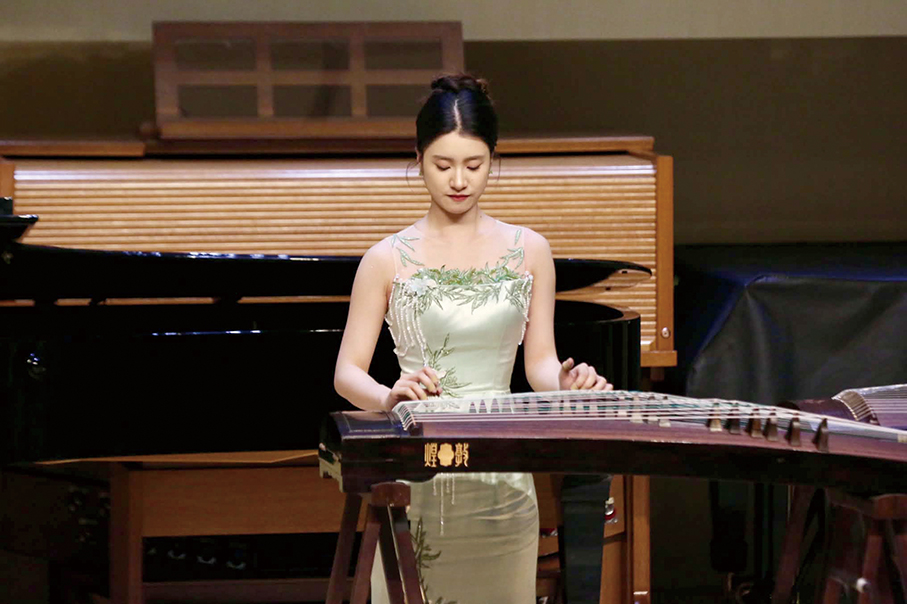
Peggy Chan performs at her graduation concert at the Concert Hall of the Central Conservatory of Music in Beijing on April 24, 2025.
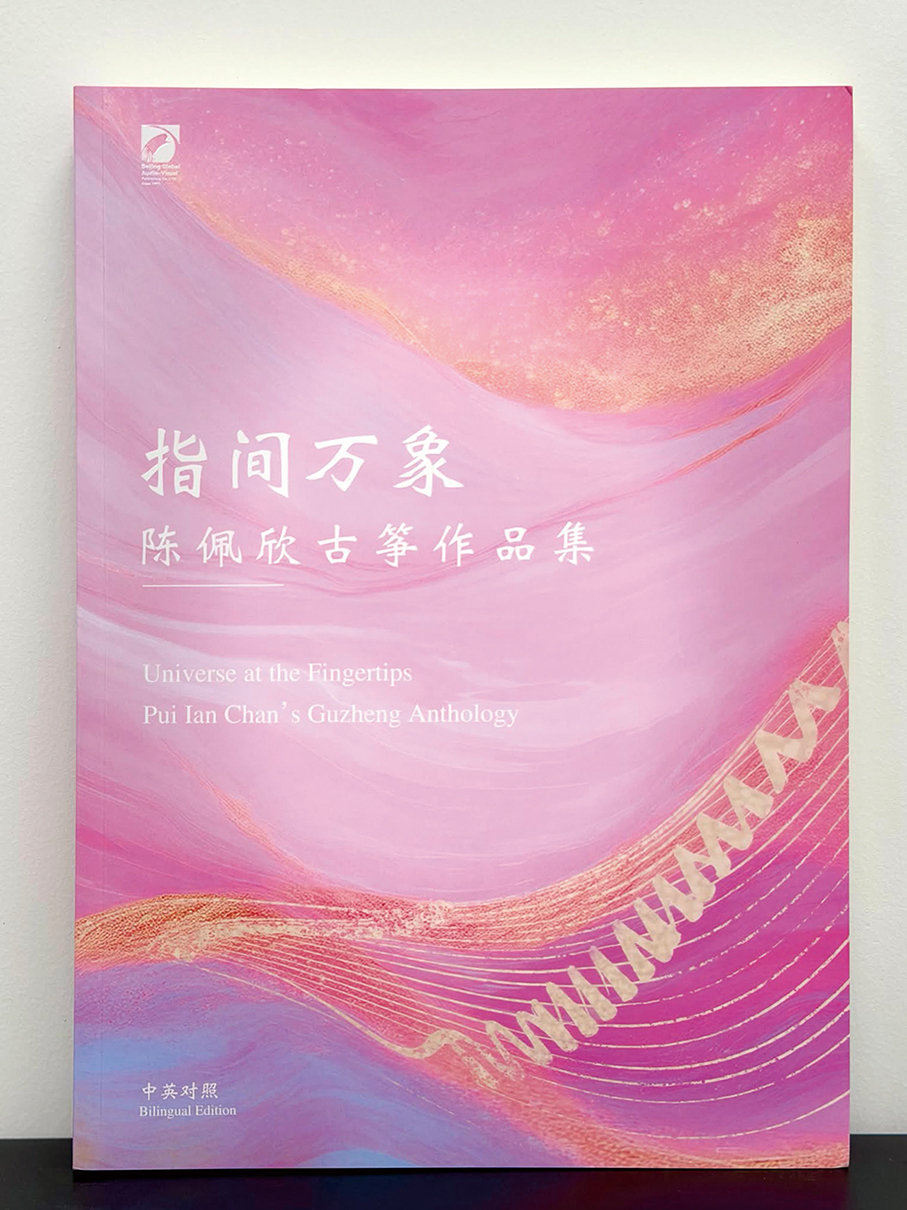
Cover of Peggy Chan Pui Ian’s Universe at the Fingertips music scores.
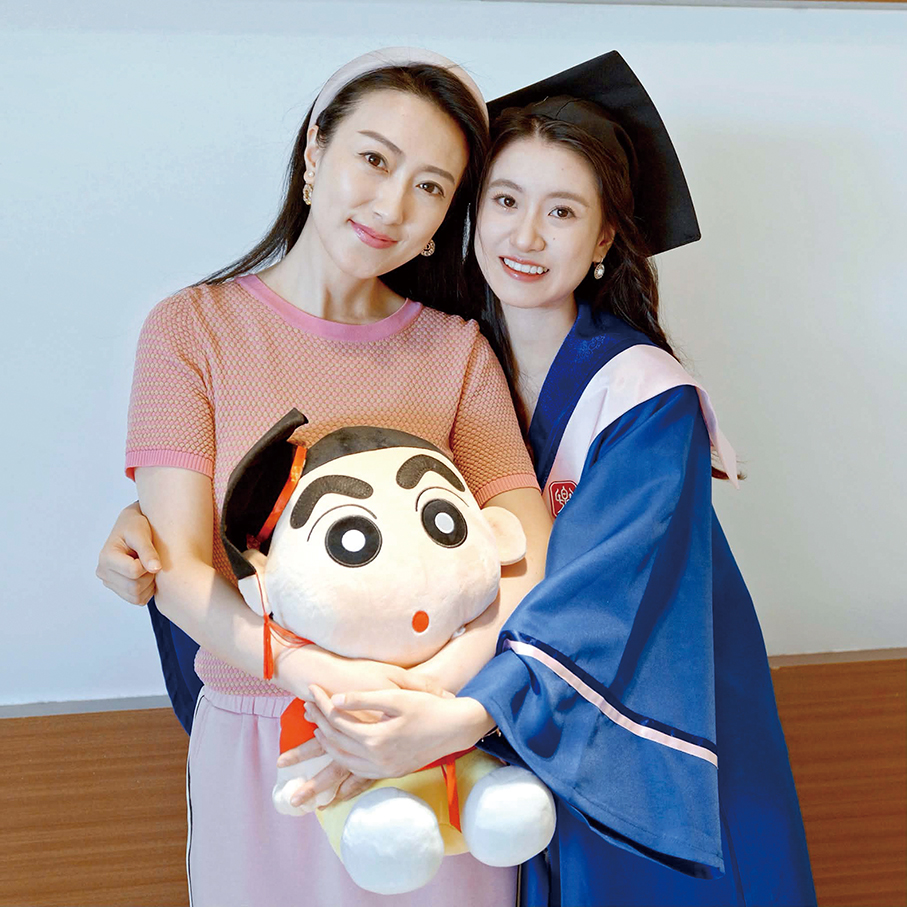
Graduation photo of Peggy Chan (right) with her supervisor, Prof. Su Chang (蘇暢), at the Central Conservatory of Music on June 24, 2025.
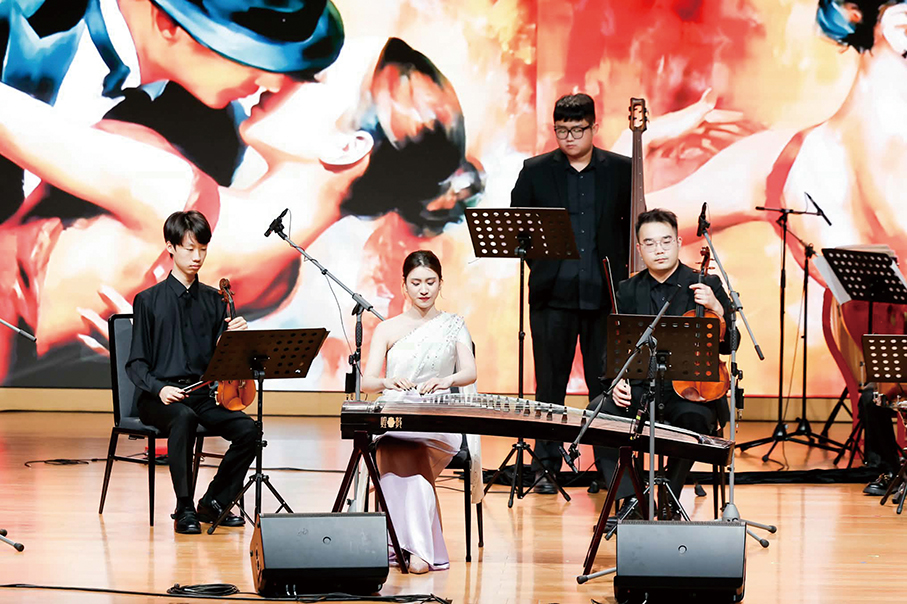
Peggy Chan performs at Galaxy Macau on October 12, 2025. – All photos supplied by Peggy Chan
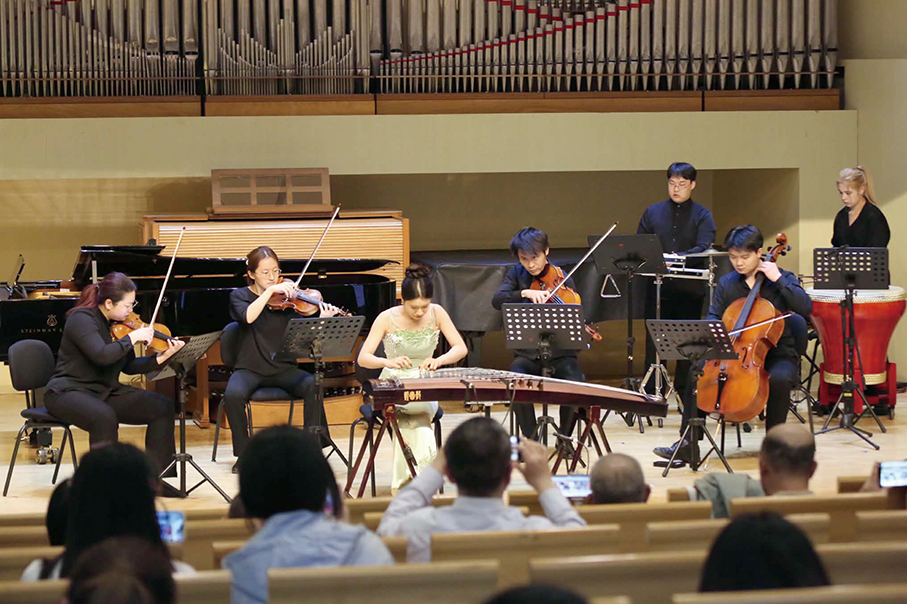
Peggy Chan performs at her graduation concert at the Concert Hall of the Central Conservatory of Music in Beijing on April 24, 2025.