

The Star Calibrator
A Western Perspective from Within China
By Julio Ceballos, Spanish business development consultant in China and author of Watching Rice Grow and The Star Calibrator
Why Was This Book Written?
For twenty years, I have worked, learned, and lived alongside China. During this time, this country has not only transformed into an economic and technological superpower; it has also transformed me. What began as a professional challenge turned into a profound journey of learning and reflection. My book, The Star Calibrator, arises from that experience: observing from within how China has rewritten its destiny, and the urgent need for Europe to look at this process with new eyes. Not from prejudice, but from understanding. Not from fear, but from wonder and analysis.
This book does not aim to provide closed answers but to offer questions and reflections that can serve as a compass. It is written from years of experience traveling, observing, and negotiating with Chinese people, from the conviction that, although our circumstances and cultures vary, human beings share essential concerns: the desire to prosper, the search for mutual benefit, and the need to coexist in peace. Its pages weave together geopolitical and anthropological analysis with observations on economy, culture, and technology. All with a clear goal: to look beyond immediacy and try to understand the deep forces shaping the 21st century.
Introduction and Overview of the Book
In a world changing at an unprecedented speed, taking a moment to observe calmly has become a rare act. However, sometimes it is precisely that pause that allows us to better understand the direction we are taking. The Star Calibrator is born from this need: to adjust our gaze to understand an interconnected, accelerated, complex, diverse planet, and at the same time, full of common challenges.
China is one of the main actors in this 21st century and today occupies a central role in the global economy, technological innovation, and the fight against planetary challenges such as climate change. Understanding how it interacts with the rest of the world is not just an intellectual exercise: it is a necessity for anyone wishing to anticipate the future. This is a book about how China, its companies, and its citizens seek their place on an increasingly complex board. Ultimately, The Star Calibrator is an invitation to lift our gaze, broaden our perspective, and discover that, although physical distances remain, cultural distances can be shortened if we are willing to listen and learn.
The title refers to an ancient instrument used by astronomers in Imperial China to study the movements of celestial bodies. Just as ancient sky watchers recalibrated their decisions based on the stars, Europe needs to recalibrate its strategic compass in a world that has changed and will not return to what it was in the 20th century. Additionally, The Star Calibrator is the name of a palindromic Chinese poem from the 6th century, the most complex ever written by a human, composed by a woman. It is a perfect symbol: there are many ways to solve global challenges. And China’s success demonstrates that there is no single way to modernize. A metaphor in its entirety.
When I first arrived in China two decades ago, I did so with curiosity, respect, and some uncertainty. I had read and studied this country, but I soon discovered that nothing replaces direct experience, daily coexistence, commercial exchange, and the small details that can only be appreciated when living inside. Over the years, I have seen China transform at a pace that, for a European, is difficult to assimilate: cities that once seemed modest have become metropolises connected by high-speed trains, rural areas that once had nothing but dusty roads now have digital services enabling a farmer to sell their harvest thousands of kilometers away, and startups have gone from makeshift workshops to leading cutting-edge sectors such as artificial intelligence or renewable energy.
But at the same time, I have also seen that beneath this dynamic surface, deep constants remain: the discipline with which planning is conducted, the value placed on education, a strong culture of effort, the ability to collectively adapt in the face of difficulties, and a cultural identity that acts as social glue. One of the most revealing experiences China has given me is precisely understanding that development is not a succession of improvised impulses, but a path measured in decades, not in legislative terms. In Europe, the political horizon is often conditioned by cycles of four or five years, with programs that often blur after a change in government. In China, however, I have seen how plans are designed and executed with a sense of continuity that transcends the moment.
My work as a business development consultant and my coexistence with Chinese citizens have allowed me to observe with attentive eyes, to compare without prejudice, and to try to understand not just what is seen, but the reasons and values that explain it. This effort has taught me that China is neither a homogeneous block nor an impenetrable mystery: it is a living mosaic, where innovation and tradition coexist, pragmatism and ambition, strategic patience and execution speed.
This text does not aim to be an exhaustive portrait or a definitive guide. Rather, it is an invitation to explore, through concrete experiences, some of the lessons I have learned in China that I consider valuable for any society. Lessons on how to plan for the long term, how to invest in human capital, how to innovate with a clear purpose, and how to cultivate collective resilience. It is not an exercise in uncritical admiration or idealized comparison. It is an honest attempt to build bridges between two realities—the European and the Chinese—that need to better understand each other, both to cooperate and to compete or coexist. Because, in an increasingly interdependent world, the true challenge is not to compete without looking at each other, but to learn to see each other while continuing to advance.
Block I – Strategic Patience: The Strength of Looking Ahead
Time as Raw Material
If there is one thing that defines how China conceives its development, it is the relationship it maintains with time. For a European, accustomed to political agendas measured in legislative terms and business decisions in fiscal quarters, it is almost disconcerting to encounter a country that designs projects with horizons of twenty, thirty, fifty, or even a hundred years ahead. This mentality is perceived at all levels. It is not exclusive to the large ministries in Beijing; I have found it in district offices, among small entrepreneurs, and even in rural cooperatives. The first time I saw it clearly was in the office of a local official in a fourth-tier city in Sichuan province. The office, sober yet well-lit, featured a wall-sized map as its centerpiece. Different colors represented agricultural zones, projected residential areas, future logistical infrastructures, and green corridors to preserve the natural environment of the municipality.
The official, cordial and with a measured voice, pointed out each of those areas with a pointer while explaining how, in 2005, decisions were made that at the time yielded barely visible benefits, but which two decades later were consolidating a more diversified local economy, a more livable environment, and a more efficient transportation network. “In our work,” he told me, “it is not about rushing to be first, but about preparing the ground for others to run when the time is right.” He reminded me of something essential: sustainable development is not a speed race. It is not a sprint, but a marathon. Planning is not rigidity; it is institutional wisdom. I remember him saying during the conversation, “Our job is to plant trees under whose shade we will not sit.” That phrase condenses the continuity mentality I have observed in China: work is done for a future that perhaps those who pilot it will never see, but which they trust to prepare for future generations.
The Five-Year Plans: Hinges of Development
This preparation of the ground has its framework in the five-year plans. From Europe, these documents may seem like exercises in rigid planning, belonging to another time. From China, they are understood as hinges that connect the pieces of a much larger project. Each plan collects the objectives of the previous one, introduces adjustments, and opens the door to the next stage.
A clear example I saw was in a region of Shandong where, in an initial plan, a secondary road was built connecting several agricultural towns with the nearest city. In the next plan, that road was expanded and equipped with accesses to new industrial zones. In the third plan, it connected to a highway leading to the province's most important maritime port. What at the time seemed like a minor project became, over time, a strategic axis for regional trade.
In Europe, a change in government can mean the paralysis or radical alteration of ongoing projects. In China, although there are also changes in priorities, the basic roadmap remains, allowing large-scale investments to make sense in the long term and not become premature ruins.
Meritocracy in Practice
Behind this continuity is a system of professional advancement that rewards experience, achievements, and results. Before leading an important city, an official has gone through stages that test their execution ability. In Europe, we often choose our political leaders for their charisma, oratory skills, or media popularity. In China, they are chosen for results. Governors, mayors, ministers: all must demonstrate efficiency, execution capability, and strategic vision before reaching significant government positions. In China, the mayor of a Tier-4 or higher city has often trained as an engineer, then as an infrastructure manager, and after twenty years managing teams, budgets, and crises, ends up leading a city of over a million people.
Selecting talent is not elitism: it is responsibility. In China, politics is understood as a demanding profession that requires merit, credentials, experience, and training. This meritocracy is one of the silent engines of Chinese development. In every position, performance is evaluated, and it is determined whether they are prepared to take on greater responsibilities. This model, of course, does not eliminate all problems—no system does—but it establishes a logic in which trajectory matters more than media visibility.
Scenarios That Mature Slowly
One of the most visual examples of this strategic patience I saw was on the outskirts of an inland city. There, a wide and perfectly paved avenue seemed to lead nowhere. On both sides, empty plots of land and some streetlights that were not yet lit due to lack of electrical connection. I asked when they expected that area to be occupied. The immediate response was, “In about fifteen years.”
Far from being a waste, that avenue was part of a plan to move polluting industries out of the urban center, free up space for parks and residential areas, and connect the city with a future technological park. The layout was ready before demand arrived, so that growth would not be improvised or chaotic.
This long-term approach does not mean that China moves slowly. On the contrary: when conditions are prepared, the speed of execution is astonishing. The construction of high-speed train lines or complete industrial parks in a matter of months is possible precisely because prior planning has already resolved the “how” and the “for what.”
A Mirror for Europe
Europe has admirable institutional wealth and human capital, but often suffers from what we might call “strategic myopia”: the difficulty of sustaining long-term policies beyond the electoral cycle. This does not mean we should copy the Chinese model, but we can draw inspiration from its ability to maintain direction in essential projects.
Energy transition, investment in technological innovation, modernization of infrastructures, or urban regeneration are challenges that, without a vision of decades, risk being left unfinished or becoming successive patches. Incorporating mechanisms of continuity and “state pacts”—basic agreements that transcend the current political debate—would be a step for European planning to gain the temporal depth I have seen here.
The Value of Sowing for Others
Perhaps the most important lesson I have gained from observing Chinese planning is that, in many cases, those who sow will not be the ones to reap the harvest. This idea, so counterintuitive in cultures where personal recognition and quick rewards are the norm, here is accepted naturally. The pride is not in inaugurating, but in preparing the ground for others to inaugurate.
In a world where the pressure for short-term results is increasingly greater, this philosophy offers a valuable counterpoint. Thinking in decades, not weeks; building foundations, not just facades; preparing the ground even if one does not see the fruit. That, in short, is what we could call the strength of looking far.
Block II – Human Capital: Educating to Adapt
Education as the Backbone
In China, education is not just a right or an obligation: it is the backbone of social mobility and, to a large extent, of national cohesion. What surprised me most while living here was to see that this priority is not merely official rhetoric. It is deeply rooted in the daily lives of millions of families.
I have visited homes where the main room was not organized around a television, but around a large study table. Shelves filled with math manuals, history books, dictionaries, and exercise notebooks lined the walls. A well-placed desk lamp presided over the space. The decoration was minimal: the important thing was utility, not adornment.
In a modest-income family in Fujian, the parents dedicated each night to reviewing the lessons learned in class with their daughter. “We cannot give her material inheritances,” the father told me, “but we can leave her knowledge as a legacy.” This phrase sums up the approach: learning is the safest and most enduring investment one can make.
In cities, this conviction translates into long school days and a calendar packed with extracurricular activities. But the same attitude is found in rural areas, where material limitations do not diminish educational ambition. This culture of effort is not without tensions. There is an increasing debate about academic pressure and its effects on students' well-being. However, the general consensus remains that, to adapt to an uncertain world, rigorous education is essential.
Learning to Create
In Shenzhen, a symbol of Chinese innovation, I met a teenager who had been participating in a robotics club since she was eleven. Her parents, factory workers, sacrificed vacations to pay for the activity fees. “We don't want her to just know how to use technology,” they told me. “We want her to understand how it works and to be able to create it.”
This type of early training is not a luxury reserved for the elite. There are public programs and private associations that bring science and technology to students from various socioeconomic backgrounds. The idea is to prepare young people not just to adapt to innovations but to lead them.
The Reading Habit
One of the most striking traits I observed in China is the importance of reading as a daily activity. In a public library in a medium-sized city on a Saturday afternoon, almost all the tables were occupied: students preparing for exams, retirees reading newspapers or novels, and children exploring the children's section. I saw parents recommending books to their children, couples discussing essays, and groups of young people sharing readings. The scene reminded me that, in a society so oriented towards the future, reading serves a dual purpose: expanding knowledge and providing a space for reflection.
A taxi driver in Nanjing told me that, although his workday ended late, he dedicated an hour daily to reading on his phone. It was not light novels, but essays and articles on history and economics. “This way, I learn to understand the world and can educate my children better,” he said naturally.
Cultural Identity as an Anchor
One of the things that has impressed me most about China is how it has cultivated its cultural identity. Through cinema, education, gastronomy, and everyday rituals, Chinese culture is presented not as a memory of the past, but as a strategy for the future. This identity pride explains who China is today and where it comes from. It is a form of social cohesion that forms citizens with firm roots and open minds. This combination is a strategic asset that in Europe we have begun to miss.
Education in China integrates STEM disciplines with cultural training that connects students with their history and traditions. In classrooms, classical literature is studied alongside quantum physics, philosophy alongside programming. This combination conveys a clear message: it is possible to look to the future without breaking with the past.
Moreover, in a constantly transforming world, education does not limit itself to transmitting knowledge but seeks to develop the capacity for continuous learning. I have met professionals who, after decades in a sector, have completely retrained thanks to training programs sponsored by their companies or local governments. Engineers who become experts in renewable energy, farmers who learn e-commerce, teachers who incorporate digital tools into their classes.
The Chinese experience shows that investing in human capital is not a luxury for times of prosperity, but a strategic necessity. Rigorous education, access to technology from an early age, fostering reading, and integrating cultural identity form a coherent set that prepares the population to face unpredictable challenges.
It is not about idealizing this system—which has its own tensions and challenges—but recognizing that, in a rapidly changing world, the ability to adapt without losing direction is the most valuable competitive advantage.
Block III – Innovating with Purpose
In many countries, innovation is associated with major announcements, registered patents, or futuristic laboratories. In China, in addition to all that, there is a marked nuance: innovation is also measured by its pragmatism: its ability to solve concrete problems and improve daily life.
I have seen this logic in both rural areas and metropolises. In an agricultural village in Yunnan, a fruit producer proudly showed how he received payments through a mobile app. For him, digitalization was not a whimsical novelty but a radical change in the way of selling: he could reach customers in other provinces without relying on intermediaries, collect instantly, and plan his production more precisely.
Behind this scene are years of work in digital infrastructure, training, and platform design. It is not enough to install antennas or cables: people need to be taught how to use the tools and, above all, be shown that they offer real value. Technological integration in rural areas is an emblematic case of how innovation is applied with a clear purpose. In many places, the leap has not been gradual but direct: communities that went from relying almost exclusively on cash to using mobile payments in a matter of months.
This type of change is not the result of chance. They respond to deliberate policies: subsidies for devices, digital literacy programs, incentives for businesses adopting electronic payments, and platforms that adapt their interfaces for users with little technological experience.
Smart Cities: Real-Scale Laboratories
At the other geographical and socioeconomic end, large cities function as real-scale innovation laboratories. I have traveled through neighborhoods in Shanghai, Changsha, Wuhan, or Hangzhou where traffic management adjusts in real-time through sensors and cameras detecting flows and patterns. This not only reduces congestion but also optimizes fuel consumption and decreases pollution.
In some areas, garbage collection is coordinated with systems that notify when containers are full. This avoids unnecessary truck trips and reduces operational costs. These advances integrate into daily life without major marketing campaigns. For citizens, they are part of an urban ecosystem that simply “works better.”
There is one aspect that I find particularly interesting: innovation in China is not limited to creating something totally new. It also involves adapting, improving, and scaling existing technologies. This pragmatism shortens implementation times and allows improvements to reach the market sooner. Instead of waiting for a “technological revolution” every few years, a continuous evolution is cultivated that accumulates competitive advantages.
Artificial Intelligence with an Ethical Compass
Artificial intelligence is a field where technological ambition intersects with an increasingly explicit ethical debate. At conferences and meetings, I have heard researchers and policymakers repeatedly assert that AI should serve to reduce inequalities, not to amplify them.
This translates into initiatives such as AI systems for medical diagnosis in rural hospitals, adaptive learning tools in education, or platforms that help optimize energy consumption in communities.
Concerns about risks are also present. Regulatory frameworks aim to prevent the abusive use of data, protect vulnerable groups, and ensure that benefits are distributed equitably. Balancing these aspirations with the pace of development is not always straightforward, but the fact that ethical considerations are part of the conversation from the outset makes a difference.
Comparisons That Invite Reflection
In Europe, the innovation ecosystem is diverse, plural, and creative, yet often fragmented. Solutions that work well in one country do not always adapt easily to others, and mass adoption can take years. The Chinese experience shows that when investment in infrastructure, training, and social purpose are combined, implementation can be much faster. The "go-to-market" strategy is more agile and pragmatic.
This does not mean that Europe should replicate the Chinese model as it is, but it invites contemplation on how to better align innovation policies with the real needs of the population and how to bridge the gap between the lab and everyday life.
Innovating for All
Ultimately, purpose-driven innovation is the kind that leaves no one behind. From the farmer who can now get paid with a click to the rural patient who accesses advanced diagnostics thanks to AI, the goal is to ensure that the benefits of technology reach all levels of society.
This vision, combined with decisive execution, has allowed innovation in China to be more than just a showcase of advancements: it is a practical tool for improving the lives of hundreds of millions of people.
Block IV – Resilience and Cohesion in Uncertain Times
Resilience as Everyday Practice
Over the past twenty years, I have seen China face crises of various natures: natural disasters, health emergencies, profound economic transformations, etc. In all of these, one constant has struck me: the ability to quickly reorganize and maintain a sense of collective purpose. Unlike other places where solidarity arises as a spontaneous and momentary reaction, here, cohesion seems to be a pre-planned resource, ready to activate when the situation demands it. This is not a matter of chance but of a mindset cultivated over generations, combining social discipline with a community vision that is broader than the sum of individuals.
This concept of the "common good" has shown formidable resilience. Overcoming famines, crises, disasters, and massive poverty, and transforming them into energy for change is not merely the result of public policies: it is a collective mentality. The idea of not giving up, moving forward together, and sharing the effort defines much of the Chinese spirit. This attitude is supported by networks of trust built with patience and the conviction that shared effort multiplies results.
The Role of Education and Culture
This adaptability has roots in education and a cultural identity that values perseverance. From a young age, children learn that shared effort, discipline, and patience are virtues. Traditional stories, classical literature, and family teachings reinforce the idea that overcoming difficulties is part of the journey, not an interruption of it.
In practice, this translates into a willingness to endure temporary discomfort if the goal is clear and the benefit is communal. The mindset of "enduring together" does not imply resignation or complacency but confidence that collective effort will yield rewards. The disaffection for the common good currently burdens Europe, where well-being is often not seen as a daily victory but as an enforceable right.
Cohesion as a Strategic Resource
In an increasingly interconnected world prone to global crises, social cohesion can be as strategic as technology or infrastructure. China seems to have internalized this idea: it knows that mutual support networks not only buffer the impact of crises but also facilitate recovery and rebuilding. This is not solely the merit of public policies but of the social fabric that allows these policies to reach where they should and function as expected.
In Europe, we have a rich tradition of community cooperation, but in many places, this practice has weakened due to rising individualism and social fragmentation. Recent emergencies—from financial crises to pandemics—have shown that when cohesion is weak, recovery is slower and more unequal. The Chinese experience suggests that cultivating resilience is not about improvising measures when a crisis occurs but about keeping cooperation alive in everyday life.
From an international perspective, this learning opens fertile ground for the exchange of experiences between regions like the European Union and China. Both have distinct but complementary community traditions and resilience models: Europe can contribute its background in welfare systems, institutionalism, and supranational cohesion; China, its experience in social mobilization, common commitment, and the ability to transform challenges into collective opportunities. Finding common ground between these two visions would not only enrich each side but also provide a valuable reference for a world increasingly in need of shared solutions to common challenges.
Beyond Resilience
Chinese resilience is not just about "enduring." It has a proactive component: identifying opportunities even in adverse moments. This approach combines the survival instinct with strategic vision: it is not about returning exactly to the past but about rebuilding on new, stronger foundations while maintaining clarity on the goal to be achieved. No society is immune to crises, but it can prepare to face them better. Social cohesion and resilience are not built overnight; they require investment in trust, civic education, and cooperation mechanisms—and an awareness that responsibility begins with each individual.
China has not reached this point without difficulties or contradictions, but its experience shows Europe that when these elements are present, the capacity for recovery multiplies. In a world that seems to chain one crisis after another, this is a lesson worth considering.
And this is precisely where new opportunities arise: if China and Europe, with their differences and particularities, can cooperate and compete, sharing learnings and best practices in resilience, cohesion, and community collaboration, they will create bridges of understanding that transcend the moment. This does not mean uniformity but mutual respect and recognition that there are multiple paths to the same goal: building stronger societies capable of withstanding adversity and, above all, transforming challenges into creative energy.
In a global landscape marked by tensions and divisions, cooperation around universal values such as resilience, social cohesion, and the common good can become fertile ground for constructive dialogue. If there is one thing the Chinese experience teaches Europeans, it is that crises, rather than threats, can be catalysts for innovation and progress. After all, the word crisis in Chinese (危机) carries meanings of both "danger" and "opportunity." On the other hand, European tradition reminds us that cultural plurality and organized solidarity are powerful forces for sustaining stability and development. In the meeting of these two visions, the potential for mutual learning and shared benefit is immense.
Conclusion: A Compass for a Multipolar World
After two decades of working and living with China, I find it impossible to summarize its complexity in a handful of simple statements. What I can offer is an idea that runs through all the learnings gathered in this text: each society advances according to its circumstances, history, and culture, but all can benefit from reflecting on the experiences of others.
China has built its recent trajectory by combining four pillars that, though not exclusive, have achieved particular coherence here: strategic patience, sustained investment in human capital, purpose-driven innovation, and collective resilience. These elements are interwoven like the fibers of a rope that withstands tensions, absorbs impacts, and allows for firm progress.
From Europe, these characteristics can be viewed with a blend of admiration and caution. Admiration for the magnitude of achievements; caution to avoid simplistic comparisons. Our context is different, our institutions respond to other logics, and our priorities are built on histories and values distinct from those in China. However, there is something universal in the idea of learning from what others have done well, adapting their lessons to our reality. It is not about imitating but about understanding. It is not about competing blindly but about engaging in informed dialogue.
Ultimately, the true strength of a society lies not only in its capacity to produce wealth or technology but in its ability to learn from others without losing its identity. If there is one thing I have learned in these years, it is that mutual understanding is not an academic luxury or a diplomatic courtesy: it is a survival strategy. And in a rapidly changing "global firmament," the value of a good star calibrator lies in reminding us that, although each navigates their own ship, we all share the same sky.
The experience of China teaches the world that modernization is not a one-size-fits-all formula. There is no single path, no one recipe, no unique model. Each civilization has its own specificity and non-interchangeable models, but it can find its own way by intelligently combining leadership, education, patience, strategic vision, innovation, and social cohesion. Because in an increasingly interconnected and multipolar world, understanding how others think, plan, and act is as important as refining our own strategies. The star calibrator is, ultimately, a metaphor for what we need: tools to adjust our compass in a changing firmament. And, above all, the willingness to learn from others without ceasing to be ourselves.
My purpose in sharing these observations is to provide a Western perspective on China that allows Europe to better understand a different approach to facing challenges. The star calibrator is, in the end, a book written by a Westerner who has tried to look at China not with exoticism or fear but with curiosity, humility, and respect. It is an invitation to learn without idealizing, to be inspired without imitating. A gesture of admiration toward a country that has shown that when there is will, it is possible.
I hope this perspective on China, from within, sparks the interest of a Chinese publisher who wants to share this reflection with more readers from this fascinating country. Because good literature, like good ideas, has no passport.
*According to his official website (https://julioceballos.com/en/), Julio Ceballos was born in Reinosa, a town in northern Spain’s Autonomous Community of Cantabria who has worked in Finland, the UK, Germany, Austria, and China. He is a Law and Business graduate, specialized in internationalization, market strategy and negotiation.
Article courtesy of People’s Daily, October 20, 2025
N.B. Translation from Spanish by Poe edited by The Macau Post Daily
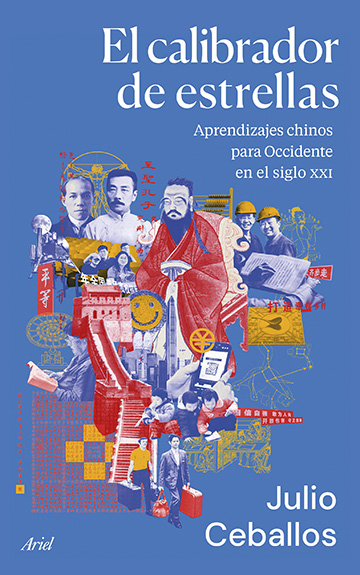
Image courtesy of Vive Campoo