

Interview by William Chan
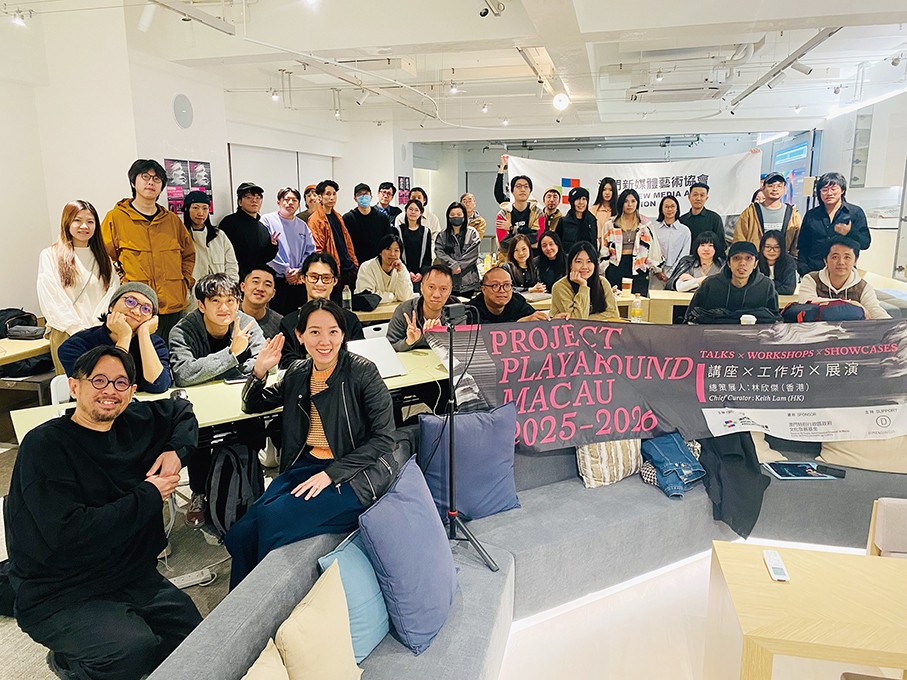
ProjectPlayaround Macau, a six-day workshop organised by the Macao New Media Arts Association, kickstarted on Friday.*
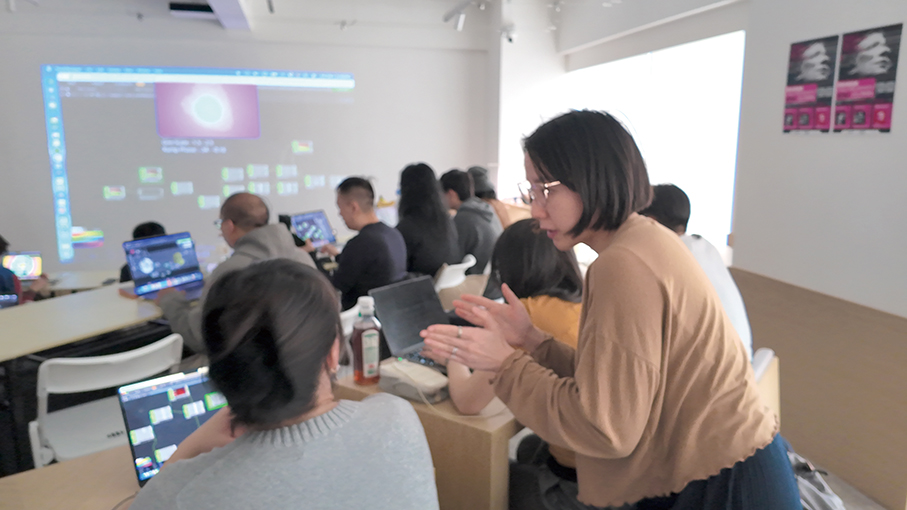
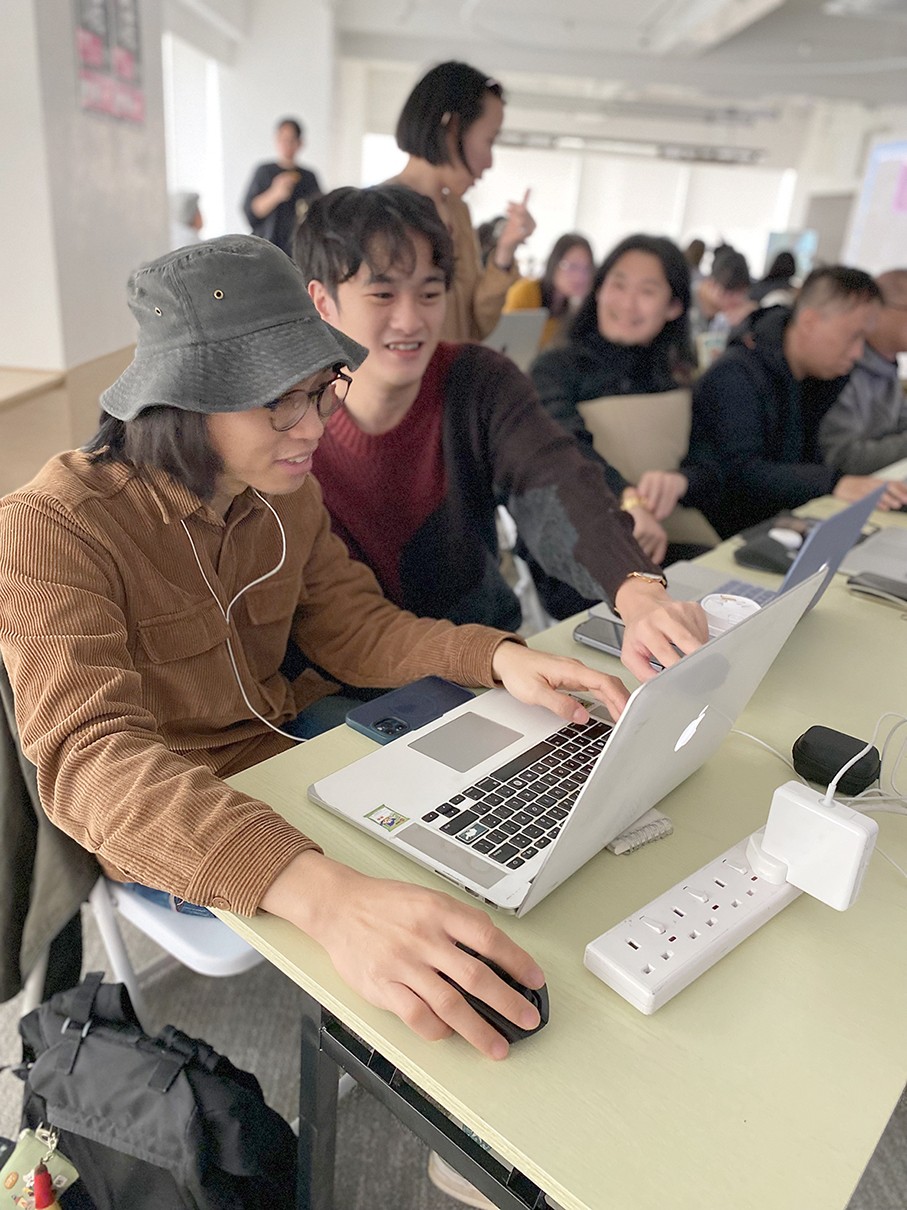
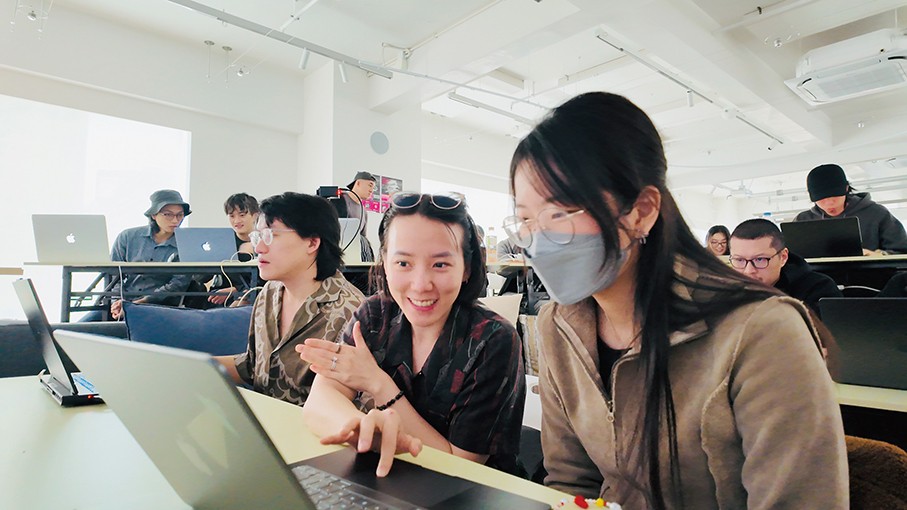
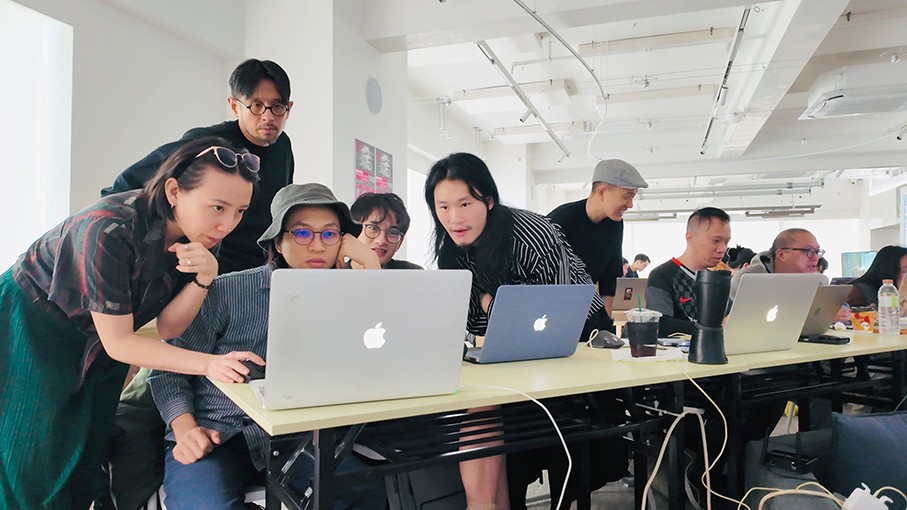
The first three-day session, the TouchDesigner Performing Arts Workshop hosted by Crystal Jow from the United States, concentrated on the widely-used TouchDesigner software, covering fundamentals, body and sound interactivity, and generative visuals. I attended the last section on Sunday afternoon at a commercial building in Nape and spoke to two students as well as Jow.
Before the course, I merely had a weak knowledge of what TouchDesigner is. TouchDesigner, according to DeepSeek, is a node-based visual programming language designed for creating real-time interactive multimedia content, such as audiovisual performances, interactive installations, and generative art. The application has been around for over two decades.
April, one of the students who came from Hong Kong to attend the lesson, works in Graphic Design and multimedia. She told me that TouchDesigner, which is ubiquitous in North America and Europe, was increasingly gaining popularity in Asia.
Sam, a local lighting designer, said that for him, the workshop provided a structured way to consolidate his existing knowledge. He mentioned that while he had used some components of the software before, the workshop provided a comprehensive, step-by-step overview that clarified the fundamentals. He noted that the visual, real-time nature of TouchDesigner provides a major advantage over traditional coding, as it allows for immediate feedback and adjustment. “The barrier to entry has been significantly lowered,” he explained, adding that knowing the software is becoming a very valuable skill set.
Crystal Jow, an artist and educator who travelled from New York to host the workshop, has witnessed this surge in demand firsthand. “It’s interesting that when I got here, there was interest from the Wynn Hotel in having an immersive space and wanting to teach their employees TouchDesigner.
“MGM, they’re like, ‘Oh, we need TouchDesigner people that are local to help,’” Jow said.
“There are a lot of places in Macau that have immersive spaces, but they need to hire people to know how to use it. It’s interesting to see how there is a market that needs to be filled.”
Jow, who teaches at several universities in New York, including the prestigious Parsons School of Design, has seen student demand for TouchDesigner courses skyrocket. “Five years ago, my colleague proposed to teach it, and students had to petition to get the class. Last semester, there were three classes for it because there was a long waitlist,” she recounted. She adapts her curriculum continuously, incorporating newer techniques like machine learning with hand tracking to keep up with the evolving landscape. She finds the workshop environment, filled with artists eager to integrate the tool into their practice, particularly rewarding. “It’s more fun to teach in that setting,” she said.
The software’s strength, Jow explained, lies in its remarkable flexibility. “TouchDesigner is a real-time software that can be used in different contexts, from doing art installations to lighting design to commercials... we’ve done fashion shows to concerts to brand activations, to television using the software.” This versatility means that artists from diverse backgrounds – from music to computer science to, like Jow herself, drawing and painting – can find their own unique way of using the tool.
Perhaps more than its technical capabilities, what truly sets TouchDesigner apart is its vibrant and supportive community. Jow described it as a “giant family” where artists and developers openly share tutorials, tools, and knowledge. This collaborative culture, she believes, is intentionally fostered by the company behind the software, which has resisted buyouts to maintain its close-knit, community-focused ethos. “I met my husband through TouchDesigner,” she laughed, illustrating the deep personal connections forged within this global network. “It’s a very interesting industry... that it’s so inclusive.”
This supportive global network, combined with the software’s accessibility and power, is a driving force behind its expanding footprint in the creative industries of Macau and beyond.
*
https://macaupostdaily.com/news/26961
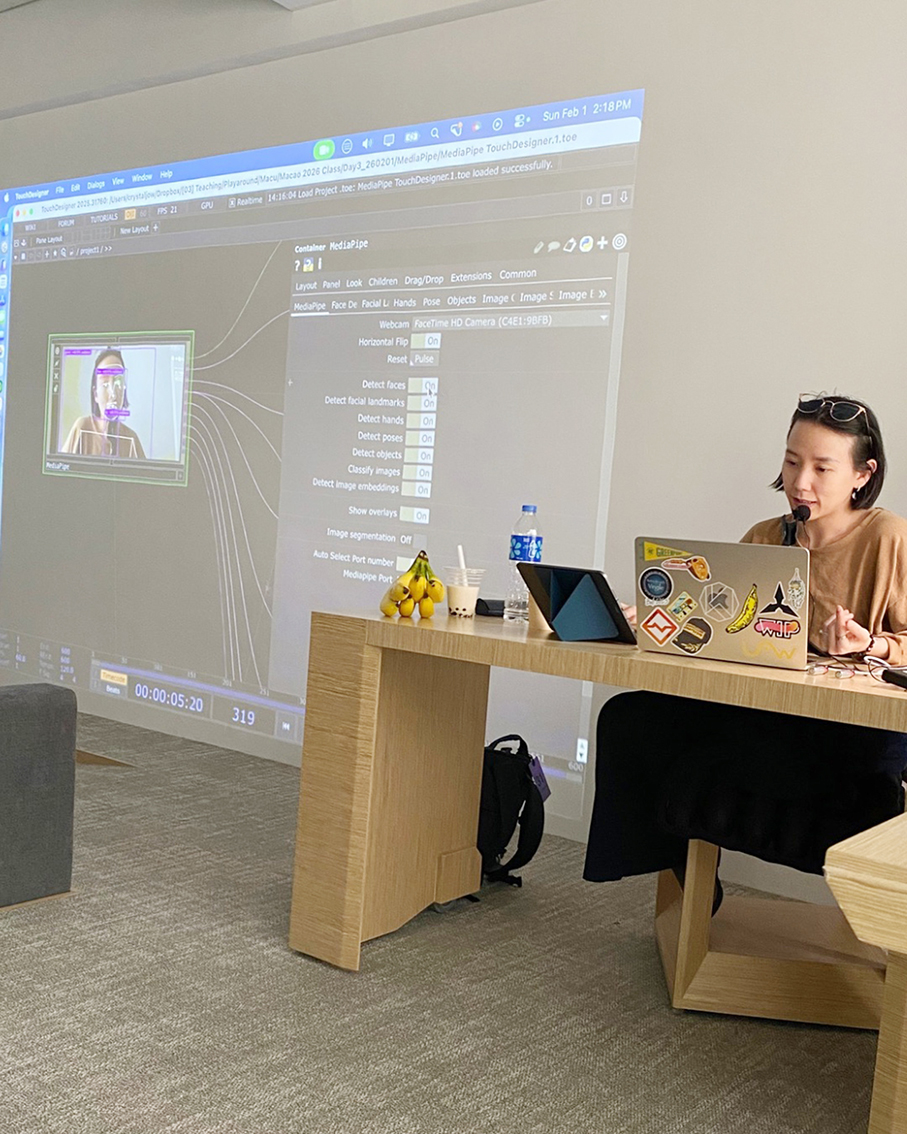
Crystal Jow teaches the TouchDesigner Performing Arts Workshop in Nape during the weekend. – Photos provided by the organiser