

Interview and review by William Chan
The local short film “The Rhythm of War” (烽火之聲), produced last year, recently won Best Film and Best Screenplay in the micro-film category at the 2nd Yellow River Estuary Revolutionary Movie Competition in Dongying, Shandong Province.
Its director, Keo Lou, spoke to the Post in an online interview last week.
“The Rhythm of War” is a 15-minute micro-film set against the backdrop of China’s War of Resistance Against Japanese Aggression. Through the perspective of patriotic youth Luo Zhensheng (羅振聲), it depicts the heroic deeds of Macau compatriots supporting the nation’s resistance during the fall of Guangdong in 1938. The film blends real historical events with artistic creation, using a Ne Zha opera troupe as the narrative vehicle to portray the brilliance of humanity and patriotic sentiments amid the flames of war. The birth of “The Rhythm of War” stemmed from funding by the Macau Cultural Development Fund and a commission from the Association of Na Tcha Temple, with the key aim of blending the Ne Zha theme with an anti-war narrative.
At first glance, this merger seems difficult because the two themes are so disparate, but Lou’s team perfectly fused them with Macau as the pivot. The team cleverly chose a father-son duo from a “Ne Zha” opera troupe in Guangdong as the main storyline. Through their encounter with a group of anti-Japanese volunteers from Macau, the film shows ordinary people’s choices in the confusion of the times. This choice itself is full of symbolic meaning – Ne Zha, as a symbol of rebellion and justice in Chinese traditional mythology, forms a subtle echo with the heroic deeds of Macau compatriots during the War of Resistance.
Lou noted that this creation was a huge challenge – not just technically, but psychologically and aesthetically. The team not only had to tackle the relatively unfamiliar topic of Macau’s local War of Resistance history but also master a grand war narrative within the limited budget of a micro-film. “Macau’s War of Resistance history isn’t that well-known,” Lou explained. “We had to do extensive historical research to ensure the story’s authenticity. At the same time, we needed to transform this history into a story that moves audiences, rather than a simple history textbook.”
According to Lou, the entire story is not only backed by historical materials but also makes perfect sense. During World War II, Macau was one of the international cities in China, obtaining information much faster than nearby cities like Foshan and Jiangmen – most people there wouldn’t even know they were under invasion – highlighting Macau’s pivotal position.
The film’s story structure revolves around a core conflict: When anti-Japanese volunteers from Macau arrive at the opera troupe asking for help in passing intelligence, the father initially resists. He thinks it has nothing to do with him – why risk his life? But when he hears gunfire and realises his son might be in danger, he ultimately chooses to sacrifice himself. Instead of a simple heroic narrative, Lou’s team has crafted a complex story about humanity, family, and responsibility.
Lou emphasised that the film’s core is not simply to praise heroes but, through this tragic father-son story, to explore war’s devastation on humanity and the preciousness of peace. “Our stance isn’t to judge right or wrong, but by showing the cruelty of war, to convey a deeper message: Everyone should approach others with a loving heart and understanding, so there will be no war.” This “seeing the big through the small” technique makes the film more emotionally penetrating and avoids rigid, preachy expression.
Encouragingly, this history piece full of a “Macau perspective” received unexpectedly strong resonance at the mainland film exhibition, Lou noted. He pointed out that many mainland judges and audiences were surprised by “Macau’s own heroic War of Resistance stories.” This surprise precisely proves the potential value and unique appeal of Macau’s local stories, powerfully refuting the outdated notion that “Macau topics have a narrow market.”
Readers interested can watch the short film on WeChat by searching its Chinese title “烽火之聲.”
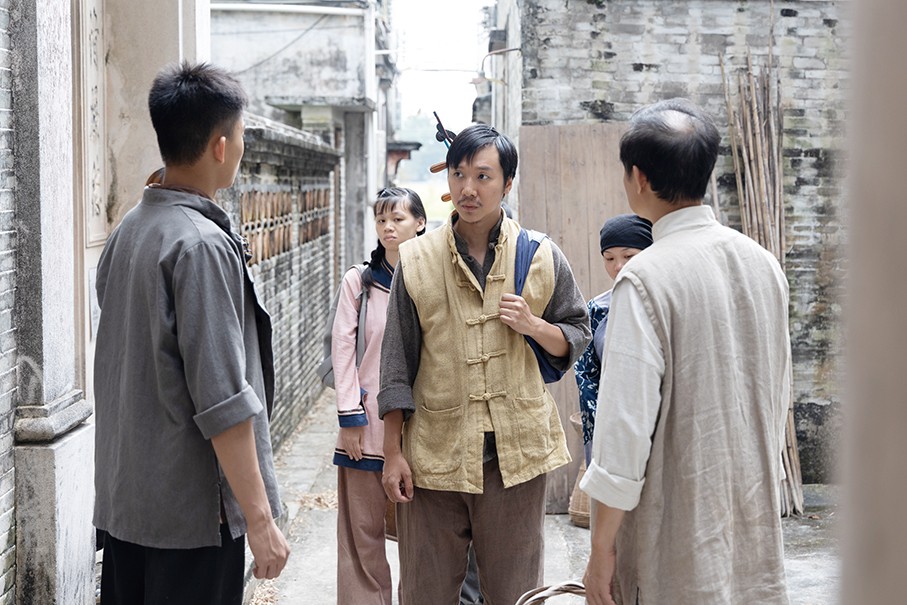

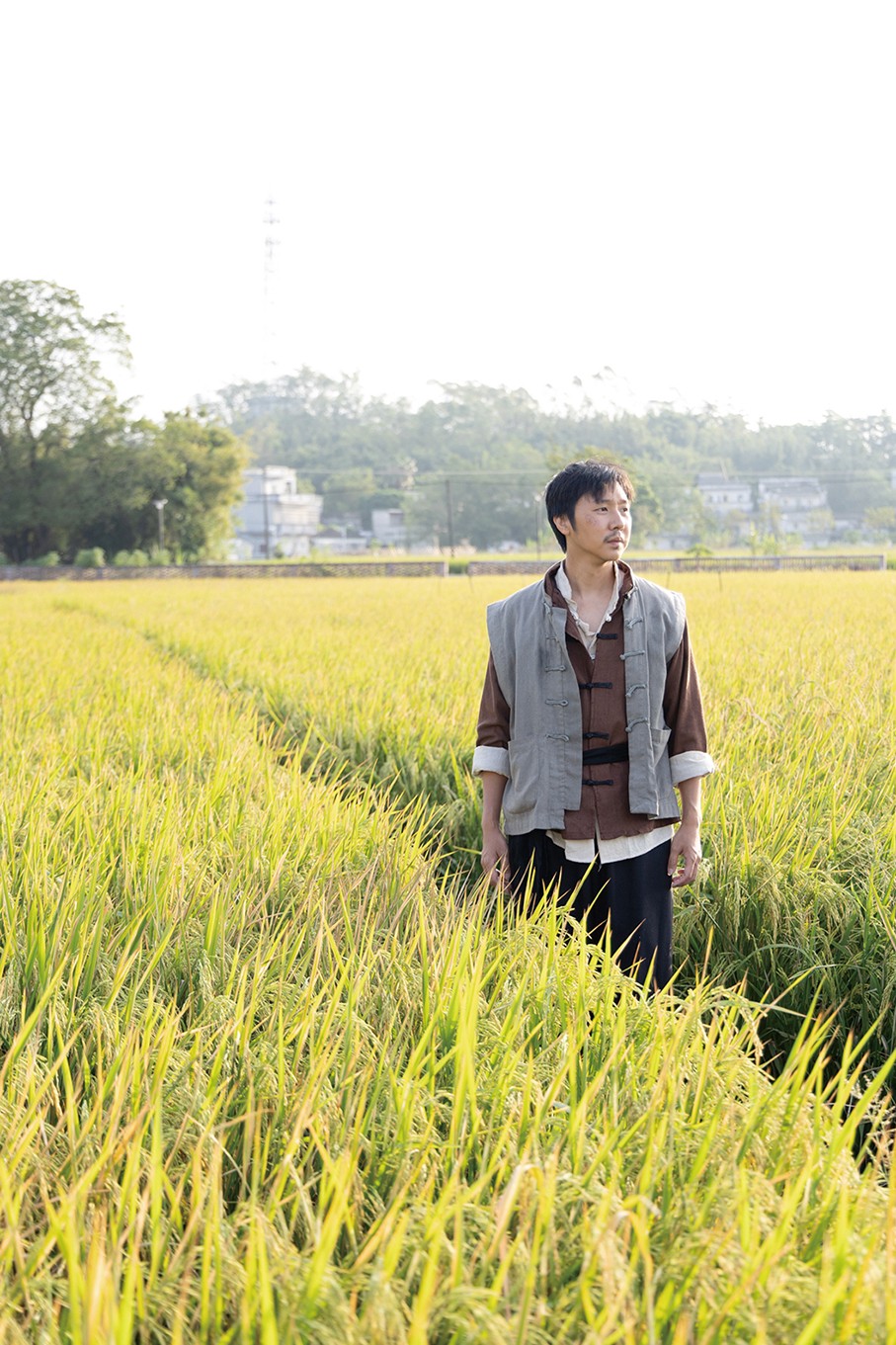
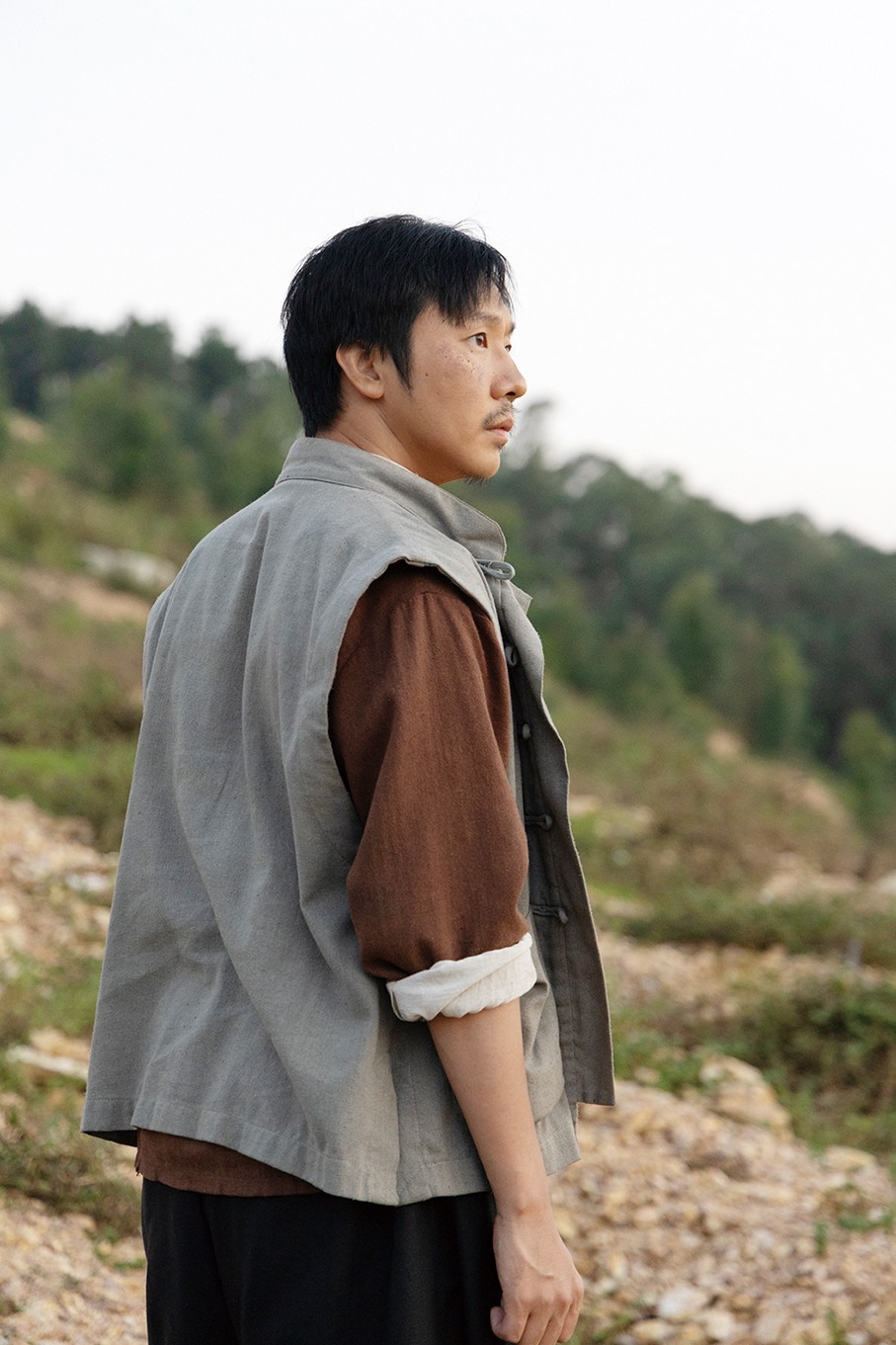
Keo Lou, who directs The Rhythm of War, also acts in the short film as a side character. – Photos provided by Lou
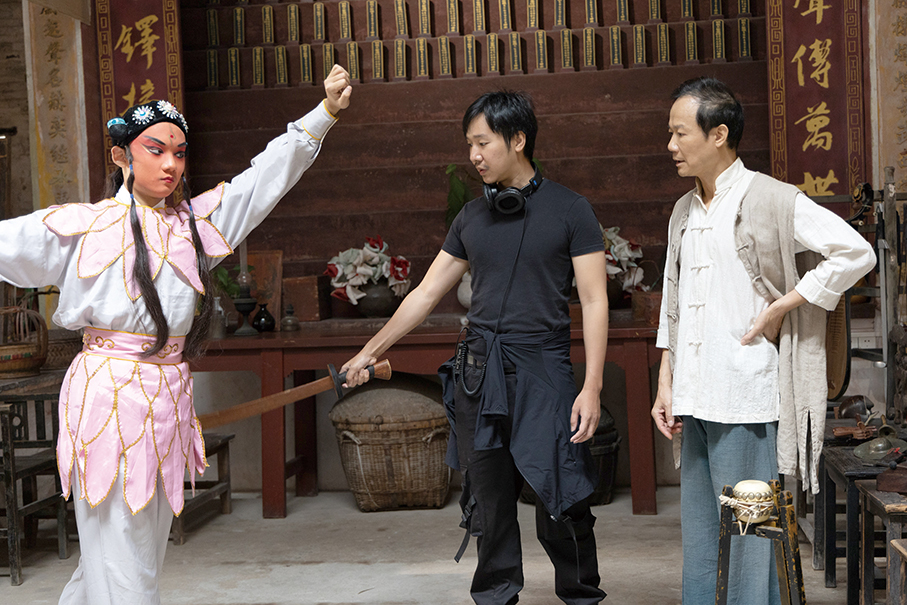
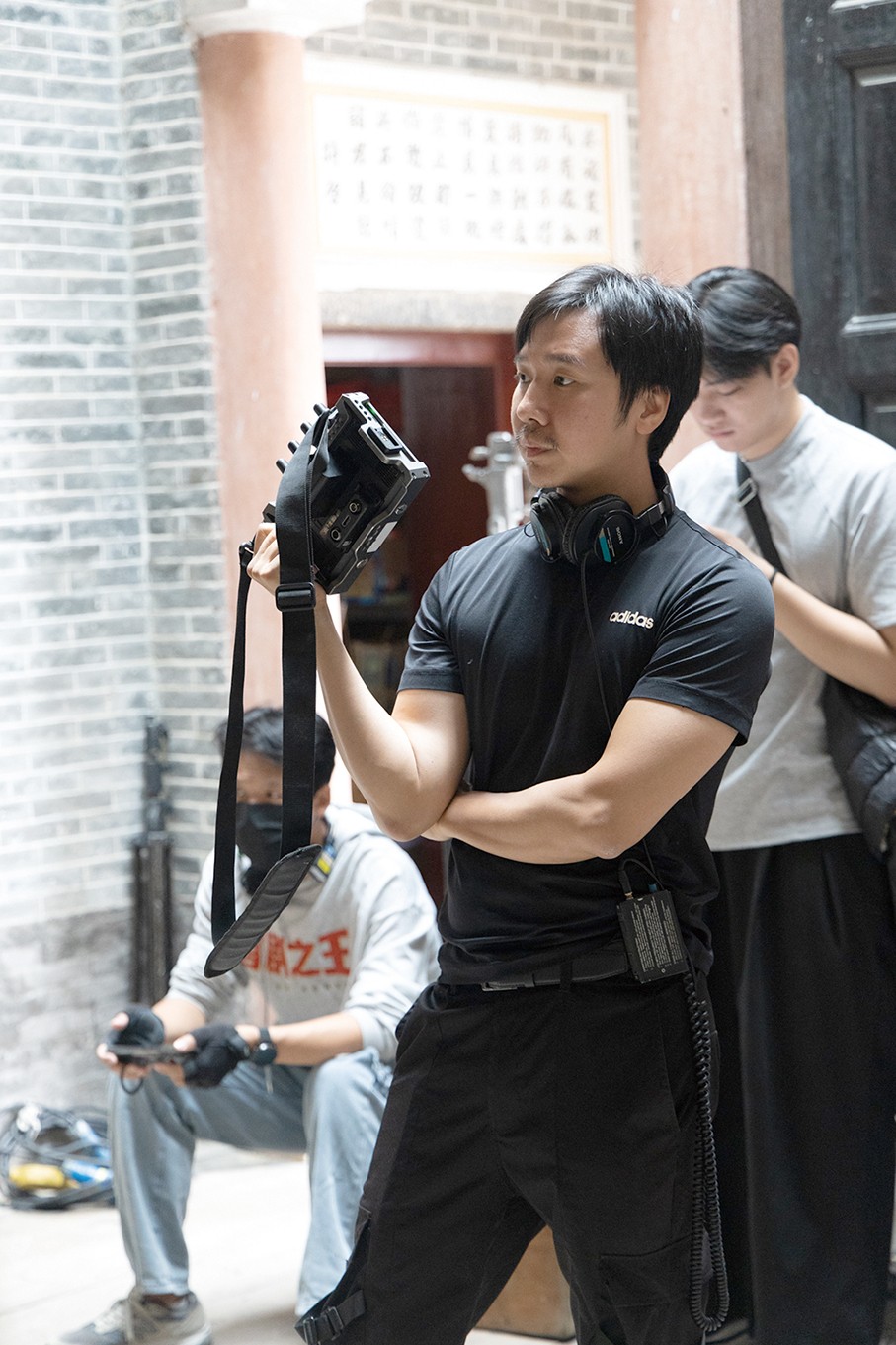
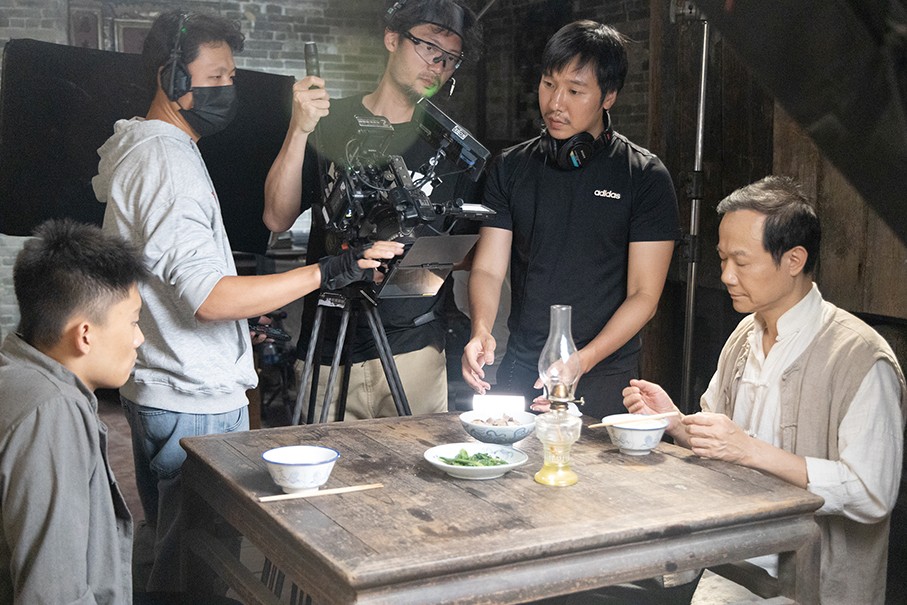
Director Keo Lou interacts with the father and son actors during film shooting last year.