

“Rainy Moment”, a film dedicated to exploring Macau’s vanishing urban fabric, takes the peninsula’s largest still existing, previously walled, village, Chi Lam Vai (茨林圍), as its central theme.
The Chi Lam Vai Concern Group hosted a film screening with Caritas Macau at the Hino Luminoso Elderly Centre on February 6, according to Tang Kam Chun, the concern group’s deputy convenor and vice president of the local Na Tcha Temple Association, the event aimed to promote and preserve Chi Lam Vai.
Through the camera lens, the film delves into the profound tension between the ongoing changes of the times and the village’s unique but potentially threatened cultural heritage, reflecting on how its small community navigates change while holding onto memory and identity.
Chi Lam Vai (茨林圍, aka Chi Lam Chuen – 茨林村) known in Portuguese as “Pátio do Espinho”, is a 400-year-old, formerly walled village that lies just a street away from the UNESCO World Heritage-protected Na Tcha Temple, one of Macau’s two temples dedicated to the divinity known in Putonghua as Nezha. It is also close to the UNESCO World Heritage-listed Ruins of St Paul’s.
Tang pointed out that after watching the film, the centre’s elderly residents were deeply moved. The movie evoked memories of the village’s former environment, and the seniors expressed a desire that the neighbourhood’s endangered environment be preserved, Tang said, adding that the centre organised a group to visit the ancient village on February 7.
Tang expressed hope that the film can be screened more widely for local communities and also be shown at schools, allowing the younger generation to learn about the history of the centuries-old neighbourhood.
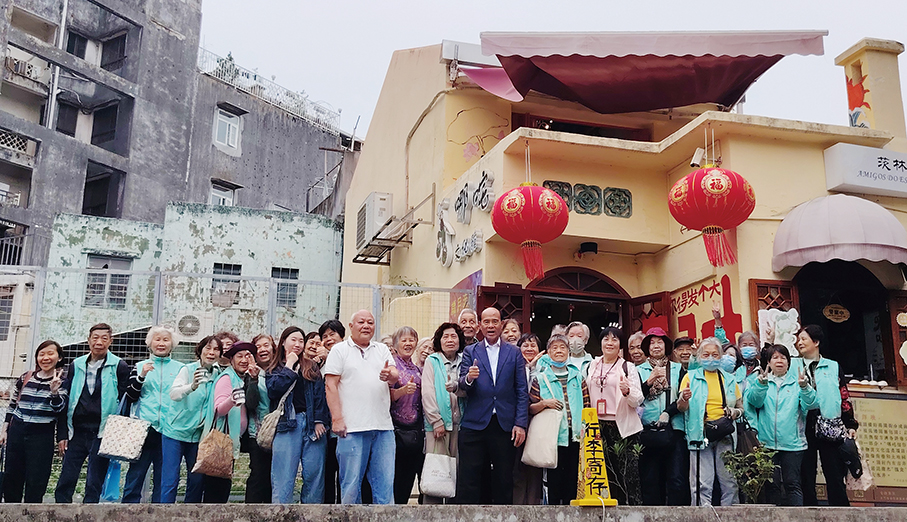
Chi Lam Vai Concern Group convenor-cum-president of the local Na Tcha Temple Association Ip Tat (blue jacket) and the concern group’s deputy convenor-cum-vice president of the association, Tang Kam Chun (white polo shirt), pose with visitors from Caritas Macau’s Hino Luminoso Elderly Centre at the Amigos do Espinho (茨林) café in Chi Lam Vai village on February 7. – Photo courtesy of Tang Kam Chun