

Interview by Rui Pastorin
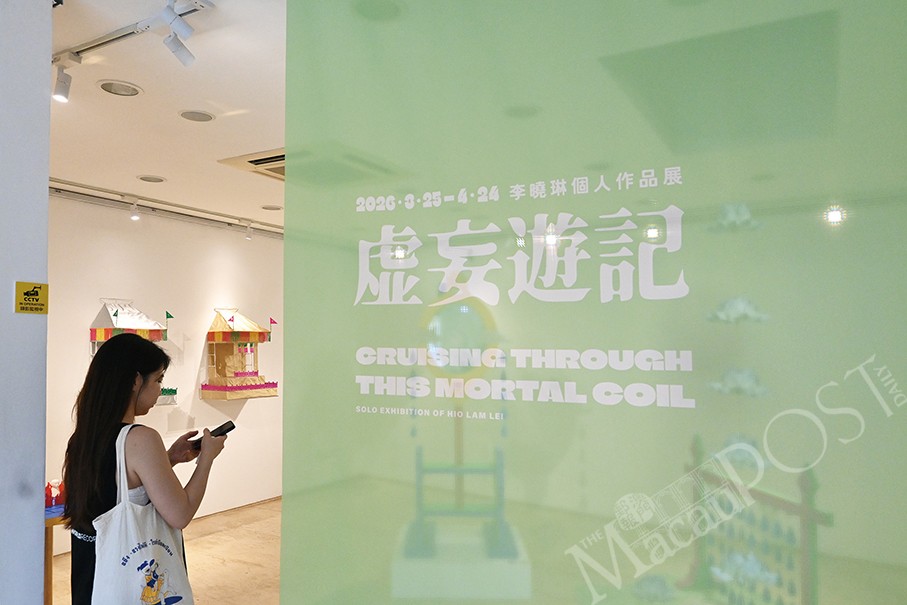
At Albergue SCM’s D1 Hall, a solo exhibition has translated the offering rituals in the Hungry Ghost Festival*, the anxieties surrounding death, and the reflections and confrontation of life’s finite nature into art.
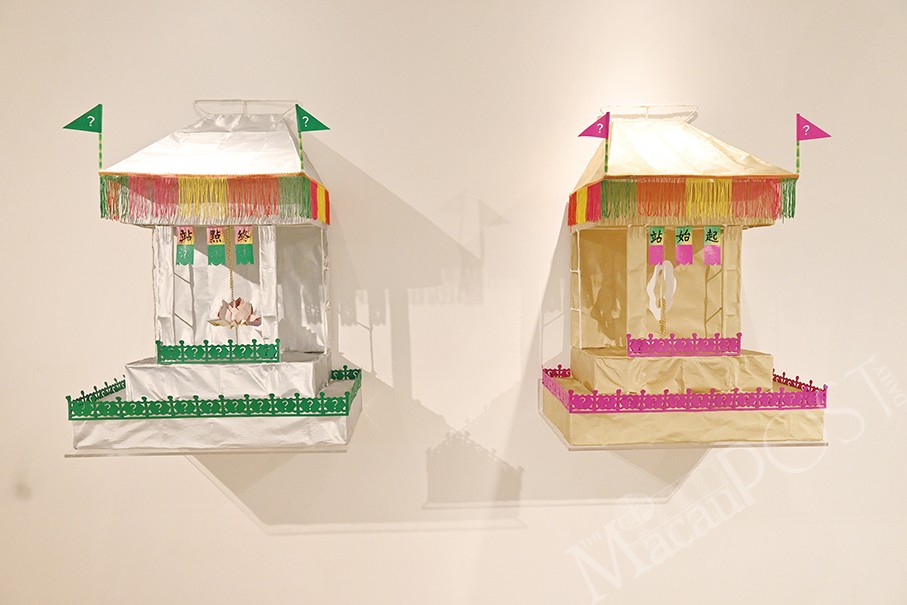
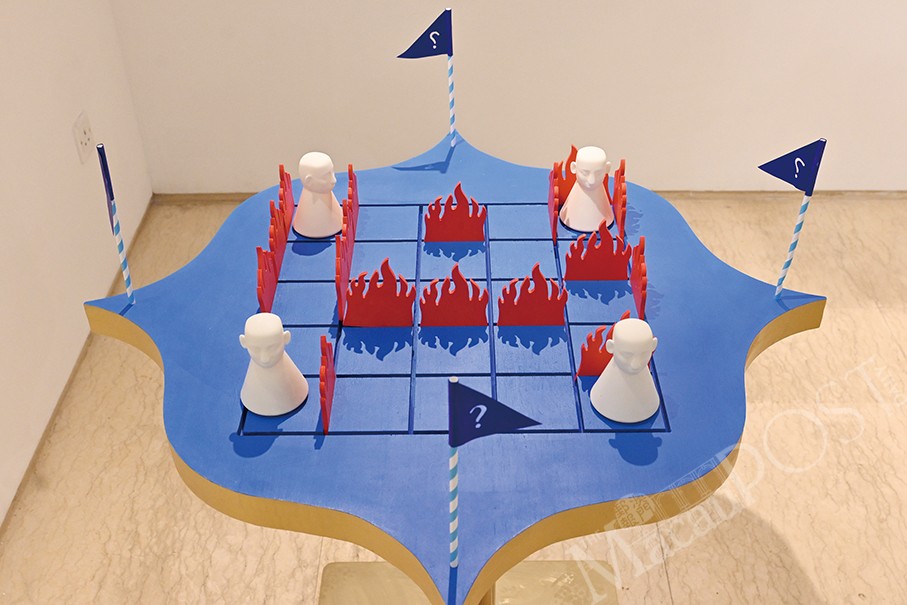
Displaying a total of nine works, “Cruising Through This Mortal Coil” features a 24-minute short film titled “If They Really Exist”, watercolours, installations, pieces made using the traditional Chinese joss paper craft, from which the intricate creations are traditionally burnt as offerings in ancestral worship, funerals and to deities.
The mind behind each work is Macau interdisciplinary artist Hio Lam Lei, with the artist telling the Post yesterday afternoon that since its launch on March 25, the ongoing exhibition, which is organised by Art For All Society (AFA), has gained traction from passers-by, seeing groups from Macau and tourists. “There is quite a lot every day”.
The concept and ideas, Hio noted, stemmed from research that she was doing back in 2023 about the offering rituals involved in the Hungry Ghost Festival and while shooting her film.
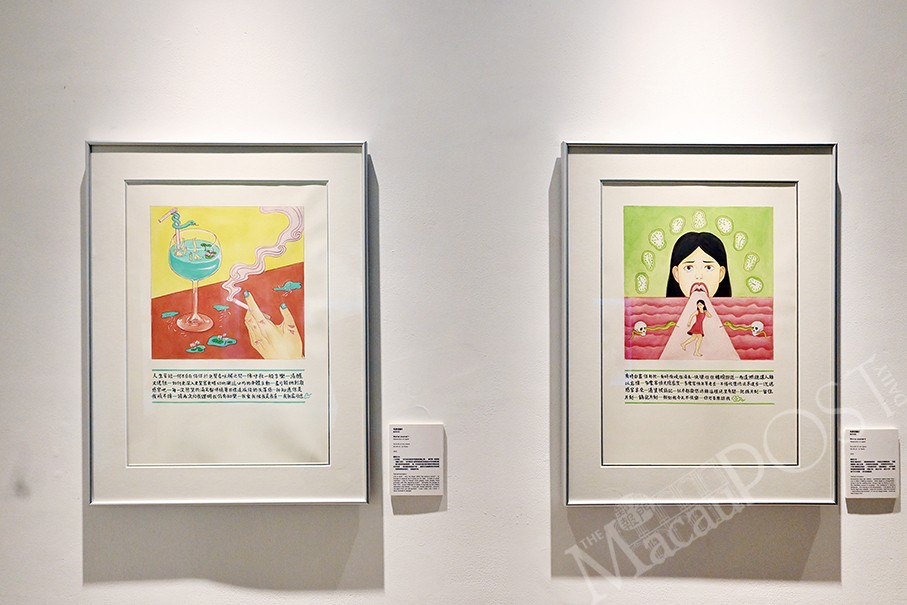
After finishing her film, Hio, who deploys Analytical Psychology as a research tool and whose recent research focuses on exploring the psychodynamics underlying ritual and healing practices in Han folk religious context, noted: “I really wanted to make it an expanded experience so I created a series of drawings” that eventually turned into her “Mortal Journal” series, all reflecting ideas about how people can “potentially meditate on the idea of death in our daily life”.
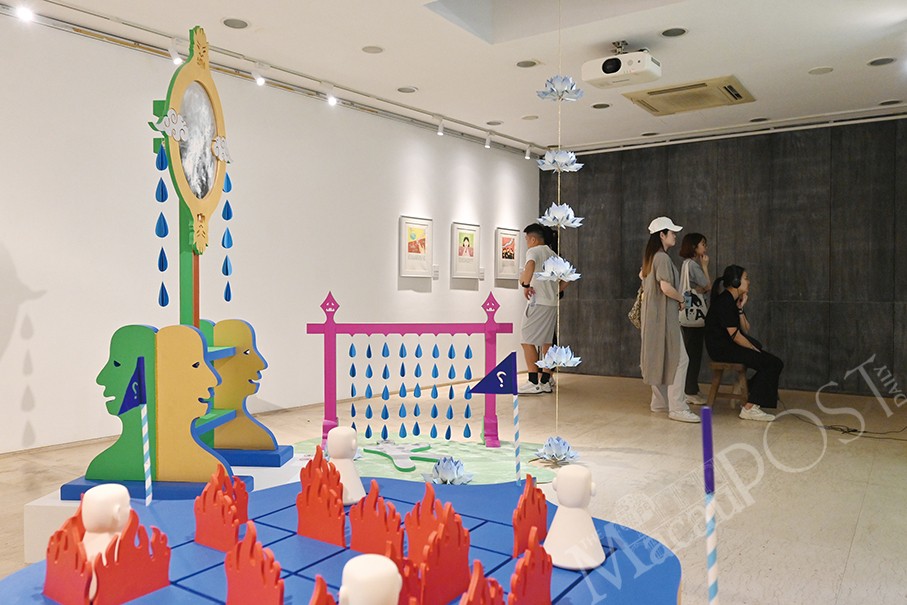
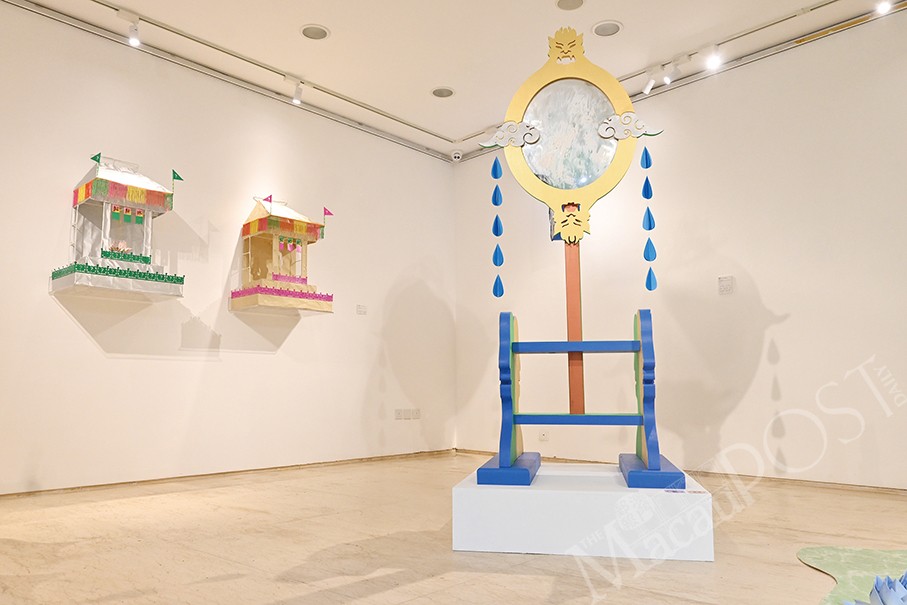
The other exhibits then followed suit, resulting in a mix of the entirely imaginative and the textually based. Among the artworks that Hio introduced yesterday are the installations “Protagonist in Blue” and “Reflect Me Gently”, which will greet gallerygoers as they enter the venue. Hio noted that both are derived from Chinese folklore and tradition, looking at what people will encounter in the underworld after death, particularly the ideas of the “sea of agony” that one traverses and the “mirror of karma” where one reflects on past deeds while one was alive.
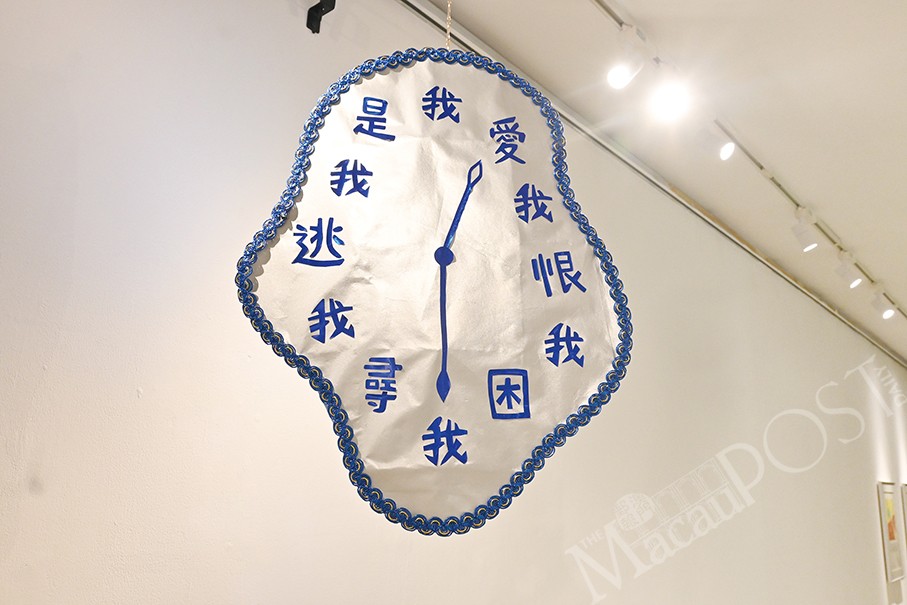
The piece “Time Will Not Tell” is meanwhile one of the works that incorporates joss paper craft, with Hio noting that the pieces are normally burnt after the rituals. “But here, we try to make it like a temporary space for remembrance, a temporary monument for the past”.
The resulting clock-shaped piece reflects ideas like how emotions shift with time, said Hio. She elaborated that when people look at all the random deaths reported by the news occurring daily, they begin to reflect on their finiteness, having limited time, physical existence and bodies that will eventually fade. And this idea of being finite is strongly internalised, she said.
“Taking this as a starting point, we want to get something, and we want to achieve something. We don’t want to waste our time. And I think this is actually the crucial anxiety we have in this discourse about death and how we contemplate it”.
The hall at Albergue SCM houses all these works, with Hio noting that this was a deliberate decision for its background and history as a shelter. Albergue is Portuguese for “hospice”, while SCM stands for Santa Casa da Misericórdia (“Holy House of Mercy”), Macau’s oldest charitable organisation, as noted by the Post.
“All these places were actually shelters or places that provided for people in need. And I think it actually resonates with what people do in offering rituals because they try to take care of those ghosts who don’t have their predecessors to worship them or to remember them. That’s why I think it’s such an ideal spot for the exhibition to take place”.
As the exhibition continues, she hopes visiting gallerygoers will be able to take away two things, namely how one can react to symbolisms related to death, and how we can reflect on and interact with death-related anxieties rather than just stowing them away.
Death is inevitable as it comes in many unpredictable forms and ageing, though society tries hard to push the narrative that it is all within our control, according to Hio, noting that this is a tension that has always existed. When we acknowledge this fate, inevitability and collective fear, Hio said that one might feel more connected in this limited journey of life and make the best of it while living with that anxiety. In the end, Hio said that it’s “about recognising the anxiety and trying to decide how to interact with this anxiety”.
The free-admission exhibition is on until April 24, being open daily from 3 p.m. to 7 p.m. on Mondays, and from 12 noon to 7 p.m. the rest of the week. One can find more information on the exhibition by visiting the AFA Facebook page and website.
*The Hungry Ghost Festival is a traditional East and Southeast Asian observance (mainly in Chinese communities) held on the 7th lunar month. It’s believed that the gates of the underworld open and spirits roam the living world. Families honour deceased ancestors and appease wandering ghosts with offerings – food, incense, paper money, and paper goods – so the spirits are fed and placated. - Poe
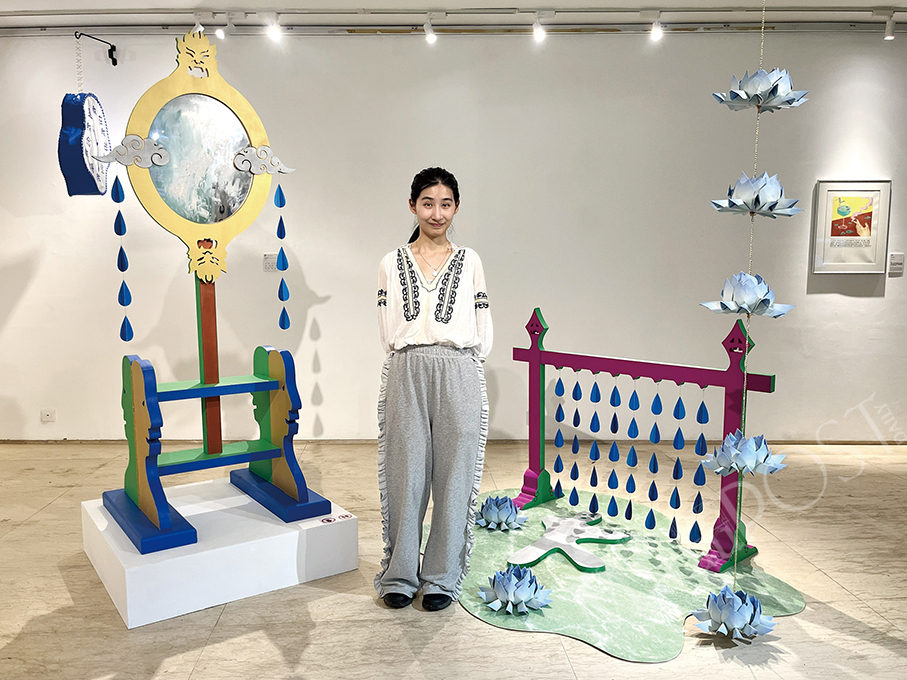
Local artist Hio Lam Lei poses with her installations displayed at the D1 Hall. – Photos taken yesterday by Rui Pastorin