


The local Health Bureau (SSM) announced in a statement yesterday that a 65-year-old local male patient, who was in serious condition, tested positive for Legionnaires’ disease.
According to the statement, the patient has a history of chronic illness and long-term coughing. He developed symptoms including haemoptysis* and dizziness on April 1 and sought treatment at the public Conde de São Januário Hospital Centre, where a chest X-ray indicated pneumonia and he was admitted for treatment.
His condition worsened on Sunday, requiring ventilator support, and he was transferred to the intensive care unit on Wednesday, the statement said, adding that yesterday’s laboratory results confirmed the presence of Legionella pneumophila** in a bronchial sample, leading to a diagnosis of Legionnaires’ disease.
The statement underlined that the patient had no recent travel history during the incubation period, and no family members living with him have reported symptoms. The statement noted that authorities will conduct environmental sampling at the patient’s residence and surrounding areas to identify the source of infection and implement targeted control measures.
According to the statement, Legionnaires’ disease is an infectious disease caused by Legionella bacteria, first identified following an outbreak at a veterans’ convention in the United States in 1976. The bacteria are commonly found in natural environments such as water and soil, and can multiply rapidly in warm and humid conditions, particularly in water temperatures between 20 and 45 degrees Celsius. Artificial water systems – including cooling towers of central air-conditioning systems, spa pools, fountains, and respiratory medical equipment – may also harbour the bacteria, especially where biofilm or sediment is present. Infection typically occurs through inhalation of contaminated aerosols***. However, the disease is not transmitted from person to person or through food and drink.
Symptoms may include fever, cough, difficulty breathing, fatigue, headache, muscle pain, abdominal pain and diarrhoea. The incubation period usually ranges from two to 10 days, and early antibiotic treatment can be effective.
The Health Bureau urged residents to maintain properly designed and maintained water systems, avoid smoking and excessive alcohol consumption, and ensure proper cleaning of humidifiers and respiratory devices to reduce the risk of infection, the statement noted.
*Haemoptysis means coughing up blood from your lungs or airways (the tubes that carry air to your lungs). It can range from small streaks of blood mixed with spit to coughing up mostly blood. – DeepSeek
**Legionella pneumophila is a type of bacteria that can cause a serious lung infection known as Legionnaires’ disease. People usually catch it by breathing in tiny water droplets (mist) from contaminated sources like hot tubs, air conditioning systems, or plumbing, not from person-to-person contact. – DeepSeek
*** aerosols are tiny, lightweight particles or droplets suspended in the air, like mist, steam, or fine dust. – DeepSeek
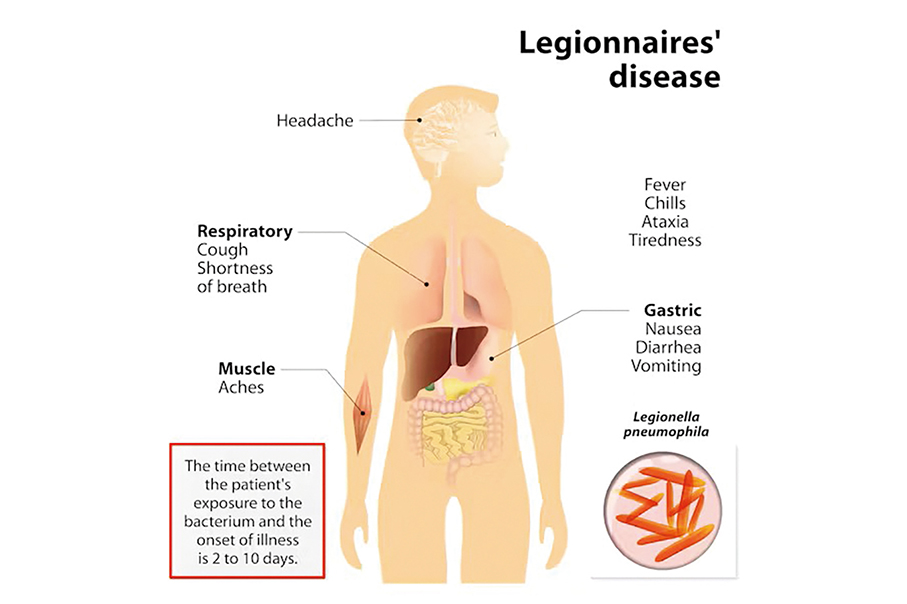
This downloaded image courtesy of Australia’s The Conversation network of nonprofit media outlets shows a diagram of the Legionnaire’s disease.