

The local Health Bureau (SSM) said in a statement last week that it is continuing to monitor developments surrounding a hantavirus outbreak linked to an Atlantic cruise ship, urging residents travelling overseas, particularly to South America, to strengthen personal hygiene and avoid contact with rodents and their excretions.
The bureau said the advisory follows a notification released by the World Health Organisation (WHO) on Wednesday regarding confirmed hantavirus infections connected to a cruise vessel operating in the Atlantic region.
According to the WHO, passengers and most crew members had disembarked by May 10 and have returned to their home countries or transit destinations, while health authorities in the relevant countries continue contact tracing and monitoring measures.
As of May 13, a total of 11 cases had been reported, including three deaths. Among the reported cases, eight were confirmed infections, two were classified as suspected cases, and one remained under investigation.
The bureau said all confirmed cases involved infection with the Andes virus, which is the only hantavirus strain known to allow limited human-to-human transmission. The bureau noted that person-to-person transmission generally requires prolonged close contact and is more commonly seen among family members, intimate partners, caregivers, and healthcare workers.
Citing the WHO’s assessment, the bureau said the public health risk for individuals associated with the cruise ship was considered “moderate”, while the overall risk to the global general population remained “low”. The bureau added that Macau has not recorded any hantavirus infection cases over the past 30 years, indicating that the local transmission risk remains low.
The hantavirus disease is caused by infection with hantaviruses and can manifest as haemorrhagic fever with renal syndrome (HFRS) or hantavirus pulmonary syndrome (HPS), according to the statement. The incubation period for HFRS is generally between 12 and 16 days, but can extend up to 56 days, while HPS usually develops within six days to several weeks after exposure, averaging around 14 days.
The statement said that the disease is primarily transmitted through exposure to saliva, urine or faeces from infected rodents. Humans may become infected through direct contact with contaminated materials or by inhaling virus-containing aerosols, noting that early symptoms also include fever, fatigue and muscle pain.
In severe cases, patients with HFRS may develop bleeding complications and kidney damage, potentially progressing to acute renal failure, the statement said, while HPS may lead to coughing, shortness of breath, respiratory failure and shock.
The bureau noted that HFRS is mainly reported in Asia, Europe and Africa, while HPS is more commonly found in North and South America. As there is currently no specific treatment for hantavirus infection, the bureau stressed that prevention remains the most effective strategy.
Residents are advised to maintain good personal hygiene, wash their hands regularly, keep living environments clean, carry out rodent control measures, avoid contact with wild rodents and wear waterproof gloves when handling potentially contaminated animals or excreta, the statement said.
The Health Bureau said it will continue monitoring the international situation and urged residents to stay alert to rodent-related infection risks, particularly when travelling to affected regions.
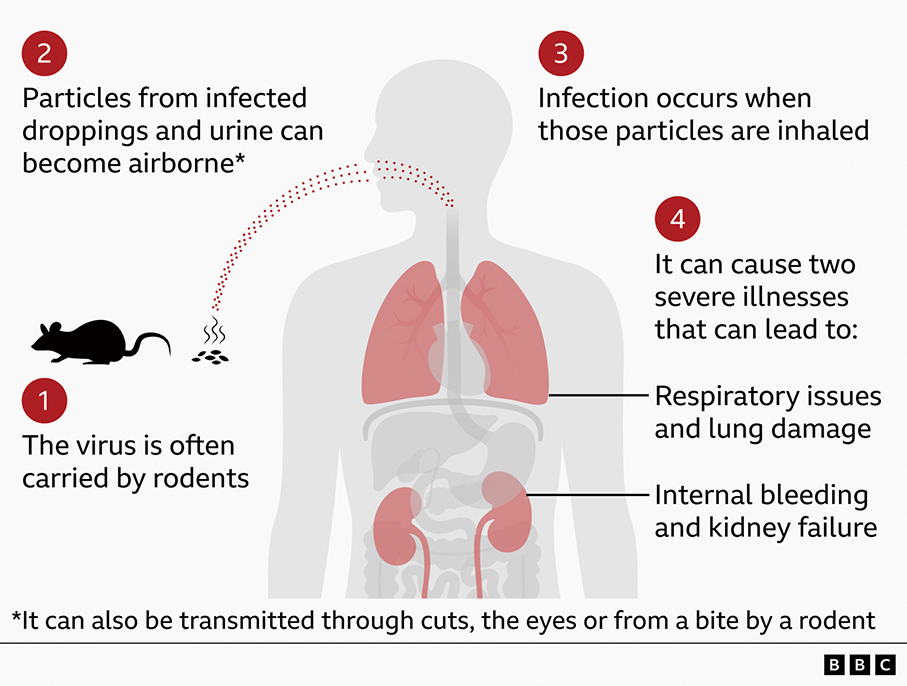
This downloaded infographic shows the symptoms of the hantavirus. – Image courtesy of BBC