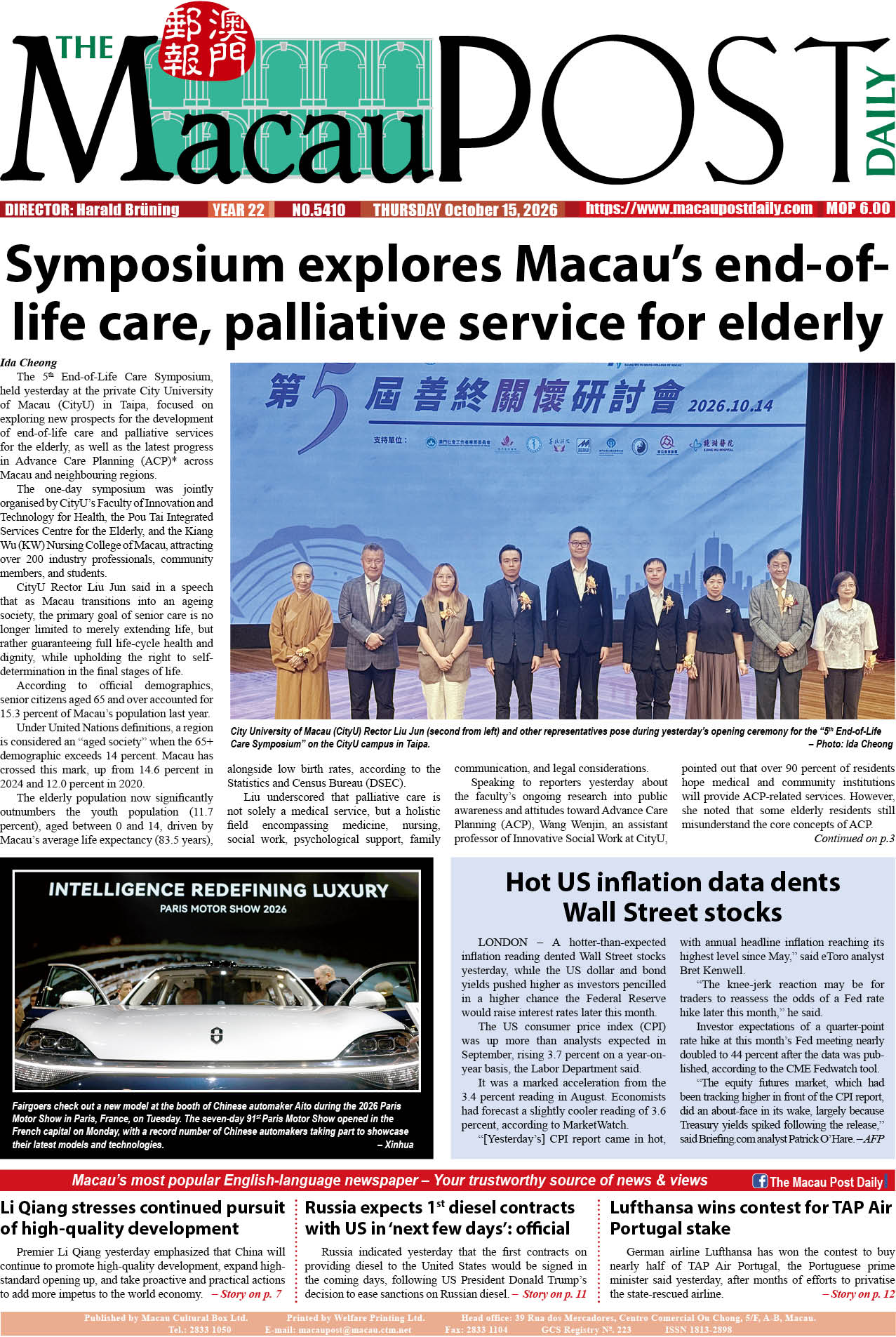


The Macau General Union of Neighbourhood Associations (UGAMM), generally known as “Kai Fong,” hosted a conference at its Toi San headquarters recently to present survey findings showing that 99 percent of Macau students use AI chatbots.
The findings also revealed that high school students rank AI as one of their top priorities when seeking help, placing it ahead of traditional sources such as teachers.
Francis Lee Wai-lun, a PhD programme in Social Work graduate from Hong Kong Polytechnic University, told the Post last month that these results reflect AI’s role as an important support tool for young people. He pointed out that parents do not need to compete with AI; instead, they should redefine their parenting role and reduce the proportion from “problem-solving” to “emotional companionship and empathy.” Speaking to the Post at his office on Rua de Berlim in Nape, Lee, who was involved in the survey, explained that students’ preference for turning to AI was not due to a lack of courage to speak with teachers or parents.
Rather, as young people are going through a stage of self-differentiation, they prefer to solve problems independently and fear that seeking advice from adults may lead to further questioning, criticism, or rejection, Lee said. In contrast, he noted that AI does not make emotional judgments but provides smooth, pressure-free responses, making it more appealing.
Lee emphasised that parents and teachers should not compete with AI regarding the sheer volume of information it can provide, as the technology is capable of integrating vast amounts of knowledge that may surpass the cognitive reach of adults. Instead, adults should focus on fulfilling roles that AI cannot replace, including offering care, companionship, and leading by example.
Additionally, Lee suggested that parents and teachers should foster an open culture of communication regarding their children’s use of AI. This involves not only encouraging children or students to share their experiences with using AI, but also having parents and teachers take the lead by actively engaging in exchanges with youngsters and reflecting on their own use of AI, thereby fostering a two-way dialogue, Lee said.
He also recommended that schools encourage students to share their practical experiences with AI from the primary and middle school levels.
Establishing peer support networks can help transform the use of AI from a “private, personal activity” into a “public platform open to discussion, sharing, and collaborative learning”, Lee said, adding that this approach would help cultivate students’ interpersonal communication skills and critical thinking abilities in the AI age.
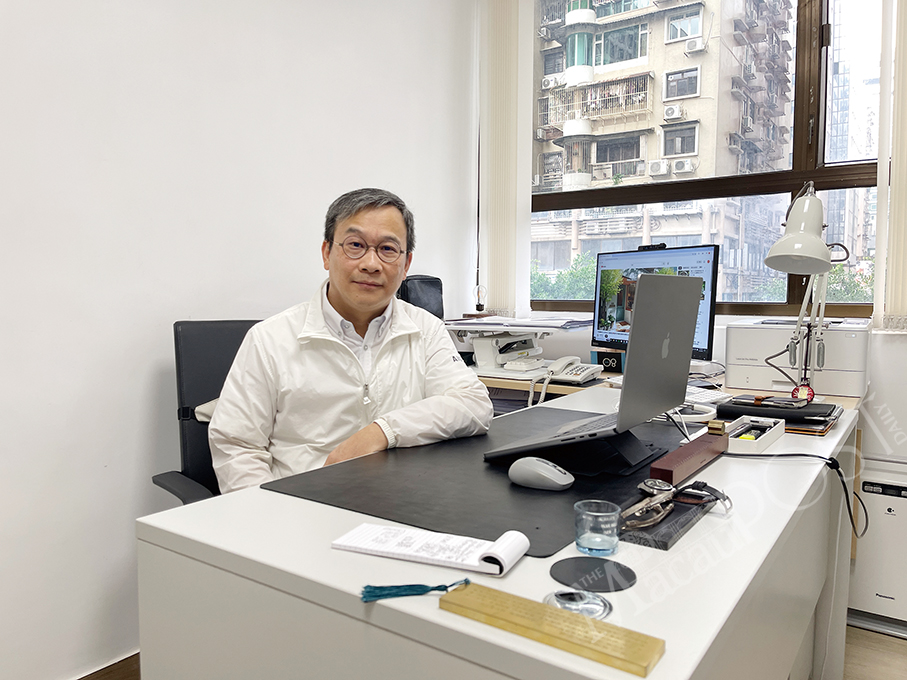
Francis Lee Wai-lun poses recently at his office on Rua de Berlim in Nape. – Photo: Armindo Neves