

Interviews by Rui Pastorin
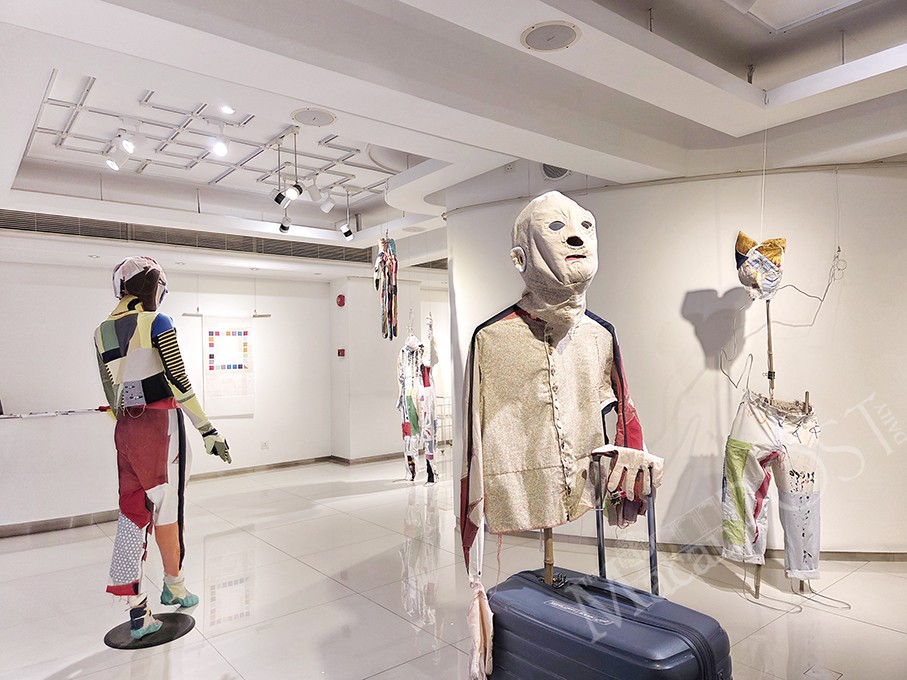
The worlds of anthropology and art are coming together at “Wondersome and Peculiar Voyages: The Travelling Dolls”, the latest exhibition hosted at the Rui Cunha Foundation (FRC) gallery.
Presenting their pieces are Macau visual anthropologist and artist Cheong Kin Man and his wife, Polish artist Marta Stanisława Sala. Marking the duo’s first exhibition in Macau dedicated to their artworks, the event not only invites viewers to a showcase of their intercultural cooperation over the years, but might urge one to reflect on people’s diverse backgrounds, cultures, and stories.
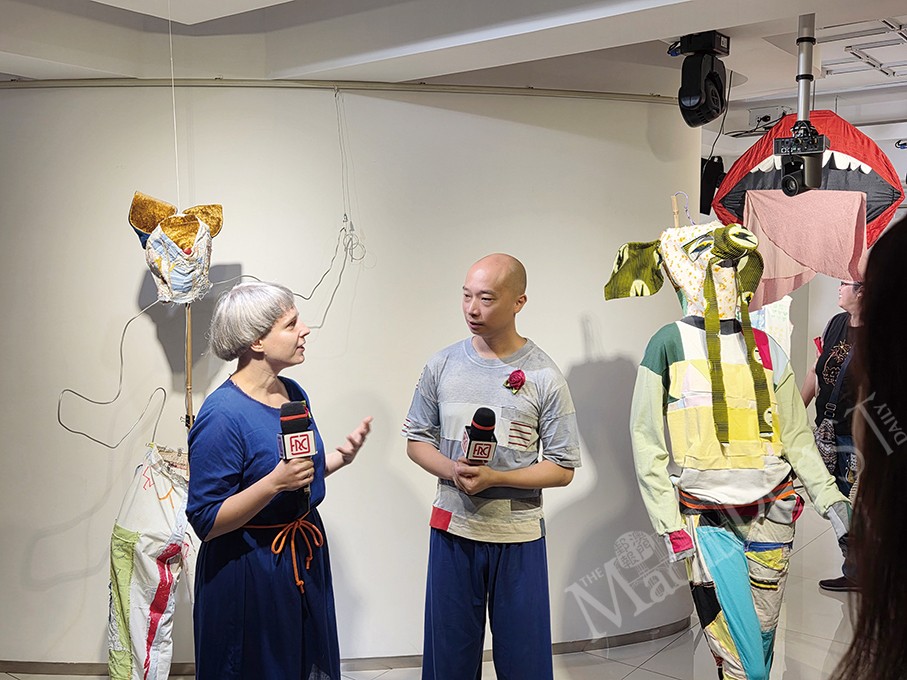
The exhibition’s concept builds on a single guiding question, which Cheong, who the Post interviewed along with Sala and curator Sara Neves during last week’s opening, said was: “How can we tell the bigger picture through our own stories?”, adding that the exhibition was about “doing artistic autoethnography* as an innovative methodology in anthropology”.
Cheong described the social science as a very reflexive and critical while also being open for discussion. “Now it’s also a trend to use arts to tell something that conventional anthropology cannot tell”, he pointed out.
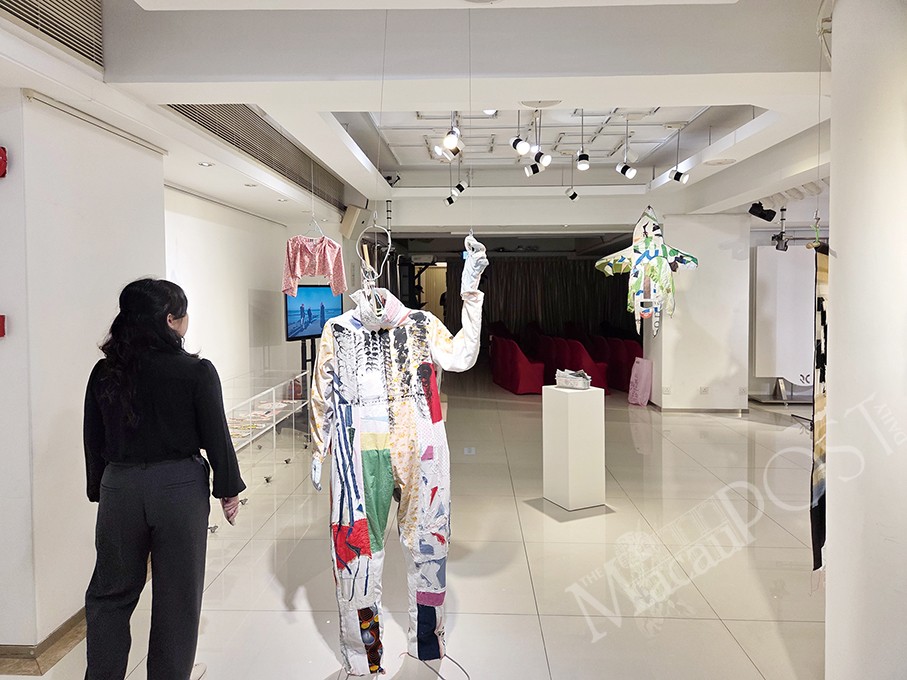
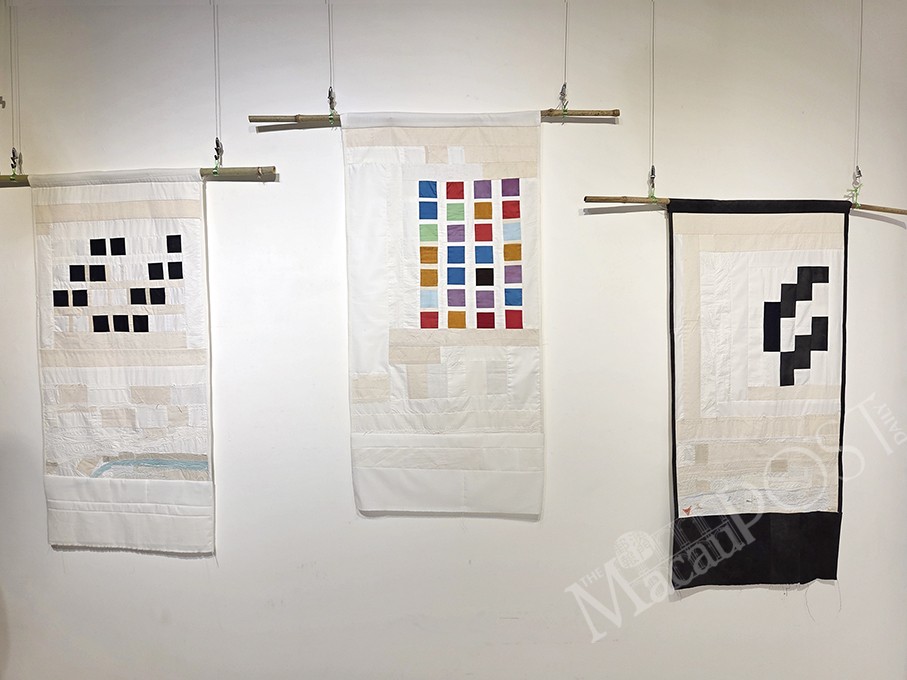
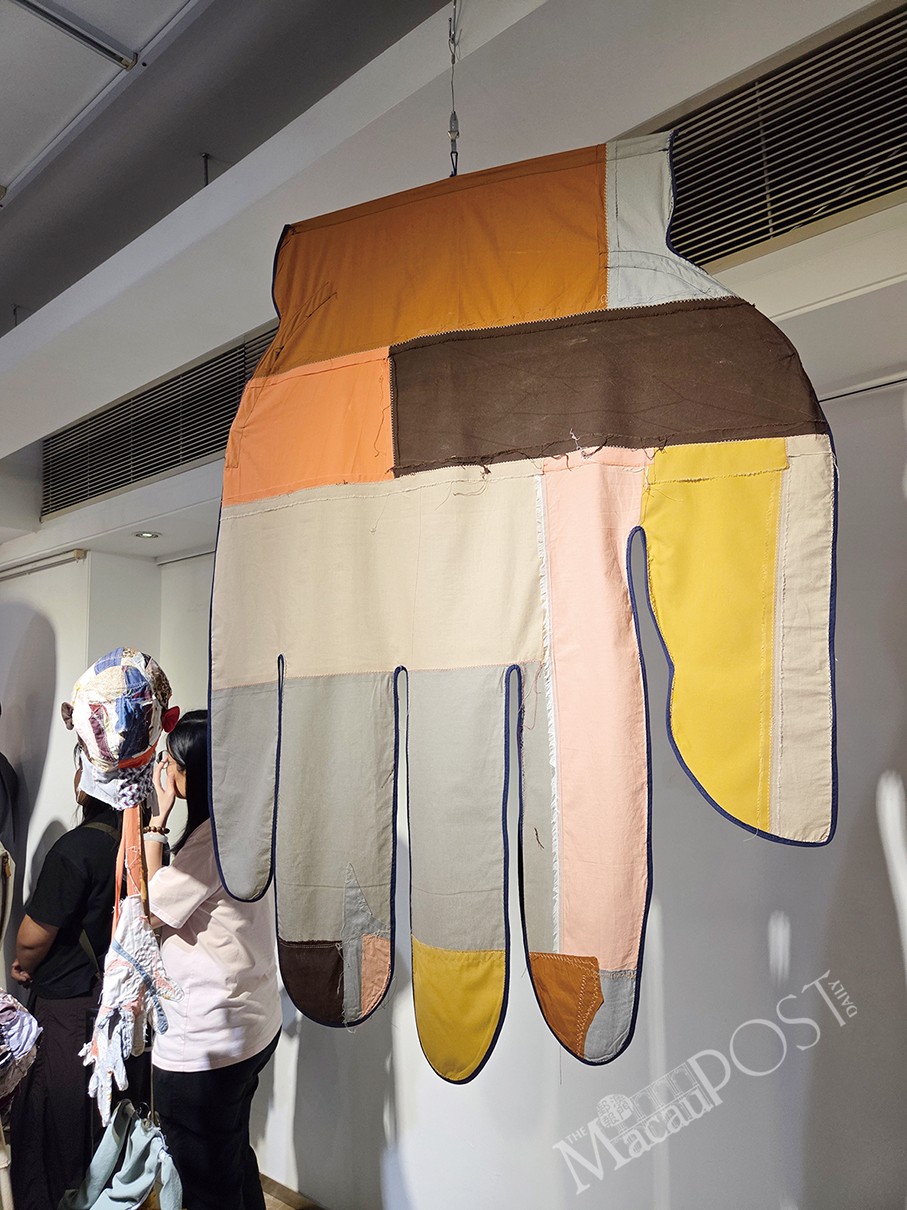
Neves meanwhile added that the exhibition weaves the artists’ personal lives and backgrounds into it, bringing together the best of both worlds and therefore turning them into artworks with an anthropology background. The resulting pieces mainly include textiles and videos, while the duo’s new “Travelling Dolls” series is the centre point of the exhibition and was created with Macau in mind.
An emphasis on translinguality
Among the topics they are exploring through these pieces are cultural exchange, migratory experiences, and ethnic identity. Another important area the couple is tackling is the idea of translinguality**, with Cheong noting that this is inspired by their interactions with art circles and daily life in the German capital of Berlin, where the couple is based in addition to Lisbon where Cheong is pursuing a PhD in anthropology.
The translingual portion also comes from more personal experiences with cultural interaction, with Cheong adding: “It is important to foster language equity”, considering factors such as their marriage and having a Kurdish-German sister-in-law. “Basically, we encounter multilingualism every day, but the importance is how we can really put these languages in an equal position, so this is one of the main reasons why we started our cooperation”.
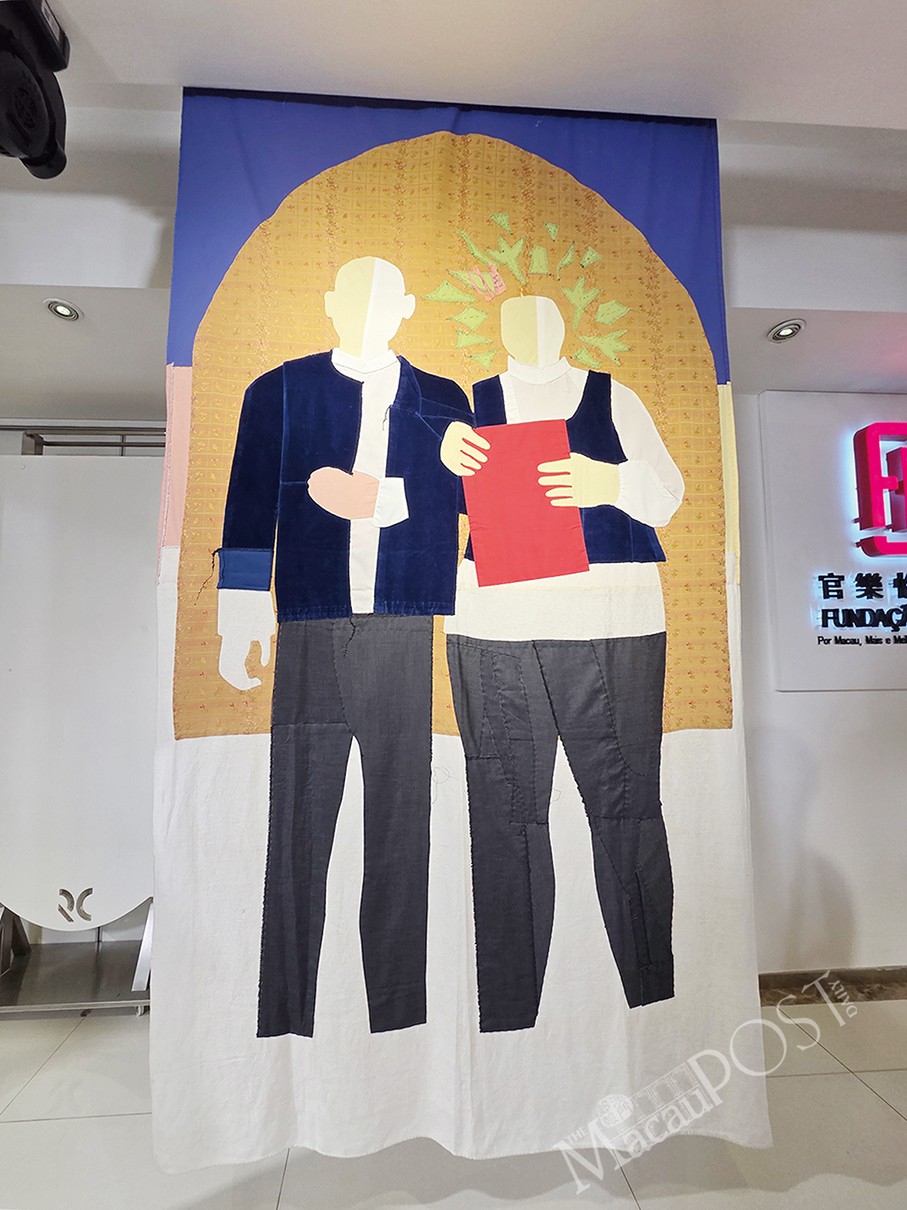
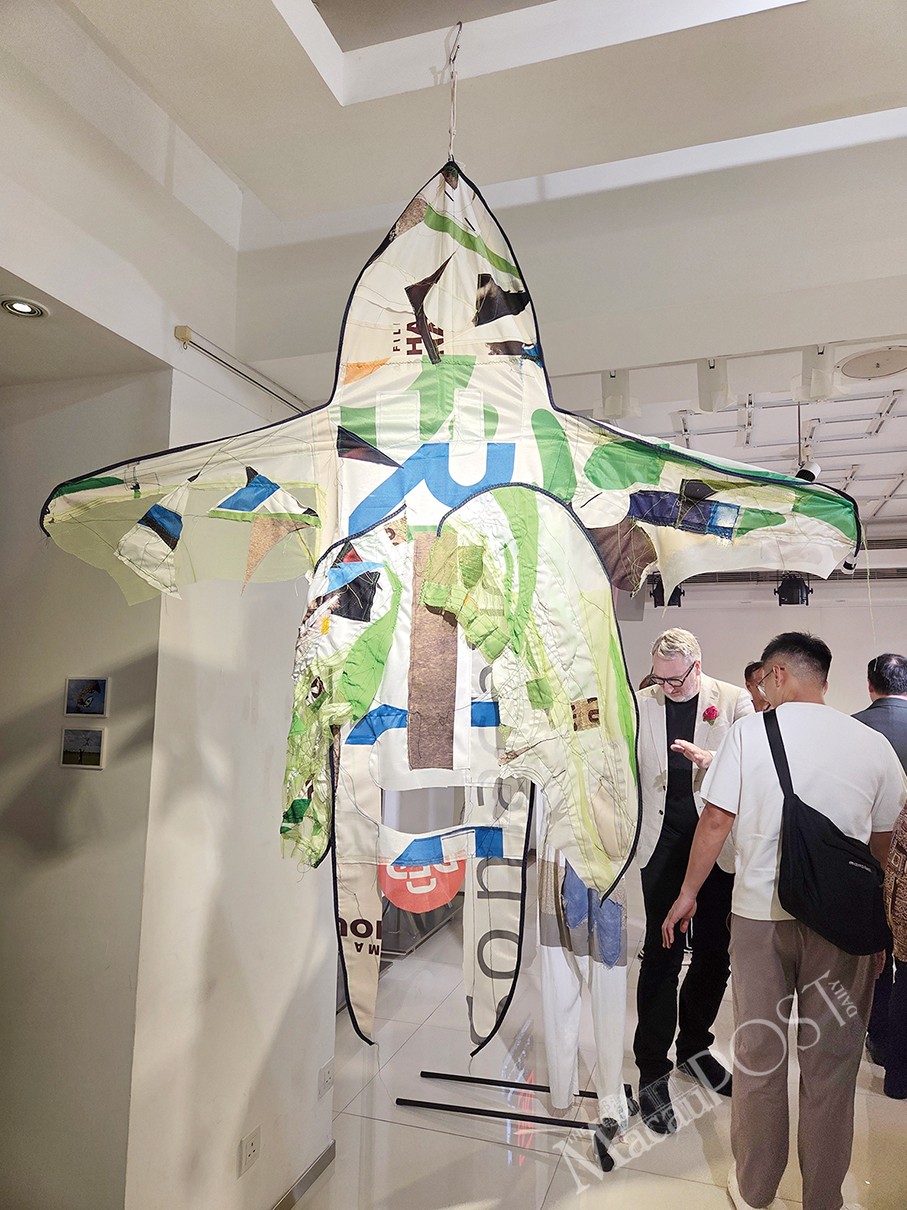
With textiles being a large part of the showcase, Sala noted how they come into play and how they are metaphorically used to talk about differing backgrounds and identities.
“These textiles are also metaphorically connected to movement and to many identities, which we even cannot count how many stories are in the textile”, from production to its eventual disposal, in all being a process akin to tracing and collecting hidden stories and processes, Sala pointed out. At the same time, these stories travel with textiles, with more narratives and layers continuing to be added and organising each event to create new languages with different people.
“Even when we’re travelling we’re searching for this translinguality”, Sala said. And Macau is no exception.
Sala observed the city as having a reputation as a “place of connecting different identities”, while also noting that public spaces also see other influences aside from its Eastern and Western mix.
On that note, the curatorial text is not only available in Chinese, Portuguese, and English, but even in Tagalog, Vietnamese and Indonesian, citing inspiration from a multilingual advertisement the couple saw and wanted to integrate it into their art.
Neves further pointed out that the city includes a “very large population” of people of different backgrounds, nationalities, and stories, also wanting to put a spotlight onto this aspect of the city. “These people also live in Macau, they are really part of the city, a very important part. So, it’s also a way for us to call back and to honour them in the exhibition”, harkening back to what she wrote in the curatorial text.
“All of us, we are a little bit like these travelling dolls, right? So, all of us, even if we don’t come from a different country, we have stories, we have ancestrality, we have maybe our families’ stories in different countries”, with the exhibition not only showing something, but a way for exhibitiongoers to think about themselves and their own history.
The works continue to be on display at the Cunha gallery, located on Avenida da Praia Grande, until Saturday. One can visit from 10:00 a.m. to 7:00 p.m., and from 3:00 p.m. to 7:00 p.m.
*Autoethnography is a qualitative research method where a writer uses their own personal experiences to analyse and understand broader cultural, social, or political issues. - Gemini
**The state, quality, or capacity of operating across and fluidly mixing multiple languages. - Gemini
Read more on: https://www.macaupostdaily.com/news/28861
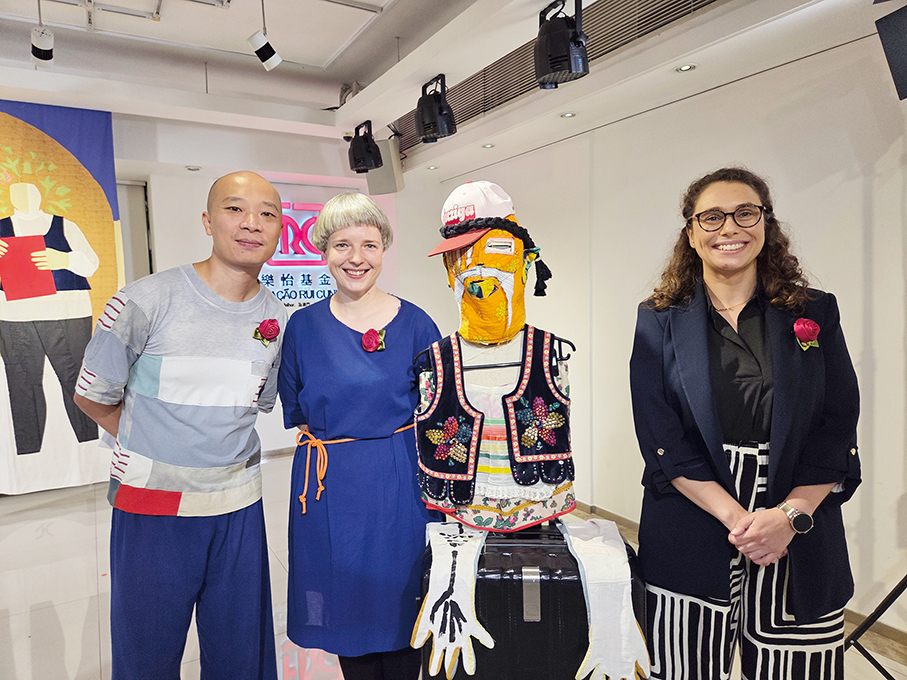
Macau visual anthropologist and artist Cheong Kin Man (from left to right), Polish artist Marta Stanisława Sala, and exhibition curator Sara Neves pose with one of the pieces being exhibited at the “Wondersome and Peculiar Voyages: The Travelling Dolls” exhibition in the Rui Cunha Foundation (FRC) gallery. – Photos: Rui Pastorin