

When discussing Macau’s history, many people’s impressions are limited to its World Heritage sites or its status as a casino hub. However, the scarcity of local history textbooks means that many local stories and historical details are gradually being forgotten. To fill this gap, the Macau Comickers Association has actively promoted the creation of comics themed around local culture and intangible cultural heritage in recent years, using vivid and engaging illustrations to open a window for primary and secondary school students – as well as the wider public – to learn about Macau’s history.
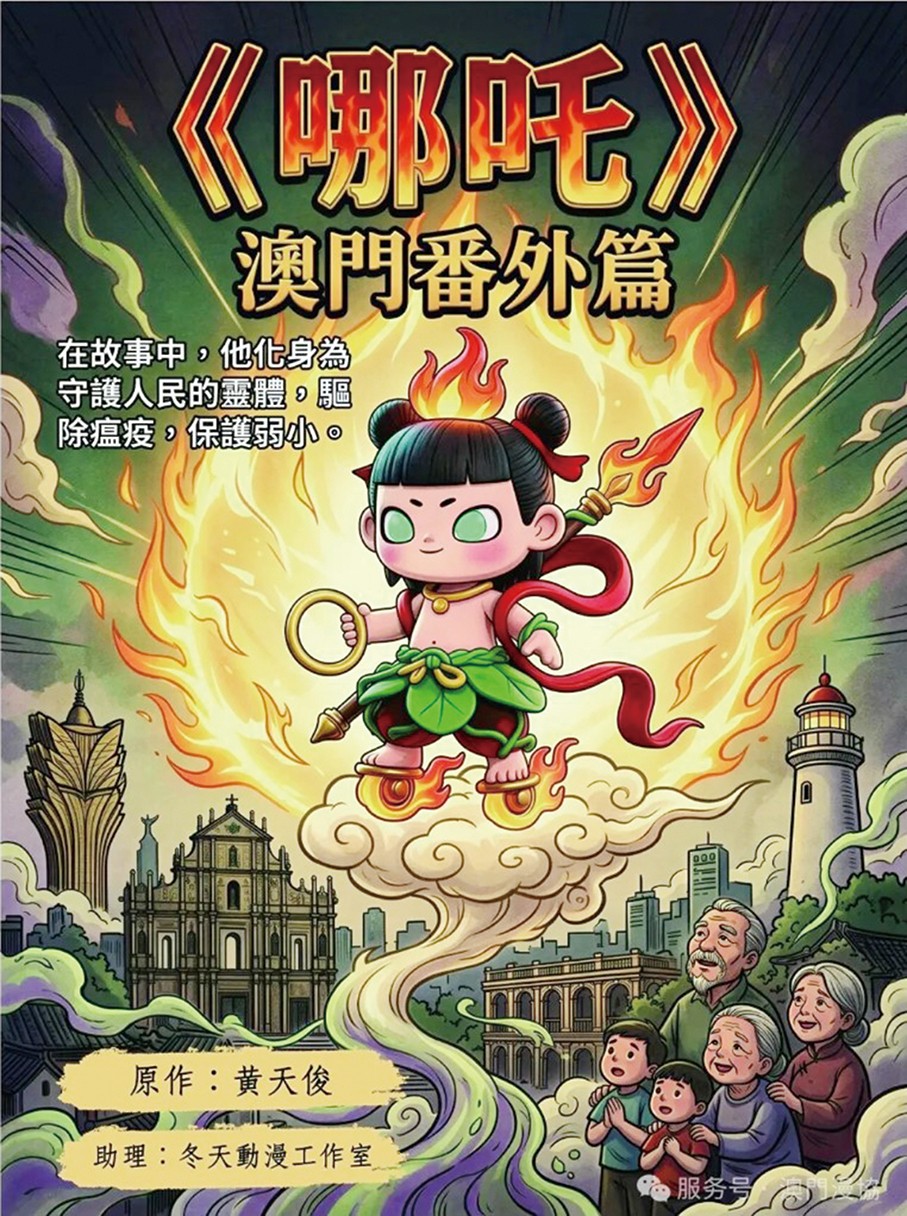
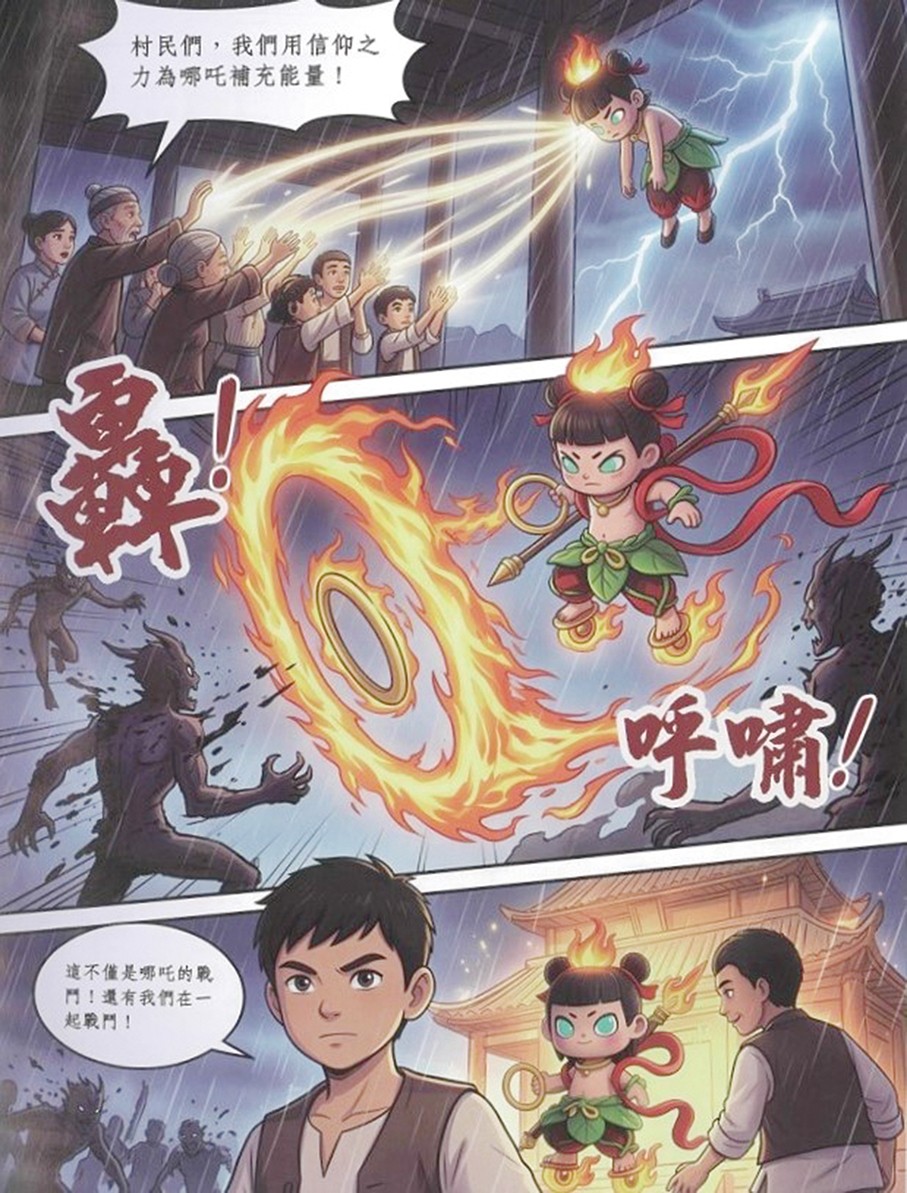
In an interview with the Post last Wednesday, Michael Wong (黃天俊), chairman of the Macau Comickers Association, noted that his group recently published a book about the Na Tcha belief in Macau – the 14th volume in its Comic Book Macau Series.
Promoting the inheritance of intangible cultural heritage amid the ‘Nezha 2’ movie wave
Speaking during an interview at the Macao Educational Centre of Culture and Arts in Zape, Wong said that the association plans its book themes in advance each year. Following the immense popularity of the animated film Nezha 2 on the mainland, and given that Macau is home to both the Na Tcha Temple near the Ruins of St Paul’s and the recognised intangible cultural heritage of the “Na Tcha Folk Belief”, his team seized the opportunity to organise a Macau comic creation competition.
Winning entries were subsequently compiled and published. In addition, the team invited 100 artists to depict Na Tcha in various styles for the ‘Nezha Multiverse’ project, aiming to leverage the popularity of this well-known IP to introduce Macau’s traditional Na Tcha culture to a wider audience.
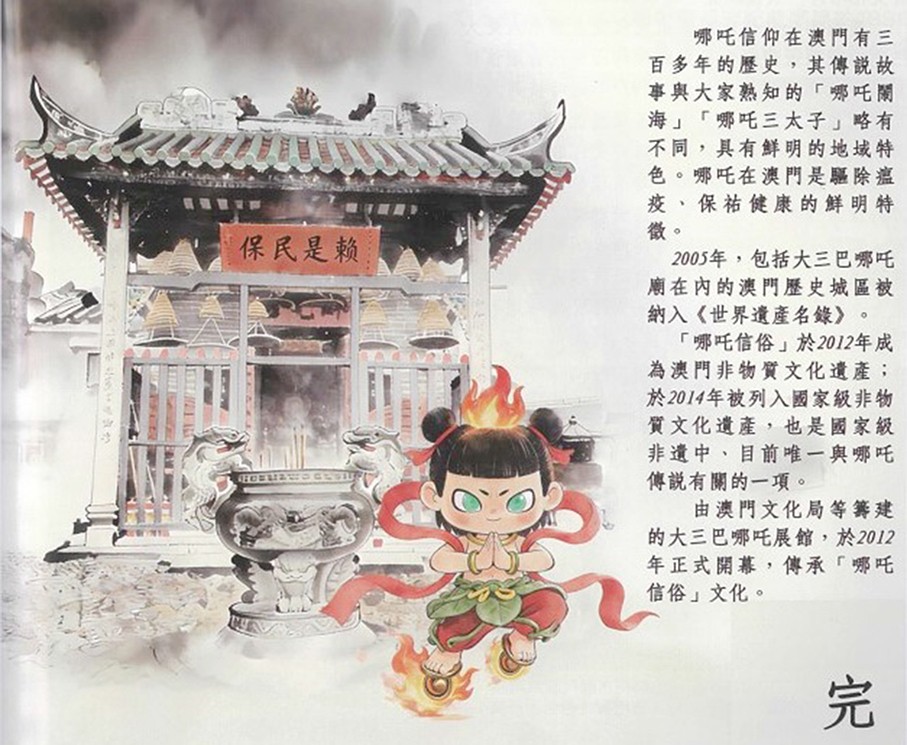
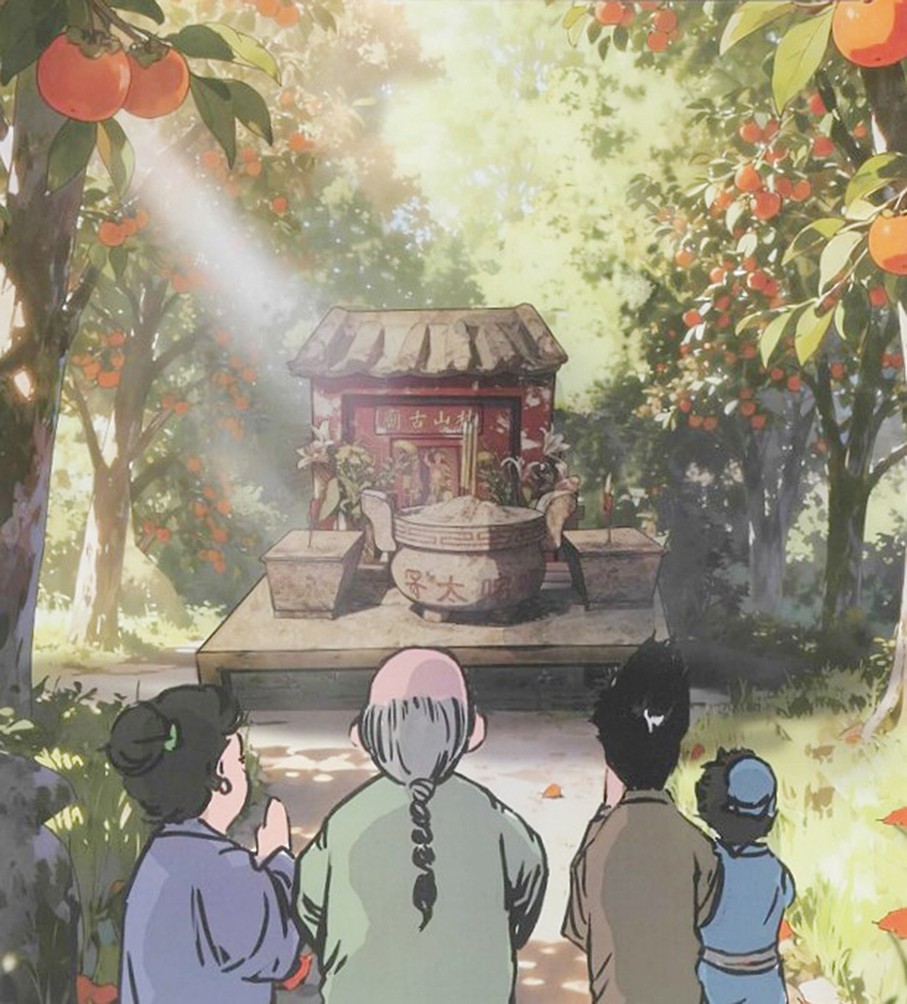
Wong pointed out that Macau’s temple culture often possesses a distinct “functional” aspect – for example, Na Tcha is associated with protecting health and warding off plagues – which sets it apart from beliefs in other regions. Given that there are multiple versions of the history surrounding Macau’s two Na Tcha temples (one near the Ruins of St Paul’s and another near Mount Fortress), the team interviewed Ip Tat, one of the two key inheritors of the Na Tcha folk belief, to compile historical accounts from different eras.
According to Wong, they also incorporated a fascinating structural discovery into their comics: the foundation of the Na Tcha Temple near the Ruins of St Paul’s is built upon the site of the former St Paul’s Church, vividly highlighting the unique historical coexistence of Chinese and Western cultures.
“Our aim in creating historical comics is mainly to fill in the gaps left by textbooks, which often do not elaborate on the full story,” said Wong.
He cited the well-known figure of Dr Sun Yat-sen as an example. While textbooks tend to focus heavily on his revolutionary activities, they rarely mention the time he spent in Macau. At the time, Dr Sun was unable to practise medicine legally in Hong Kong or Macau due to issues over the recognition of his medical qualifications. He therefore offered free medical consultations at Kiang Wu Hospital, during which he met the Macau-born Portuguese national Francisco Hermenegildo Fernandes (1863–1923). Fernandes and his family not only helped Dr Sun publish his articles but were also crucial supporters during the early stages of his revolutionary journey.
“These lesser-known details are precisely what make historical comics so compelling,” Wong noted.
Using comics as a stepping stone to forge a unique local path
Facing a small animation and comics market in Macau, with a population of around 688,000, Wong candidly admitted that developing comics genres such as science fiction, romance or motor racing would make it difficult to compete with established markets like the United States, Japan or Hong Kong. However, Macau’s rich history and intangible cultural heritage are unique local assets that cannot be replicated elsewhere.
With the support of the Cultural Development Fund (FDC), Wong’s team have published historical comics that transform complex archival materials into accessible “gateway books”. These are primarily distributed and promoted in schools to spark students’ curiosity about local history.
Looking ahead, the association has set out a clear publishing roadmap: following the Na Tcha theme, they will successively release works covering Cantonese opera culture and other elements of Macau’s intangible cultural heritage. Wong expressed his hope that this series of comics will continue for years to come, allowing both local residents and visitors to look beyond the casino industry and discover Macau’s profound cultural richness, built up over centuries.
Nezha (哪吒), also known as Nezha the Crown Prince (哪吒太子), is a protection deity in Taoism, Buddhism and Chinese folk religion. Nezha, a famous figure in Chinese mythology, is a divine hero whose origins are rooted in ancient Chinese folklore and religious traditions. According to the mythological narrative, Nezha was born during the Shang Dynasty (商朝, around 1600–1046 BCE), as his story is closely tied to the Investiture of the Gods (封神演义), a Ming Dynasty (1368–1644) novel set in that era.
The Post published an editorial about ‘Ne Zha 2’ on 3 March 2025, headlined ‘Editorial: Ne Zha – China’s soft power answer to Mickey Mouse’: https://www.macaupostdaily.com/news/24225.
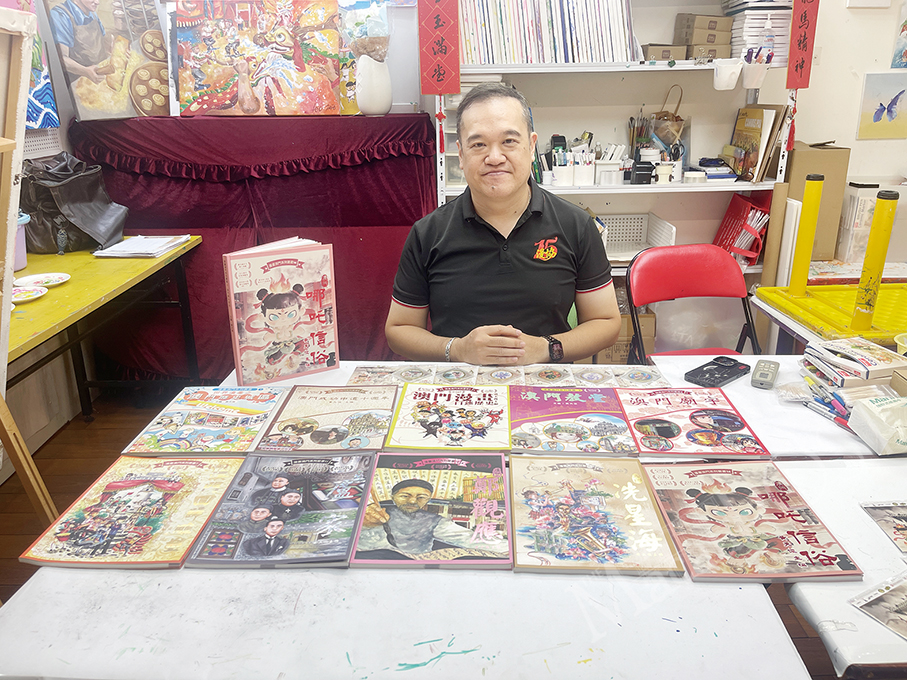
Macau Comickers Association Chairman Michael Wong (黃天俊) poses with Comic Book Macau Series at Macao Educational Centre of Culture and Arts in Zape last Wednesday. – Photo: Armindo Neves
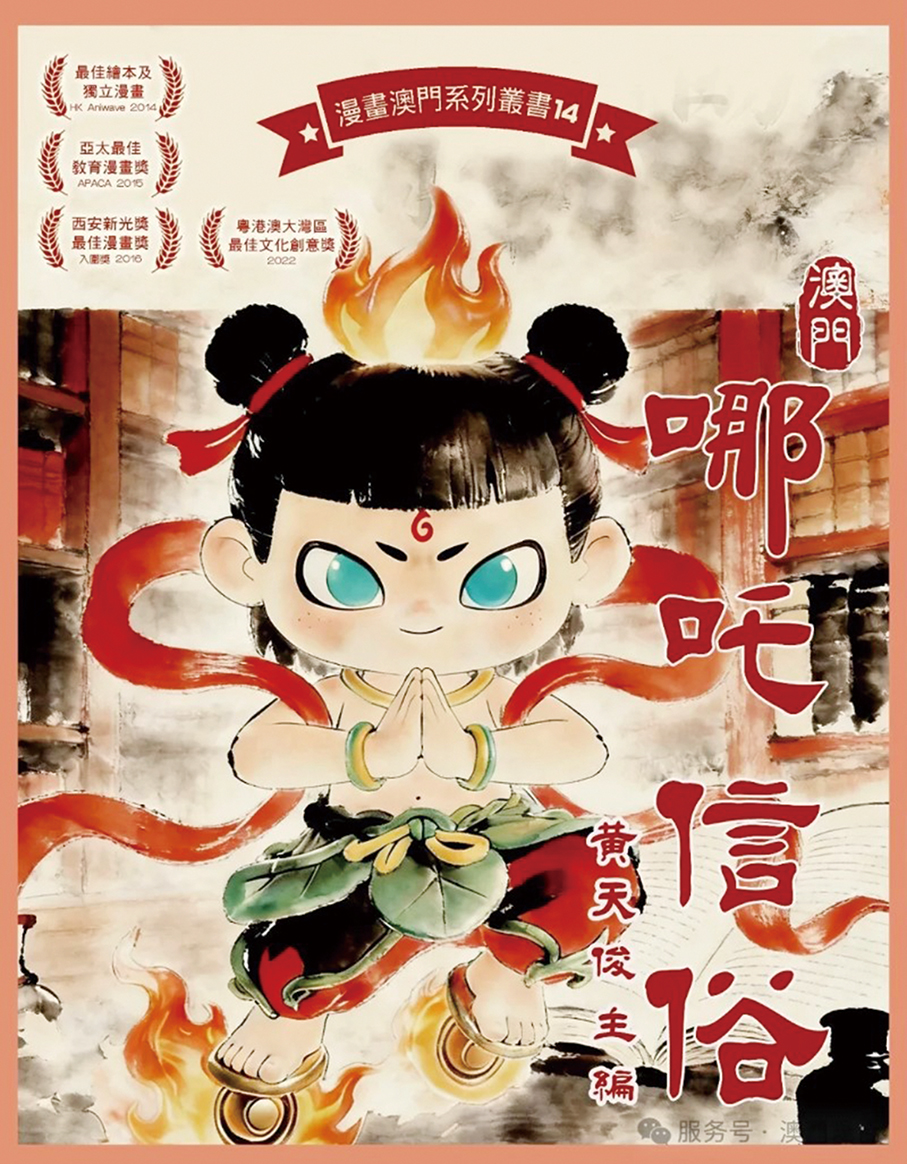
Front cover of Na Tcha Folk Belief in Macau, the 14th book of Comic Book Macau Series. – Photos courtesy of Macau Comickers Association