

Two separate incidents of student violence occurred in quick succession last month, prompting local lawmaker Sharon Loi I Weng to warn that emotional stress among young people and campus safety both require ongoing attention.
According to an announcement released to the Post on Friday, Loi–who is also vice-president of the Women’s General Association of Macau (Fu Luen)–said that efforts must be deepened across education and psychological counselling. She stressed that focus should shift towards early prevention while squarely addressing underlying structural issues.
On September 1, a male secondary school student allegedly splashed a female teacher with corrosive liquid inside a classroom, causing burns to multiple parts of her body. Separately, on September 24, another male secondary student – harbouring a grudge against a classmate – engaged in a verbal altercation and scuffle before pulling an unsharpened butterfly knife from his pocket, stabbing the victim in the face and scratching his neck.
As vice-principal of Fu Luen School, Loi expressed sympathy for the students, staff, and families affected. She noted that these isolated incidents early in the current academic year highlight how some young people lack effective outlets for stress relief and struggle to cope with accumulated emotional pressure, academic stress, peer conflict, and interpersonal friction. Such issues often stem from a combination of factors, including family communication, academic competition, and the availability of mental health services, she explained.
Loi also highlighted that, given the influx of online content, students are increasingly exposed to violent or inappropriate material. Consequently, improving digital literacy is essential to guide students in filtering and handling online information responsibly to avoid negative influences.
She argued that preventive efforts must be prioritised, with school counsellors and staff working together to integrate emotional education into daily campus life. Beyond strengthening emotional management, education on resolving peer conflict should also be embedded into the curriculum.
Through practical exercises and scenario-based learning, students can be taught to respond to conflicts rationally and peacefully, she said. Furthermore, Loi suggested introducing “peer counselling” or “mental health ambassador” schemes, where senior students are trained as peer supporters to lower the barrier to seeking help and foster a supportive culture.
Regarding resources, Loi noted that sustained investment by the Education and Youth Development Bureau (DSEDJ) has increased the number of student counsellors in local schools to over 410, bringing the counsellor-to-student ratio to approximately 1:210. Although an improvement, pressure on frontline services remains intense. Some counsellors report that rising numbers of integrated students (those with special educational needs) have significantly increased follow-up workloads. Allocating counsellors based solely on total student enrolment may no longer meet current demands, she added.
Loi recommended that the government factor in the number of integrated students and special educational needs when assigning counsellors. She also called for increased support during high-risk periods – such as the start of the school year – when students are particularly vulnerable to emotional fluctuations and transition difficulties.
Furthermore, Loi said, when signs of stress are detected, intervention must be prompt and comprehensive. Communication between parents, teachers, and counsellors should be strengthened to monitor behavioural changes proactively. Students should also be encouraged to use support hotlines, such as the DSEDJ helpline, while community and healthcare resources must be integrated to provide preventive, rather than purely reactive, support to families in need.
Loi called on all sectors of society – including schools, families, and community groups – to collaborate closely in embedding emotional education and digital literacy into daily life, safeguarding young people and preventing similar tragedies from recurring.
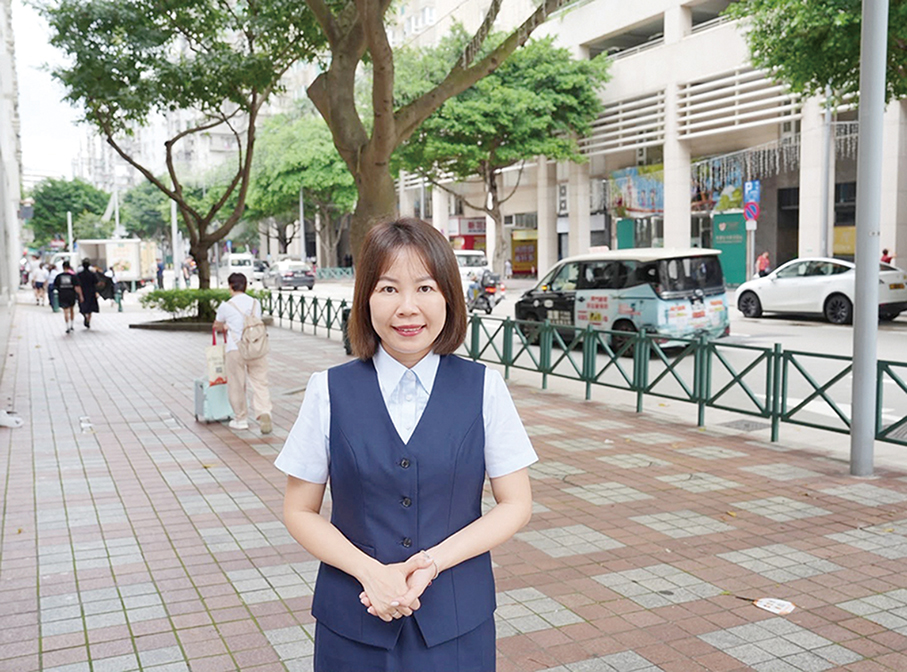
Undated file photo of Women’s General Association of Macau (Fu Luen) Vice-President-cum-lawmaker Sharon Loi I Weng. – Photo courtesy of Fu Luen