

Commentary by Stefan Hammond*
The gaming industry leverages technology in powerful ways. During the early twenty-first century, integrated resorts (IRs) sprang up all over the Macau landscape, and now process vast rivers of data which define everything from culinary preferences to choice of background music.
The luck of the draw lures many patrons, and traditional tech disciplines like CRM (Customer Relationship Management) ensure that said patrons are fed, watered, and kept cheerful. The latest CRM wrinkle: generative-AI applications.
Show floors and name badges
The business of luck was displayed across show floors at G2E Asia 2025, held in Macau in early May concurrently with Asian IR Expo 2025. G2E Asia, which debuted in 2007, is all about the Asian gaming industry, while Asian IR Expo focuses on emerging trends and innovations in Asian IRs, hotel and travel sectors in Asia.
Macau is the obvious location for these conferences, although representatives from different regions also shared knowledge on the Philippines. And although Thailand has yet to codify its nascent plans to open their market, representatives of online publication Thai Casino Insider (TCI) was named an official media partner for G2E Asia 2025 (https://thaicasinoinsider.com/g2e-asia-2025/g2e-asia-2025-media-partner-thai-casino-insider/). “Thailand’s journey toward legalising integrated resorts with casino components illustrates the complex interplay between economic opportunity and political reality,” wrote TCI editor-in-chief Philip Beere. “[But] initial optimism has been tempered by emerging opposition and a fragmented political landscape.”
Maria Helena de Senna Fernandes, director of the Macau Government Tourism Office (MGTO), opened the Asian IR summit at the Galaxy International Convention Centre and lauded the recovery in tourist arrivals.
Speaking at a presentation entitled “Macao: Navigating the Future as Asia’s Premier Entertainment and Tourism Destination,” Senna Fernandes voiced optimism as visitor and overnight stays continue to inch closer to their pre-pandemic figures.
She said that in the first three months of 2025, Macau welcomed almost 10 million tourists, nearly matching levels reached in pre-pandemic 2019 for the same period.
From K-pop to Huangmei opera
“Compared to 2019, there are almost three times as many shows in 2024,” said David Baxley, vice president of regional entertainment at Sands China, Macau, at an industry roundtable. The Sands VP suggested a scheme whereby a short-term visa is included with a ticket purchase to drive visitor numbers – a visa which he said could be as short as 12 to 24 hours.
Macau offers international performers along with localised entertainment options like Cantopop sirens Kelly Chen and Sammi Cheng, and classic Anhui Huangmei Opera Culture Week (https://www.venetianmacao.com/entertainment/huizhou-stories-2025.html).
Andrew Pearson, managing director of Macau-based software consulting company Intelligencia’s presentation at Asian IR Expo 2025 highlighted specific AI techniques designed to enhance customer relationships. Pearson demonstrated simple techniques that IRs can use to personalise guest experiences.
“Content creation is the most interesting area of generative AI,” he said. The Intelligencia MD name-checked text-to-image and text-to-video tools, and showed short videos that utilise voice tracks specific to individual guests, complete with their names –when the spoken words address the individual guest, they’re more effective.
“AI can now translate spoken recordings from English into Spanish or Portuguese,” he said. While “text-to-video tools are currently limited to creating video of about three seconds,” Pearson added that other AI-centric tools like chatbots and virtual assistants have sharply improved in recent years.
Generative-AI applications can also help with content personalisation, content automation, coding assistance (optimising software code), and augmenting customer support, said the Intelligencia MD. And even optimising background music: feeding birthdates into an AI allows it to select appropriate background music for a casino floor, for example.
It’s not all pink clouds and fuzzy puppies for generative-AI, because AI can suffer from “hallucinations” according to Wikipedia (https://en.wikipedia.org/wiki/Hallucination_(artificial_intelligence) , defined as “a response generated by AI that contains false or misleading information presented as fact. For example, a chatbot powered by large language models (LLMs), like ChatGPT, may embed plausible-sounding random falsehoods within its generated content.”
“By 2023, analysts estimated that chatbots hallucinate as much as 27% of the time, with factual errors present in 46% of generated texts,” says Wikipedia. “Detecting and mitigating these hallucinations pose significant challenges for practical deployment and reliability of LLMs in real-world scenarios.”
Caveat emptor.**
*The author is a Hong Kong-based writer and author
**Latin for “buyer beware”

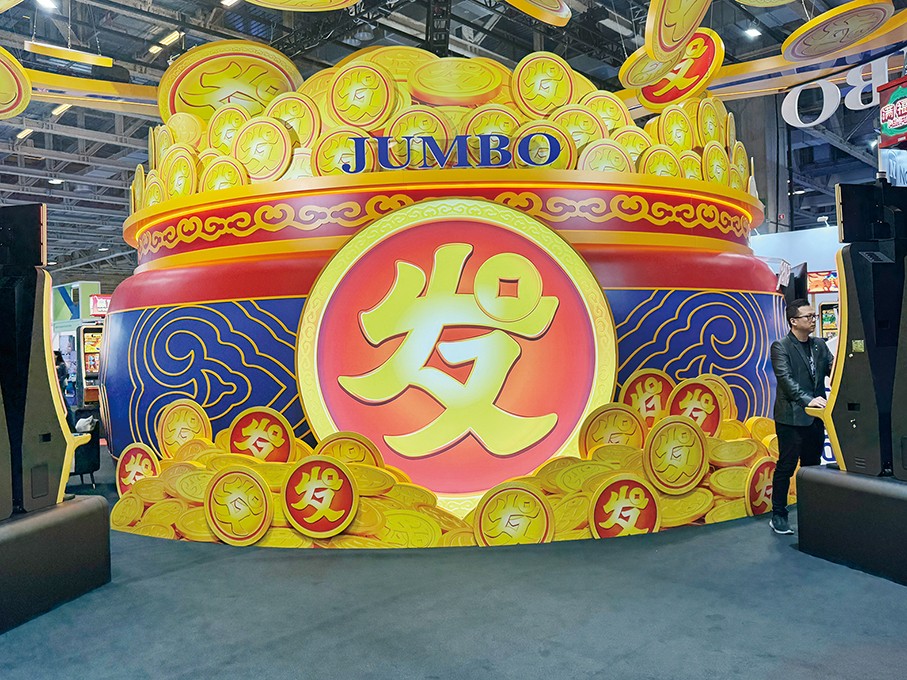
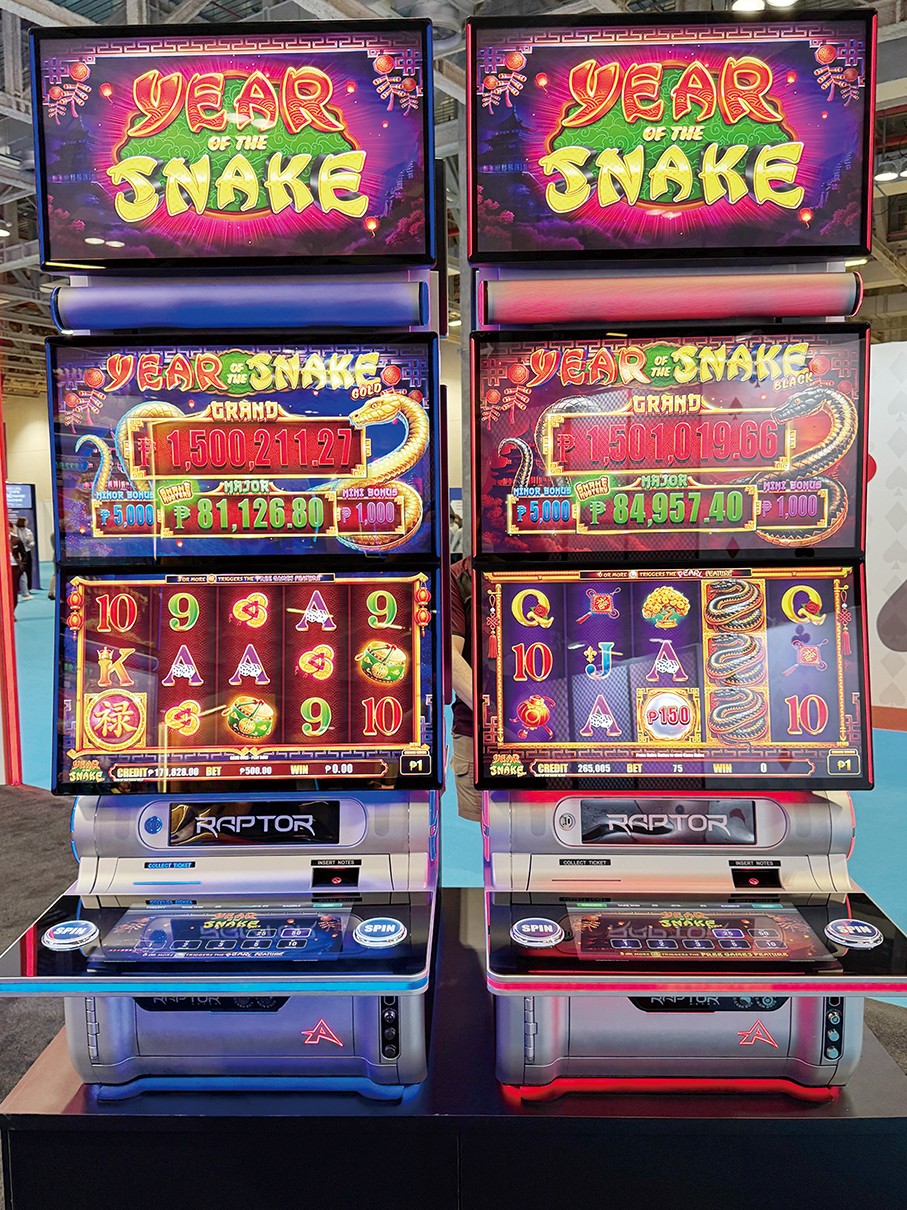
These photos were taken during the G2E Asia at The Venetian Macao early this month. – Photos: Stefan Hammond