

After nine months in Macau, Cristina Maria de Faria Rocha Leiria, who designed the Kun Iam Statue and Ecumenical Centre, said in an Instagram statement earlier this month that she was “filled with gratitude and at the same time filled with expectations as I prepare to return to my homeland.”
The Portuguese architect and sculptor also said in the Portuguese-language statement translated by the Post: “The deepest desire I have is to ensure that the legacy I built here, the Kun Iam Ecumenical Centre, is nurtured and continues to be serene sanctuary for all those who seek peace and tranquillity”.
In her statement, she described the centre meant solely for introspection and peace.
Meanwhile, in a reflective, nearly two-hour gathering yesterday afternoon at the centre, she said that the centre offered a rare environment of silence, free from the noise and distractions of daily life. “This space is about being with ourselves,” she said, adding: “Normally, we live in constant interaction with others.”
Leiria emphasised the spiritual essence of the space, describing it as more than just a physical structure. “I don’t call it a temple, but many people do,” she said, and she was quick to add that “because when you’re inside, the energy feels like that of a church – sacred, quiet, and infinite.”
She expressed hope that the community and media will support the centre’s continuity, ensuring its legacy as a place for reflection, silence, and “cultural depth”.
The centre opens daily between 10 a.m. and 6 p.m. except Fridays, while its outdoor space opens between 7 a.m. and 11 p.m. daily, on a small artificial islet off Nape, connected to the waterfront Avenida Dr Sun Yat-Sen by a 60-metre-long causeway.
The statue and centre designed by Leiria opened in 1999. The statue depicts Kun Iam (known in Putonghua as Guanyin), a Buddhist divinity.
According to DeepSeek, Kun Iam is a revered figure in East Asian Buddhism. Known as the Goddess of Mercy and Compassion, she is the bodhisattva, i.e., an enlightened being who postpones Buddhahood to help others, associated with infinite kindness and healing.
The name Guanyin (觀音) is short for Guanshiyin (觀世音), meaning “The One Who Perceives the Sounds of the World”—referring to her ability to hear the cries of suffering beings. Originally based on the male bodhisattva Avalokiteshvara from Indian Buddhism, Guanyin evolved into a female form in China and other East Asian cultures, blending with local beliefs. She embodies compassion, mercy, and unconditional love. She guides souls, protects devotees from harm, and grants wishes. She is believed to assist those in distress, including women and children. She is associated with fertility, healing, and protection at sea. She is customarily portrayed as a serene woman in white robes, sometimes standing on a lotus, a symbol of purity. Sometimes, she is shown with multiple arms or eyes, representing her ability to aid all beings, according to DeepSeek.
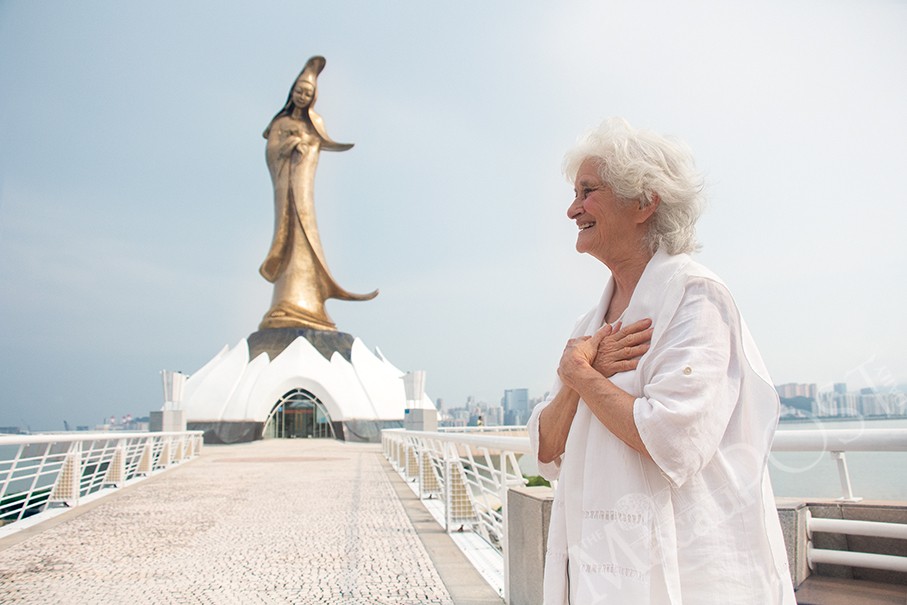
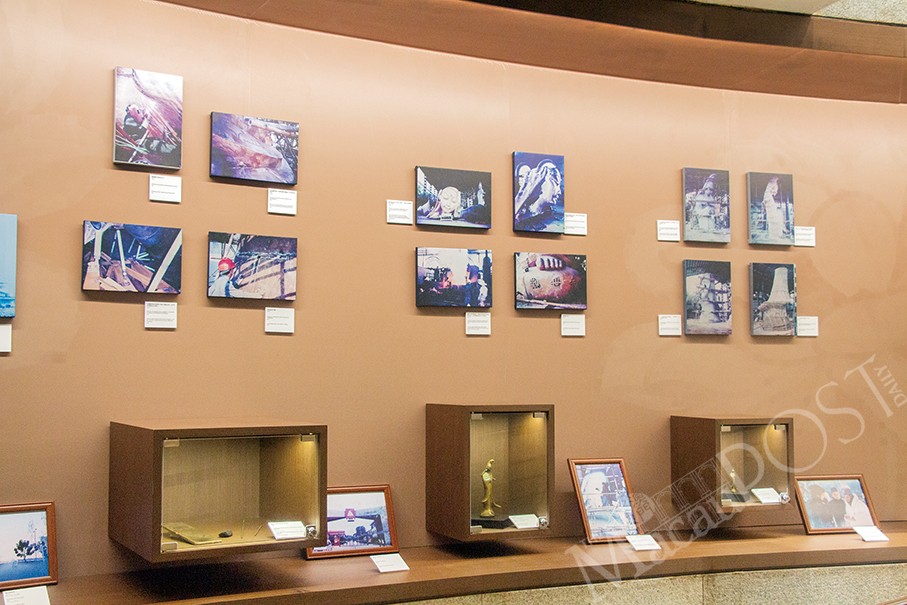
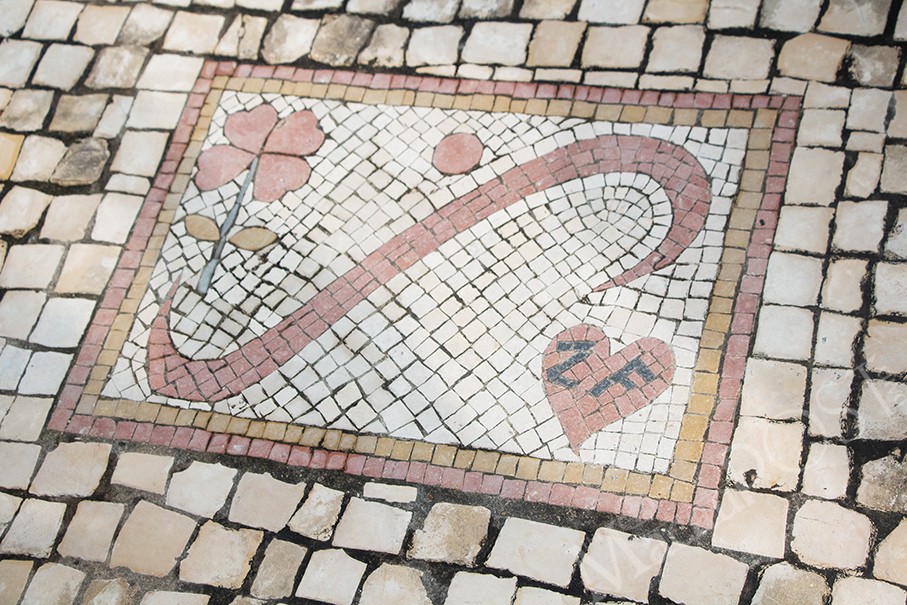
These photos show Cristina Leiria and her most renowned project in Macau – the Kun Iam Statue, floor tiles and Ecumenical Centre on a man-made islet off Nape. – Photo: Khalel Vallo