

The future and responsibility of Macanese youth
Commentary by Manuel Silvério
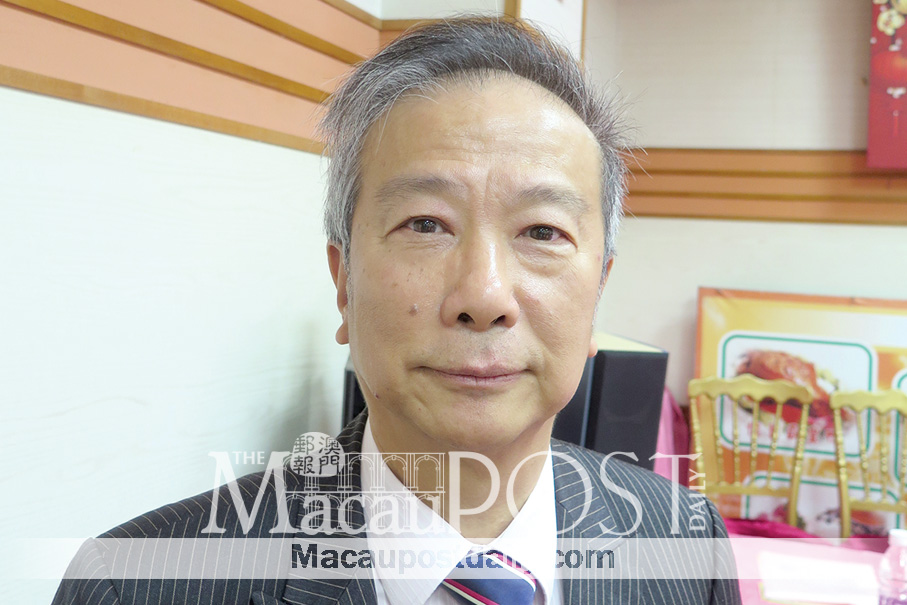
Independent public policy and regional development commentator (Former senior public official with international experience and a long-standing commitment to public policy and sports development)
An action that has not yet ended
The visit by the Association of Macanese Youth to Qinghai Province, held from July 26 to August 1, 2026, was not merely a study visit, nor simply an experience to be kept in photographs and memories. Its most important meaning lay in allowing the participants to step outside the familiar environment of Macau and come into direct contact with a broader, deeper, and more complex side of the country.
Over several days, young Macanese* people and other participants travelled through a profound part of the land of the Motherland, far from the major cities, financial centres, and modern urban landscapes that are more familiar to us. They experienced the plateau, the altitude, the long distances, ethnic and cultural diversity, the force of nature, ecological security, strategic resources, and the historical memory of a land with many meanings. These experiences remind us that Macau, although it is the place where we live, is only one part of the country’s overall development landscape.
A journey of this nature should not remain only in photographs and places visited. A truly meaningful journey should not end upon return. Its value lies in whether it can lead participants to think more deeply about the country, Macau, their own community, and future responsibilities. It should continue, after returning to Macau, as a starting point for reflection, participation, and responsibility.
On the evening of August 12, at a Macanese buffet dinner hosted by [veteran Macau civic leader and lawyer] Leonel Alves, the participants in the Qinghai visit gathered again in an atmosphere of sharing and reflection, recalling also the bonds of friendship created throughout the experience. Senior officials from the Liaison Office of the Central People’s Government in the Macao SAR were also present, led by Qiu Yu, director-general of its Coordination Department, who had accompanied the delegation throughout the visit to Qinghai.
It was a simple but meaningful reunion. After an intense programme, there was finally time to speak more calmly, recall moments from the journey, exchange impressions, and realise that the visit to Qinghai had not ended with the arrival at Shenzhen airport, nor with the coach journey back to Macau through the Hengqin border crossing. On the contrary, another journey began at that moment: the journey of thinking, back in Macau, about how we should carry forward the lessons received during this visit and respond to the inspiration it provided.
Leonel Alves’s reminder
As head of the delegation, Leonel Alves stated that the visit had been a success. Its success lay not only in the completion of the programme or in the quality of the organisation, but above all in the many lessons received along the way. He recalled the journey, the long coach rides, the in-depth conversations among participants, the direct contact with different realities of the Motherland, and even the special feeling of experiencing almost “four seasons” in a single day. These are experiences that can only be fully understood when lived first-hand, and which help one feel, in a concrete way, the diversity and depth of Chinese culture.
Leonel Alves also expressed the wish that, next year, another visit of this kind could be organised, allowing more people to visit other regions of the country.
More important still was the message he left with the young people. In a clear, calm, and firm tone, he urged Macanese youth to better understand Macau’s new situation and to recognise that certain responsibilities can no longer be postponed. He reminded them that we should not remain confined to our own small circles or personal interests, but should broaden our horizons and think, with greater vision, about the community, Macau’s interests, development, young people, our children, and the future of the new generations.
This is perhaps the most important lesson Qinghai should leave us.
From memory to participation
Macau is a comfortable city, and that is an achievement we should value. But comfort can also mean excessive complacency. When a community becomes too accustomed to being protected, it risks losing initiative, narrowing its horizons, and confusing the preservation of identity with the mere preservation of memory.
Macanese identity cannot remain confined to nostalgia, cuisine, occasional gatherings, or family photographs. All of this matters, but it is not enough. For a community to retain its vitality, it must prepare its young people and the next generations so that they can participate in the time in which they live.
Preparing young people does not mean merely inviting them to ceremonies, lunches, receptions, or group photographs. More importantly, it means listening to them, accompanying them, entrusting them with responsibilities, and creating concrete opportunities for them to learn, make mistakes, grow, and serve.
In fact, Macau already has many associations and organisations that have trained young members through practice: supporting their initiatives, involving them in social activities, guiding them towards the real needs of the community, giving them opportunities to appear in different areas of society, and helping them gain confidence, experience, and a sense of responsibility. The Macanese community can, and should, draw inspiration from these experiences.
The training of young people can move forward naturally, but it also requires method. Opportunities must be created for them to write, speak, organise activities, present ideas, take part in projects, accompany those with more experience, visit the mainland, get to know the Greater Bay Area (GBA), receive delegations, and learn to communicate with different sectors of society.
This is not about training young people merely to preserve a cultural memory. It is about giving them the tools to participate in the affairs of Macau today.
Macanese identity must renew itself
Macanese identity will only continue to have vitality if it remains useful, respected, and recognised by society. It must therefore be passed on as heritage, but also exercised as competence.
The Macanese have their own history, an intercultural sensitivity, and an experience of coexistence among different languages, traditions, and communities. Yet these advantages will only have future value if they are accompanied by preparation, discipline, linguistic ability, knowledge of the country, civic awareness, and a spirit of service.
Today, Macanese identity can no longer be reduced to a single formula. It does not necessarily mean fluency in Portuguese, nor should it be used to create false hierarchies over who is more important or more authentic. What matters is that all voices willing to contribute to Macau and to this distinctive feature of our city can find their place in this shared effort.
We are often asked: how many Macanese are there? The answer is not always easy, and perhaps that is not the most important question. What truly matters is whether we still have the ability to maintain this unique feature of Macau, to extend this historical and cultural heritage, and to help Macau remain a distinctive, open, plural, and internationally recognised Chinese city
The value of a community does not depend only on the number of its members, but on the quality of its presence, the usefulness of its participation, and its ability to pass on to younger generations a sense of belonging, responsibility, and service. If Macanese identity continues to serve as a bridge between cultures, languages, memories, and future projects, then, regardless of numbers, it will continue to have meaning for Macau.
Young people are the key to the future
Among Macanese youth, some already have strong conditions: they are multilingual, open, broad-minded, and capable of assuming greater responsibilities. Others still need to gain confidence, step outside their usual environment, and get to know Macau, the Greater Bay Area, and the whole country better. Both groups should be accompanied. Both are part of the community’s future.
Naturally, we should neither overinterpret nor underestimate the attention, consideration, or opportunities granted by public authorities. As in many things in life, recognition depends, to a large extent, on individual and collective effort, preparation, usefulness, and the ability to contribute seriously.
The Macanese community does not need to place itself above anyone, nor does it need to be present in everything. What it needs is to be prepared, to remain open, and, when necessary, to have the capacity to serve Macau, always in harmony and openness with the other communities that also form part of the plural reality of the Macao SAR.
It is precisely here that visits such as the one to Qinghai have special value. When well organised, they are not tourism, but human, civic, and community training. They place young people before different settings, allowing them to adapt, coexist, listen, observe, and understand that Macau, however important it is to us, is only one part of a much wider national reality.
But a journey alone is not enough. The real challenge begins after the return. Which conversations will continue? Which initiatives will emerge? Which young people will begin to write, organise activities, study Chinese more seriously, learn more deeply about the country’s history, move closer to the Greater Bay Area, and think about Macau’s overall interests?
If nothing happens after the return, the journey will remain only a good memory. If there is continuity, it will become an investment.
Turning experience into responsibility
Macau needs to invest better in its young people. This investment should not be limited to scholarships, courses, or occasional visits, but should build paths of responsible growth. Young people can begin by observing, then helping; later, they can propose ideas, organise work, represent the community, and assume responsibilities. No community can renew itself if it leaves the younger generation forever waiting for symbolic permission from its elders. But, in the same way, no young person truly grows without guidance, example, and demand.
The older generation has the responsibility to open doors. Young people have the duty to enter through them with humility, willingness to learn, and a spirit of service. The community cannot continue merely to talk about young people; it must begin to entrust them with concrete tasks. Young people, in turn, must also understand that social or political visibility is not personal vanity, but a responsibility towards the community, Macau, and the country.
To think about young people is also to think about our children and grandchildren. It is to ask what kind of Macau we want to leave them. It is to ask whether they will still have space to live, work, participate, and feel that they belong to this land. It is to ask whether Macanese identity will be only a beautiful memory of the past or a living presence in the city’s future.
The answer will depend less on speeches than on the concrete opportunities we are able to create, and also on the willingness of young people themselves to take those opportunities seriously.
A bridge that can still renew itself
Qinghai taught us that the country is vast, diverse, demanding, and profoundly complex. The reunion of August 12 reminded us that this learning must continue in Macau. The visit was important, but responsibility begins now: to transform experience into awareness, awareness into participation, and participation into future.
Macau is our home. The country is the wider horizon behind us. Between the Macao SAR and the mainland, the Macanese community can continue to be a living bridge. That bridge should connect Macau to the Greater Bay Area and to other provinces and cities of the mainland, but also to the outside world, especially the wider Portuguese-speaking world and other countries and communities with which Macau maintains historical, cultural, linguistic, emotional, and commercial ties.
Preserving Macanese identity does not mean placing a precious relic of the past inside a glass cabinet. It means giving new life to a unique, flexible heritage deeply connected to Macau. It means transforming memory into presence, identity into competence, and tradition into strength to serve the Macau of today.
This is perhaps the most appropriate path: to allow Macanese youth to know Macau better, to understand the country better, to keep alive the connection with the Portuguese-speaking world, and to engage in dialogue with other communities, without closing in on themselves. Only in this way can Macanese identity continue to have dignity, usefulness, and a future.
If the journey to Qinghai helped us step out of the greenhouse, then returning to Macau should not simply lead us back to our previous comfort. Preserving Macanese identity is not only about remembering what we once were; it is about preparing, with courage and humility, what we may still become. This responsibility requires action from each one of us.
(End)
Macao SAR, September 5, 2026
*Customarily, the term “Macanese” refers to Macau’s community of mixed Portuguese and Asian extraction, as well as its diaspora.
Editor’s note: Minor edits, footnote and remarks within square brackets added by the Post