

Hoi Sio Hong, Form 4, Chan Sui Ki Perpetual Help College
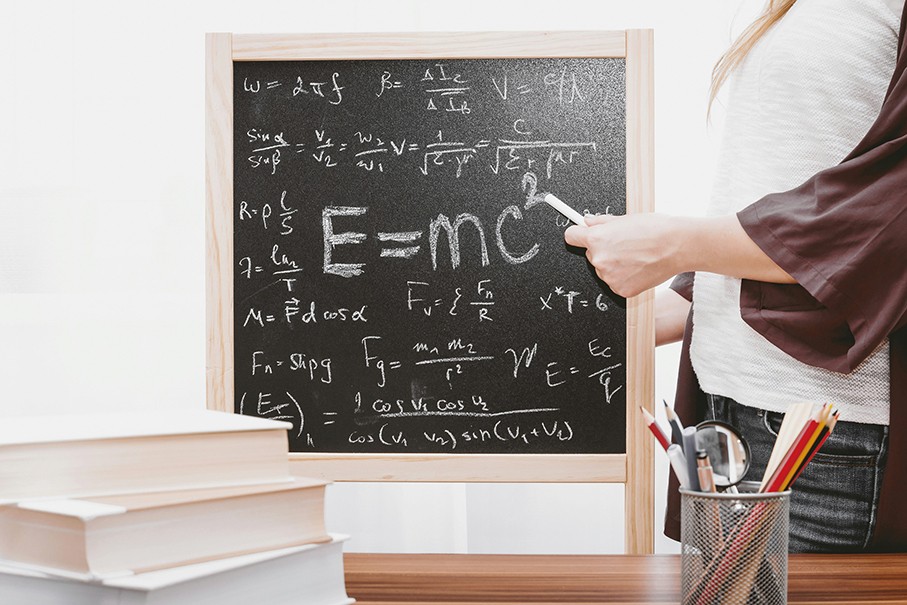
The International Mathematical Olympiad (IMO) is a competition where every year the most talented high school students from around the world come together to tackle extremely tough maths problems. Preparing for the prestigious competition demands enormous time and effort - so much so that, in 2025, only about half of the 630 contestants won a medal, and just 72 earned gold.
Yet AI is closing the gap. Both OpenAI and Google, which are among the most competitive tech firms, have claimed that their AI models achieved a gold medal-level performance in IMO 2025. A year ago, OpenAI’s model achieved an upper silver-medal performance. It seems only a matter of time before AI achieves a perfect score in the competition.
Of course, “AI defeating humans” is not new. In 2016, Google DeepMind’s AlphaGo stunned the world by beating Lee Sedol, who was the best Go player at that time in a five-game match. It is the highlight of a move, now famously known as “Move 37”, during the match which marked the milestone of AI development.
In game 2, AlphaGo made an unexpected move which no human would have made. At first sight, it appeared to be a mistake, even Lee Sedol took an unusually long time to respond to that move. However, it turned out to be a brilliant move that ultimately led to AlphaGo’s victory, revealing a style of play no one had anticipated.
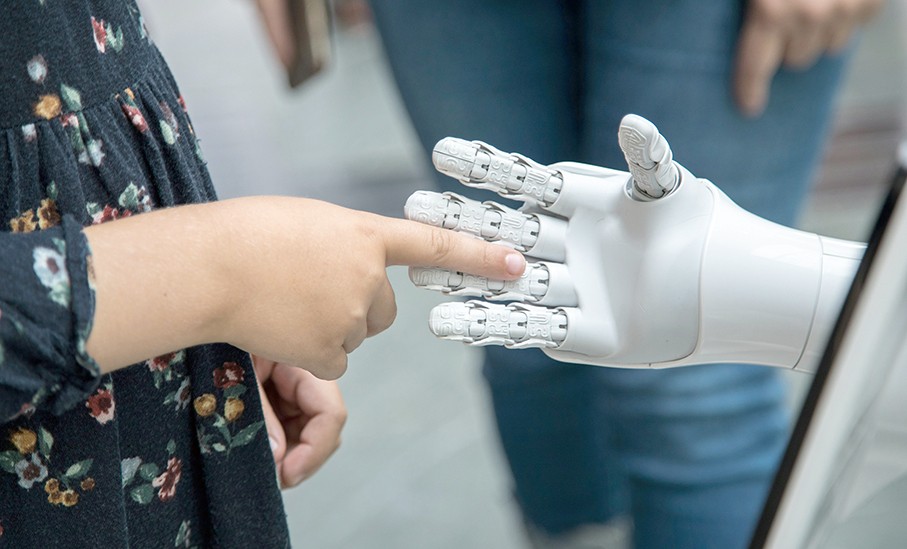
These milestones illustrate a clear trend: AI is evolving so rapidly that it may soon surpass human intelligence in many domains. For centuries we have regarded ourselves as the planet’s smartest creatures and today, our creations are teaching us new ways to think.
What’s more is that the pace of AI development can render entire skill sets obsolete almost overnight. Back in January, I had an article published about the tutorial of prompt engineering (written in July 2024), only to see it outmoded within months by the launch of “reasoning models”. These models are able to analyse the input from the user (and the context of past conversations for some models) to figure out the optimal answer by itself.
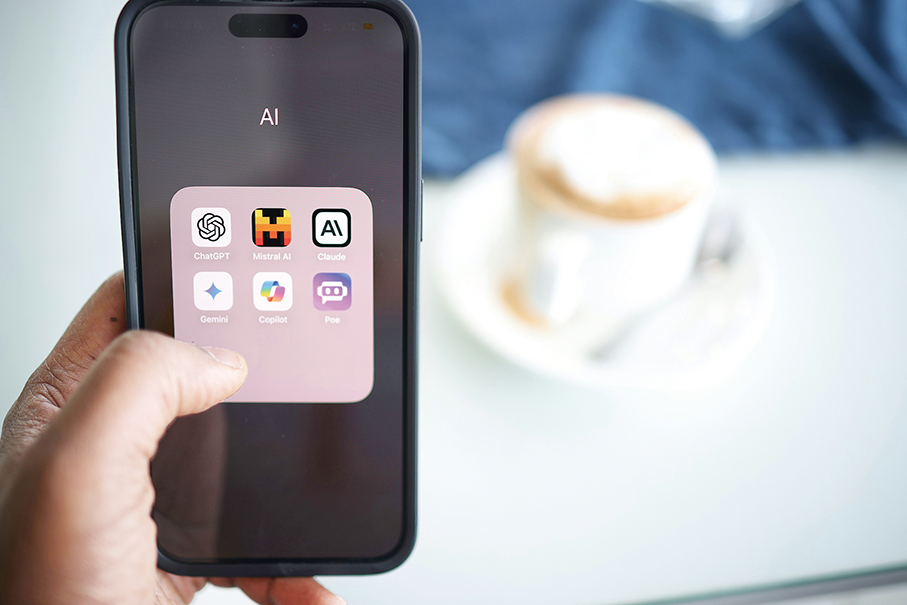
That may sound bleak, but there is a bright side. AI-powered study apps are flourishing, reshaping education by delivering personalised learning paths and real-time feedback. Students facing heavy memorisation tasks are turning to these apps. Memo AI, a Hong Kong–developed AI learning platform, is especially popular among Hong Kong medical students. It claims to convert PDFs, slides or videos into flashcards and practice quizzes, then track their progress instantly.
Not only can AI assist with medical knowledge, but it can also contribute to abstract research fields, such as mathematics. Terence Tao*, a preeminent mathematician and Fields Medallist**, has actively integrated AI into his research workflow. He believes that AI could evolve into a “trustworthy collaborator”. In fact, he used AI to identify subtle errors in his proofs. For instance, AI spotted flawed steps in his work that required manual correction, acting as a preliminary “sanity check”.
In a world where machine intelligence accelerates daily, our greatest opportunity is to learn alongside it. We may treat AI not just as a utility, but as a partner whose methods we can adopt. From Tao’s experience, we can see that he remains a “strategist” to set goals while utilising AI as a “partner” to execute tasks.
AI’s outperformance demands redefining excellence: We must become AI’s strategists to guide its logic with human values, creativity, and ethical foresight. This means championing roles that blend technical oversight, such as verifying AI outputs, with irreplaceably human skills like innovation.
Much like the computing revolution of the late 20th century, AI will inevitably redefine industries. By embracing it as a co-intelligence, we can further leverage synergy between human and machine to accelerate human potential.
*Terence Tao Zhexuan (陶哲轩) is a preeminent Australian-American mathematician, widely regarded as one of the greatest living mathematicians, born in Adelaide in 1975. – DeepSeek
** The Fields Medal is the most prestigious international award in mathematics, often described as the “Nobel Prize of Mathematics.” It recognises outstanding mathematical achievement for existing work and the promise of future contributions. – DeepSeek
Photos courtesy by Unsplash